
President Donald Trump’s administration has paid back $81 billion it collected in tariffs before the U.S. Supreme Court ruled it illegal, according to budget data.
The official figures, seen by The Guardian, reveal the astonishing figure refunded this fiscal year - from last October to February this year - which compares with the $5 billion given back a year previously.
A Treasury Department spokesperson told the newspaper the total was almost entirely the result of the court’s tariffs decision, with the bulk of the amount paid back in May and June. The Independent has also reached out to the Treasury for comment.
Trump pitched reciprocal tariffs at the start of his second term to “reset” the balance of international trade, promising the revival of domestic manufacturing and a narrowing of the federal budget deficit, telling voters they would reap the benefits and live to see a new “golden age” of American prosperity.
He unveiled a suite of new levies on foreign imports at an event in the White House Rose Garden on April 2 last year, a date he christened “Liberation Day,” placing a blanket 10 per cent duty on most of the world and targeting the reminder with higher country-specific duties.
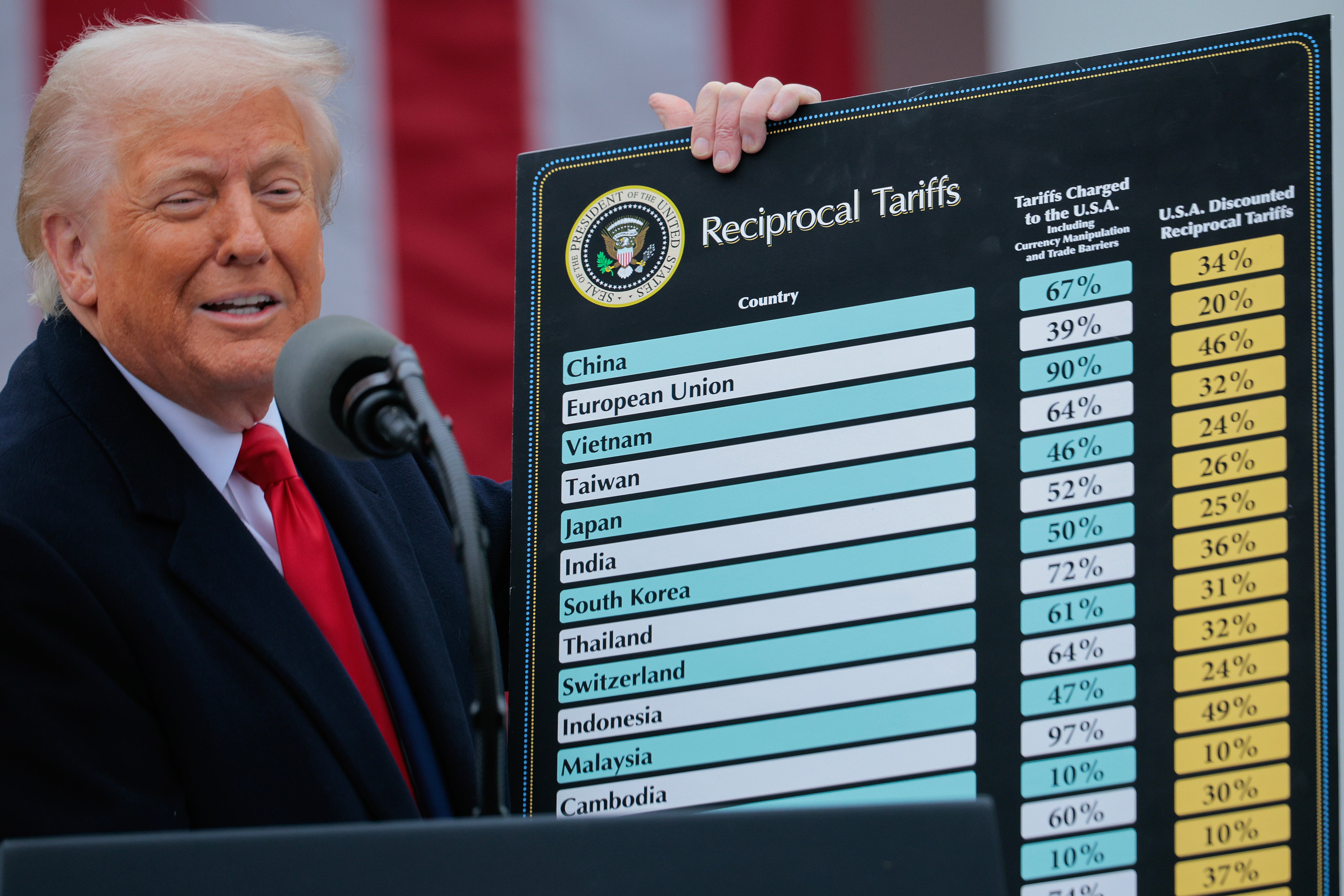
However, the president had to suspend the policy just a week later after the markets reared in horror at the turmoil created. It was subsequently reintroduced, after a prolonged delay, with major modifications.
Trump subsequently used the threat of astronomical levies as leverage in negotiations with international allies and trading partners while raking in $195 billion in fiscal year 2025 alone, only for the highest court in the land to find against him in a 6-3 vote earlier this year.
Chief Justice John Roberts and conservative judges Neil Gorsuch and Amy Coney Barrett joined their liberal colleagues in concluding the president lacked the clear congressional authorization to carry out the tax strategy, questioning his invocation of the International Emergency Economic Powers Act of 1977 as justification for his actions.
Trump responded by flying into a rage, saying he was “absolutely ashamed” of his own appointees to the bench for their defiance.
The U.S. deficit did actually shrink last year as a result of the tariff income generated from the president’s policy, but it has since grown in the first nine months of the fiscal year by 2 per cent to $1.367 trillion.

The country has also paid out $1 trillion servicing interest on that debt at a time when its military spending has climbed 5 percent as a result of Trump’s on-off war with Iran.
A year on from Liberation Day, Mark Zandi, chief economist at Moody’s Analytics, looked at the data and concluded: “The tariffs have done significant damage to the economy.”
Zandi pointed to job growth coming to a “standstill” in 2025 with the weakest hiring levels since 2002 and inflation accelerating as the war drove up energy and commodity prices and consumers bore the brunt of the increased cost of everyday goods, contrary to Trump’s promises.
The administration does still have a 10 per cent temporary global tariff in place on all foreign goods, although that is set to expire on July 24 and the White House is said to be readying a replacement, expected to be between 10 and 12.5 per cent and to impact the likes of the U.K., Japan, India, Taiwan and China.
The president has continued to use tariffs as a threat, meanwhile, warning Brazil it could be hit with a 25 per cent levy over its “unreasonable” trade practices serving to “restrict U.S. commerce.”
He has also told the country’s European partners they could face a 100 per cent rate in retaliation for daring to impose digital services taxes on American all-conquering tech giants like Amazon and Google.