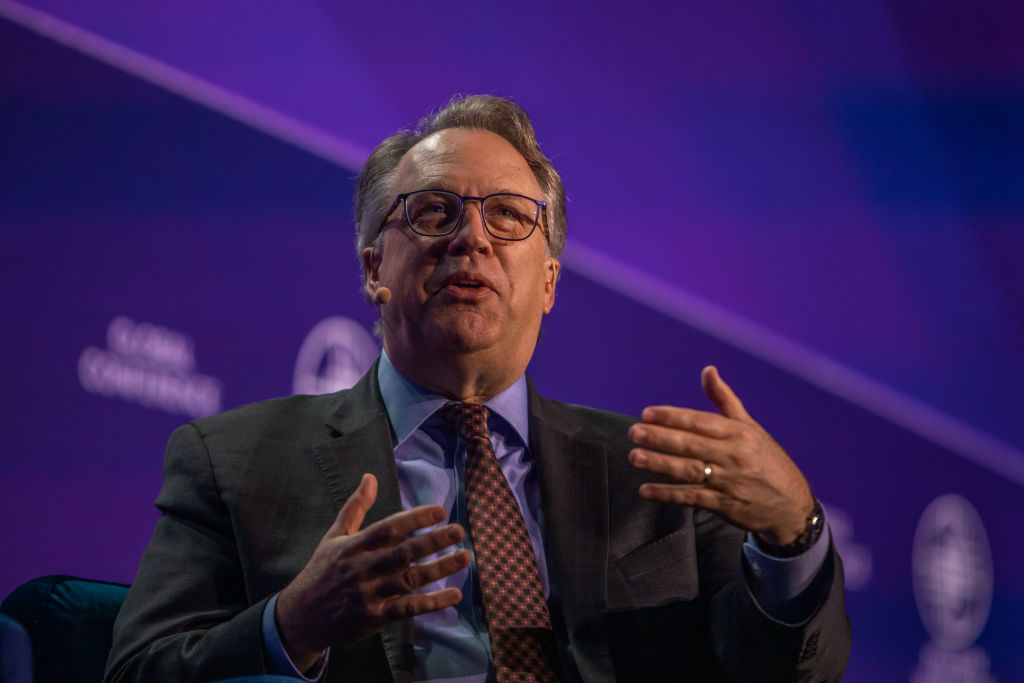
New York Federal Reserve President John Williams said he sees multiple signs that inflation has peaked, something that would allow policymakers to refrain from hiking interest rates.
"There are encouraging reasons to expect that inflation has peaked and should edge down in coming quarters," Williams told business leaders.
He went on to say he expects overall inflation to decrease to around 3.25% by the end of the year and move towards its 2% goal next year, getting there in 2028.
Williams also said the war in Iran, tariffs and more technology spending contributed to rising energy prices, but those factors will ease.
"With inflation running high, it is imperative that we restore it to the Federal Reserve's 2 percent longer-run goal on a sustained basis. The current stance of monetary policy is well positioned to do that," Williams noted.
Financial markets sharply reduced expectations that the Federal Reserve will raise interest rates later this month after new government data showed inflation eased more than economists anticipated in June.
According to data released Tuesday by the U.S. Bureau of Labor Statistics, the Consumer Price Index (CPI) rose 3.5% over the past 12 months through June, slowing from the 4.2% annual increase recorded in May. While inflation remains above the Federal Reserve's long-term 2% target, the report suggested that the pace of price increases is cooling.
Even more encouraging for policymakers was the performance of core inflation, which excludes the more volatile food and energy categories. Core CPI rose 2.6% year over year in June, down from 2.9% in May, while remaining unchanged on a monthly basis. Economists closely monitor core inflation because it is viewed as a better indicator of underlying price trends.
The softer-than-expected inflation report immediately reshaped market expectations for the Federal Reserve's next policy meeting. According to CME Group's FedWatch, traders now assign only about a 10% probability that the central bank will raise its benchmark interest rate at its July 28-29 meeting. Before the inflation report was released, markets had priced in roughly a 35% chance of another quarter-point increase.
Expectations for September also eased considerably. Investors now see approximately a 60% chance of a rate hike at the Fed's Sept. 15-16 meeting, down from more than 90% before Tuesday's data.
Additional data showed that wholesale prices unexpectedly fell in June as well. Concretely, the producer price index saw a 0.3% decrease for the month. Analysts expected the rate to be unchanged.