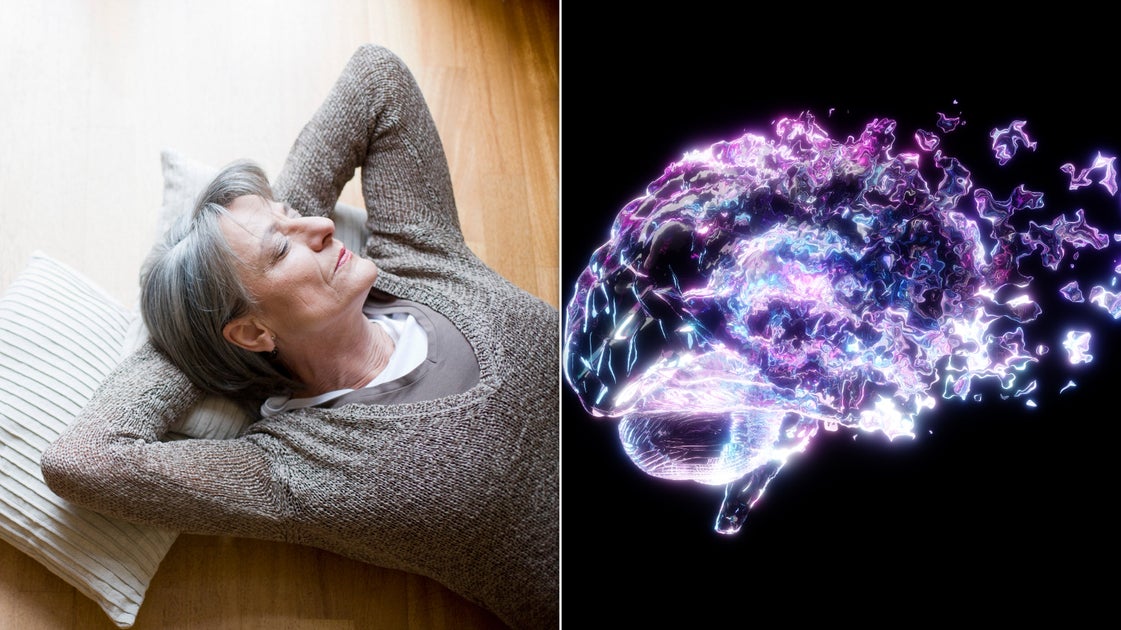
When time allows, napping is a beloved activity among adults of all ages. But not all napping habits are recommended ― in fact, some behaviors may even be a red flag.
A recent study led by researchers at Johns Hopkins’ Bloomberg School of Public Health linked frequent, unintentional napping in older adults with a higher risk of dementia. The study, published in the Journal of Gerontology: Medical Sciences, followed just under 1,000 adults aged 65 and older for 10 years. None of the older adults had dementia at the start of the study.
Participants self-reported their napping habits, including how often they napped, how long they napped, and whether they napped intentionally or unintentionally, which researchers defined as falling asleep without meaning to— such as dozing off on the couch while reading a book.
When compared to people who rarely or never napped, those who napped every day or nearly every day were at a 48% increased risk of developing dementia. People who napped for less than 30 minutes had a 40% higher risk of dementia. Those who napped unintentionally had a 39% higher risk.
This does not mean that napping causes dementia, researchers stressed.
“More frequent napping could be a marker of changes in the brain, rather than a cause of brain changes that lead to dementia,” Adam Spira, the study’s senior author, said in a press release.
It also doesn’t mean that quitting your afternoon nap will lower your dementia risk.
The study authors acknowledge that this research cannot tell us whether keeping someone from napping would protect against dementia, said Dr. Heather Elizabeth Whitson, director of the Duke Center for the Study of Aging and Human Development in North Carolina. Whitson is not affiliated with the research. “Would interrupting that behavior be protective against dementia? We definitely cannot conclude that from the study,” Whitson added.
The researchers also noted “that many studies find the opposite or find no results,” Dr. Mario Dulay, a neuropsychologist at Houston Methodist, told HuffPost. Dulay is not affiliated with the research.
The study also has other limitations. Respondents self-reported their napping habits, which could leave room for misremembering exactly how often or how long they napped.
But “the relationship between sleep and dementia is undeniable, and it’s also really complicated,” Whitson added. There is a connection between poor nighttime sleep and dementia, but “even that has been difficult to tease out because we know it’s probably what we call ‘bidirectional,’” she continued.
This means that if you “are already harboring neurodegenerative changes in your brain, one of the ways that can manifest is that it messes with your sleep. And also, people are increasingly convinced ... that having disrupted sleep at night is also a risk factor for getting a neurodegenerative problem and dementia.”
There is also the thought that “important housekeeping” happens in the brain when you sleep, such as the draining of toxins and the natural repair of mechanisms, Whitson said. So, without high-quality sleep, these important processes can’t happen.

Jose Luis Pelaez Inc via Getty Images
No, you don’t have to stop napping.
These findings do not mean all napping is bad. After a late night or an early morning, a planned snooze can be helpful ― and even healthy.
“The data really suggested that what’s most problematic is these unintentional naps of short duration,” said Whitson, noting that intentional, longer naps didn’t seem to be that negative.
Exactly how long is ideal for a nap? Dulay said 45 minutes is a good goal.
“To get through the whole sleep cycle, where you get REM sleep and all stages of sleep, it’s estimated [to take] about 45 minutes,” Dulay explained.
You don’t have to be totally strict with the 45-minute rule, though. If you had a late night and want to make time for an hour-long nap the next day, that’s OK, Whitson said.
“And you’re doing that rarely and only because there was an event last night that caused your sleep to be disturbed,” she said. “There’s nothing in this article that suggests to me that that is harmful to people.”
According to this research, it’s also not concerning if you come from a culture where siestas (an early-afternoon nap) are common. “If people are doing that because it’s a cultural norm, that’s probably not a problem either,” Whitson noted.
Unintentionally dozing off during the day is not normal aging.
While the sleepy grandma or snoring grandpa are common tropes in cartoons, falling asleep without meaning to during the day is not a normal part of aging.
Roughly a quarter of study participants reported that they frequently napped unintentionally, Whitson noted. Meaning, the majority of older adults in this study did not doze off without meaning to.
If you are falling asleep unintentionally during the day, take it as a sign to talk to your doctor. While it could be linked to dementia, it could also be a sign of a treatable condition like obstructive sleep apnea, Whitson said.
Even if you do receive a dementia diagnosis, there are therapies now for Alzheimer’s disease “and so much in the pipeline,” she said, before adding that there are more than 190 randomized human protocols going on right now that are testing interventions for diseases that cause dementia.
“It’s kind of time to break the stigma or the fear,” Whitson said.
Getting a dementia diagnosis now is very different than getting one a decade or even five years ago, she added. It’s better to know what’s happening with your health so you, your family and your care team can design the right treatments and interventions for your safety.