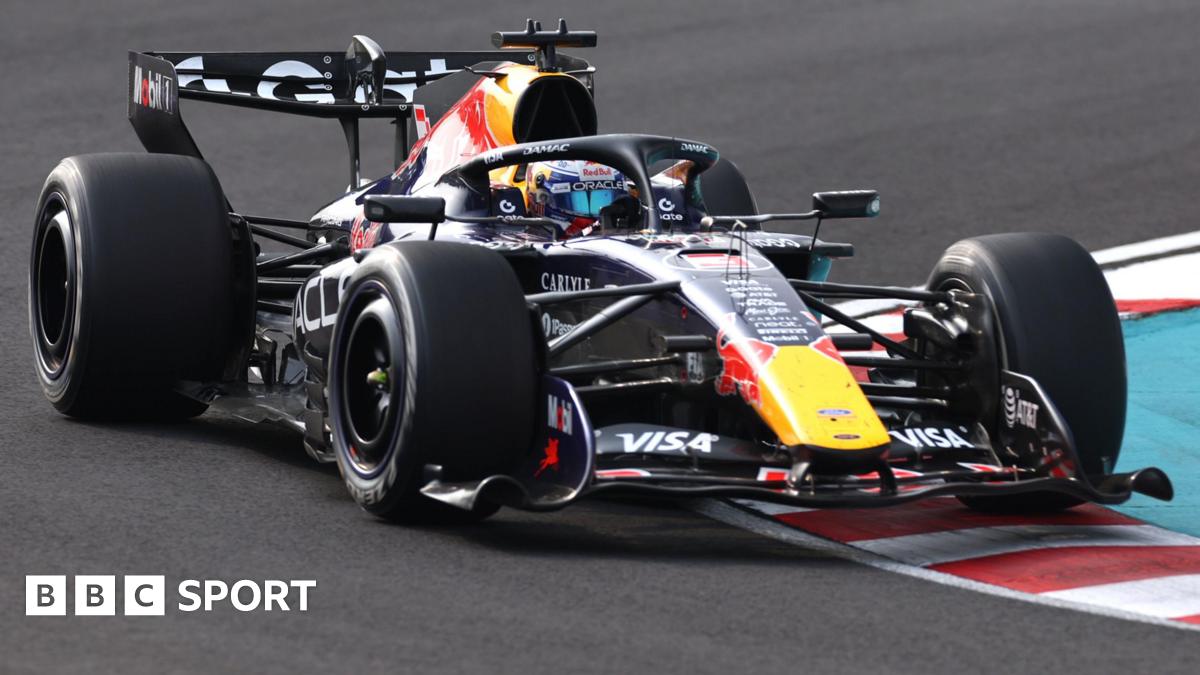
Red Bull have had a very difficult start to the season. It started off looking not too bad, with Isack Hadjar qualifying third at the first race of the season, even though Max Verstappen crashed in qualifying.
Hadjar retired from the race in Melbourne with an engine problem, while Verstappen recovered reasonably well to sixth place in the race.
But in China and Japan they were uncompetitive.
Team principal Laurent Mekies said after the race in Japan: "We left Melbourne thinking that we were one second off Mercedes and half a second off Ferrari. In terms of overall gap to competitors, (here) it looked not too dissimilar to the Melbourne picture in terms of one second to the best guy, half a second to the best Ferrari."
Mekies pointed out that in Australia Verstappen's recovery brought him up to the back of Lando Norris' McLaren but that by Japan Red Bull were a "distant force". In other words, McLaren had progressed and Red Bull had not.
Mekies said that in China Red Bull were "starting to scratch (our) heads about car balance and car characteristics".
He perceives their problem as "some work to do" to close the gap on the competition and "a layer of us not being able to extract enough from the package and to give something Max can push with". The car does not handle with the front-end bite that Verstappen prefers, and which enables him to get the best out of himself.
Mekies was asked whether the bigger gap in China and Japan compared with Australia was simply a corollary of the fact that the Melbourne track has fewer corners to expose the car's weaknesses.
He replied: "It's a fair question. We certainly think that in China we made a step back. And we measure that against, not only against the top guys, but also against the midfield that got closer to us. So, I don't think it's a product of the number of corners only.
"There is a layer where, in certain cornering speed and cornering conditions, we lose some performance compared to what our package is supposed to give us. So, this we need to work on."