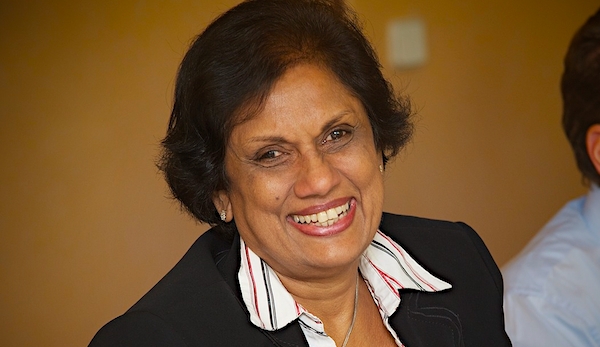
By Vipula Wanigasekera –
In the complex and often unforgiving landscape of Sri Lankan politics, few leaders have inherited a situation as daunting as Chandrika Kumaratunga. When she assumed office in 1994, Sri Lanka was already deeply entrenched in a brutal conflict—one she neither initiated nor escalated. Unlike the conditions that later enabled a decisive military end to the war in 2009, her presidency offered no such strategic or geopolitical advantages. Instead, she faced a protracted and uncertain war, with limited options and immense human and economic costs.
Yet, her approach reflected a rare blend of pragmatism and courage. She pursued peace negotiations, even at significant political risk, demonstrating a willingness to explore solutions beyond militarism. While these efforts did not yield a final settlement, they underscored a leadership style rooted in reconciliation rather than confrontation—an approach that, in hindsight, may have been ahead of its time.
Simultaneously, Kumaratunga had to grapple with the structural consequences of the open economic policies introduced in the late 1970s. By the time she took office, the country had become heavily import-dependent, with domestic production weakened. Critics often remarked—perhaps symbolically—that even basic items like pens and pencils were imported, illustrating the depth of economic vulnerability. Reversing or stabilizing such entrenched economic patterns while managing a war economy was no small feat.
Despite these severe constraints, her administration was able to maintain moderate economic momentum for much of her tenure, with growth hovering around the 4% mark in several years. However, this trajectory was sharply disrupted in 2001 following the attack on the airport, which dealt a heavy blow to investor confidence, tourism, and overall economic stability—pushing growth into negative territory for the first time in decades. In that context, even maintaining relative stability in the preceding years was a formidable challenge. It reflected not only a degree of macroeconomic resilience but also policy continuity and administrative functionality under exceptionally adverse conditions—an aspect often overlooked in contemporary assessments.
Equally noteworthy is the comparative absence of large-scale, systemic corruption scandals during her presidency. This is not to suggest that her administration was without flaws. Criticisms regarding governance style—such as reliance on a close inner circle, delays in attending meetings and decision-making, and perceptions of elitism—were frequently highlighted, including in the writings of Victor Ivan. However, when viewed against the backdrop of more recent governance challenges in Sri Lanka, these issues appear relatively modest. In many ways, they were overshadowed by far more serious allegations of corruption and mismanagement that characterized subsequent administrations.
Kumaratunga’s leadership must therefore be evaluated within its historical context. She governed during one of the most turbulent periods in the nation’s history, balancing war, economic transition, and political instability. Her ability to maintain institutional continuity and avoid major governance breakdowns speaks to a level of competence and restraint that deserves renewed recognition.
Today, as Sri Lanka continues to navigate economic recovery and political realignment, the question of leadership becomes ever more critical. While age and personal inclination may preclude her return to active politics, it is worth considering what her experience represents. In an era where governance often oscillates between extremes, her tenure offers lessons in moderation, resilience, and the difficult art of managing competing national priorities.
If circumstances were different—if energy and interest aligned—she might well be considered a strong candidate for leadership once again. Not because she was flawless, but because she governed during adversity with a degree of balance that is increasingly rare. In reflecting on her legacy, one is reminded that effective leadership is not always about dramatic victories, but about steady stewardship through the most challenging of times.
(Writer is a former diplomat and Head of the Tourism Authority, currently a lecturer, YouTuber, author, and meditation and Reiki therapist.)
Photo credit: https://www.dailymirror.lk/front-page/Chandrika-Kumaratunga-urges-people-not-to-be-provoked/238-165706
Year-by-Year GDP Per Capita Growth (Annual %) based on World Bank data