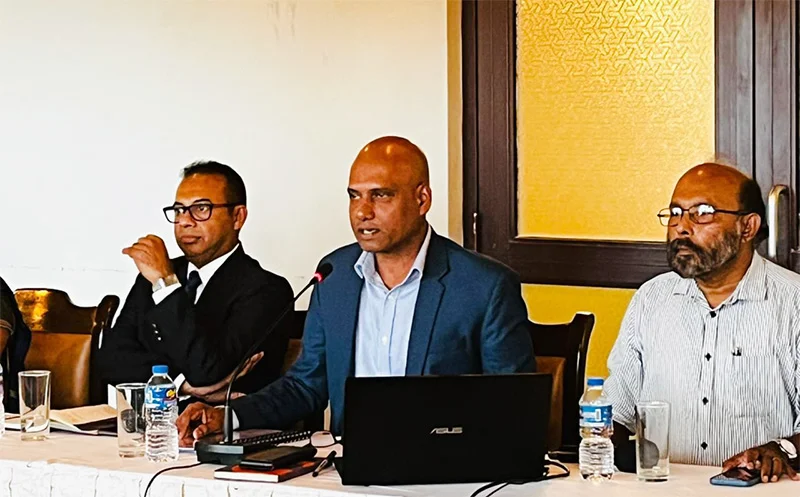
Specialised training programme set to begin
The Sri Lanka Institute of Tourism & Hotel Management (SLITHM) has launched a new initiative that could quietly reshape the country’s tourism industry – the National Tourist Interpreter Training Programme.
The idea, explained by SLITHM Chairman Dheera Hettiarachchi, is simple but important. Sri Lanka does not need to rely only on bigger tourist numbers or louder promotion. It needs to help visitors understand the country better.
“This is where the concept of a tourist interpreter comes in”, he said.
“Unlike traditional tour guides, who mainly explain and show places, interpreters are trained to go deeper. They connect the story behind what visitors see; linking history, culture, environment and local life. In a country like Sri Lanka, where ancient heritage, rich biodiversity and living communities are closely connected, this approach can make a real difference,” Hettiarachchi explained.
The programme itself will run for three months and focus more on field visits and practical learning rather than classroom teaching. It is open to academics and professionals with knowledge in areas such as history, culture, environment and research. Those who complete the course will receive a National Tourist Interpreter Licence from the Sri Lanka Tourism Development Authority, along with a digital badge.
With a course fee of around Rs. 250,000, this is not meant for mass entry. The target is a smaller, more specialised group. These interpreters are expected to work with destination management companies, serving high-end travellers who are looking for meaningful and informed experiences, not just sightseeing.
Speaking further, the SLITHM chairman said: “Globally, this trend is already visible; visitors increasingly expect detailed explanations about nature, conservation and local communities in the destinations they visit. They want to know not just what they are seeing, but why it matters. Sri Lanka has the natural and cultural depth to offer this kind of experience. What has been missing is the structured way of delivering that knowledge. That is where this initiative fits in.”
According to SLITHM, there is also a wider benefit. Visitors who understand a place tend to respect it more. This can reduce damage to sensitive sites and support conservation efforts, creating a better balance between tourism and the environment.
In this context, a new group of trained interpreters could gradually change how Sri Lanka is presented to the outside world. Instead of quick impressions shaped by social media, these interpreters can offer informed, thoughtful accounts of the country, combining knowledge with storytelling.
For a destination long promoted mainly for its beaches and scenery, this shift towards deeper storytelling may be both timely and necessary.
By Sanath Nanayakkare