Your support helps us to tell the story Read more Support Now From reproductive rights to climate change to Big Tech, The Independent is on the ground when the story is developing. Whether it's investigating the financials of Elon Musk's pro-Trump PAC or producing our latest documentary, 'The A Word', which shines a light on the American women fighting for reproductive rights, we know how important it is to parse out the facts from the messaging. At such a critical moment in US history, we need reporters on the ground. Your donation allows us to keep sending journalists to speak to both sides of the story. The Independent is trusted by Americans across the entire political spectrum. And unlike many other quality news outlets, we choose not to lock Americans out of our reporting and analysis with paywalls. We believe quality journalism should be available to everyone, paid for by those who can afford it. Your support makes all the difference. Read more
Shop price inflation eased in April, driven by widespread discounting from retailers, though experts warn the full impact of the Middle East conflict is yet to be felt by consumers.
Overall shop prices rose by 1 per cent compared to April last year, a decrease from 1.2 per cent in March and below the three-month average of 1.1 per cent, according to data from the British Retail Consortium (BRC) and NIQ.
Non-food items saw a slight deflation, becoming 0.1 per cent cheaper year-on-year, a shift from the 0.1 per cent growth recorded in March.
Meanwhile, food inflation also saw a dip, falling to 3.1 per cent from 3.4 per cent in March, although fresh food prices remain 3.9 per cent higher than the previous April.
BRC chief executive Helen Dickinson said: “Bigger discounts in clothing, furniture and DIY goods helped pull down shop price inflation in April.
“With weakening consumer confidence, retailers competed harder on price to stimulate more spring spending.
“Food price inflation also slowed as retailers offered discounts on Easter items such as chocolate.
“While we’re yet to see the full force of the Middle East conflict feeding into consumer prices, it will not be long before it begins to.”
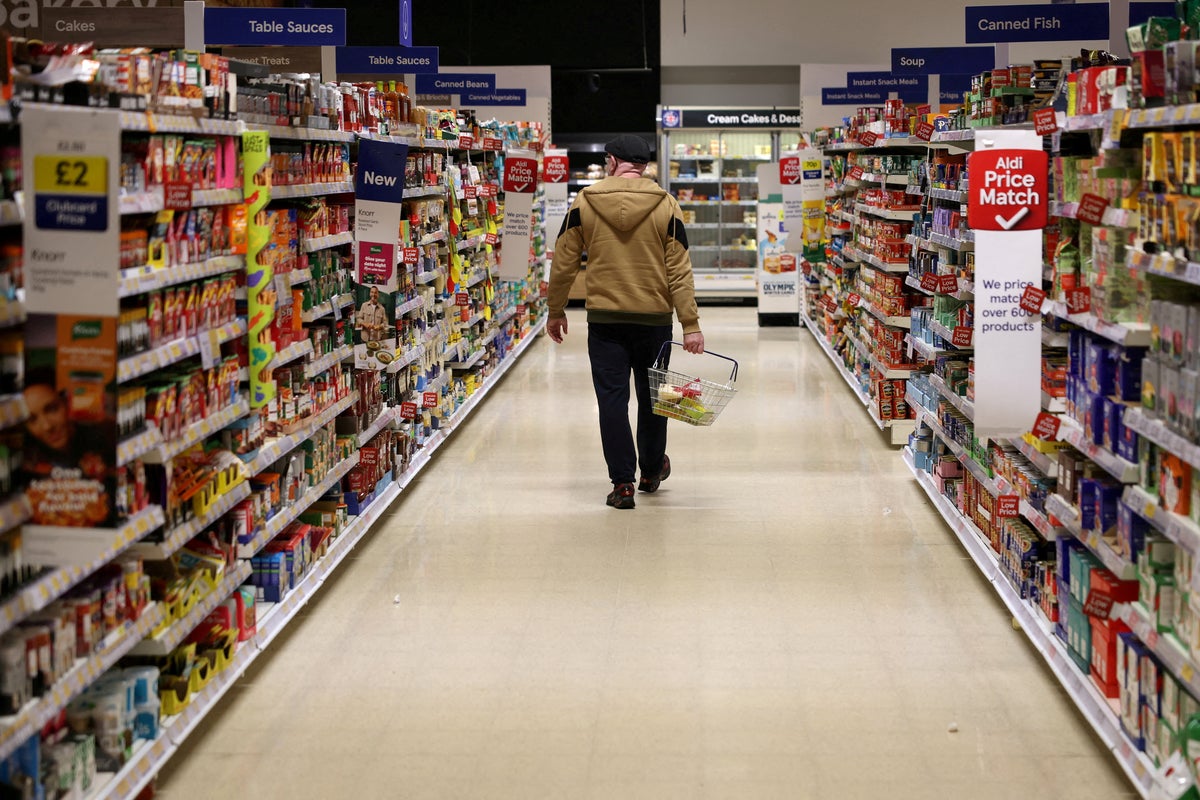
Overall shop prices rose by 1 per cent compared to April last year, a decrease from 1.2 per cent in March and below the three-month average of 1.1 per cent, according to data from the British Retail Consortium (BRC) and NIQ ( Yui Mok/PA Wire )
Mike Watkins, head of retailer and business insight at NIQ, said: “Increased fuel prices are already leading to higher inflation and we can expect a similar impact in the food and non-food supply chains in the months to come.
“However, retailers will look to hold back any price increases as long as possible as alongside fragile consumer confidence, accelerating inflation is likely to negatively affect consumer spending.”
Research by the Resolution Foundation has found that the average household will be £480 worse off this year due to increased energy costs.
Chancellor Rachel Reeves recently said the Iran crisis was “not our war, but it is pushing up bills for families and businesses”.
She continued: “That’s why it’s my number one priority to keep costs down. Our economic plan is the right one and has put us in a stronger position to support families in the face of this new crisis.”