Skip to main content
Skip to navigation
Skip to navigation
View image in fullscreen
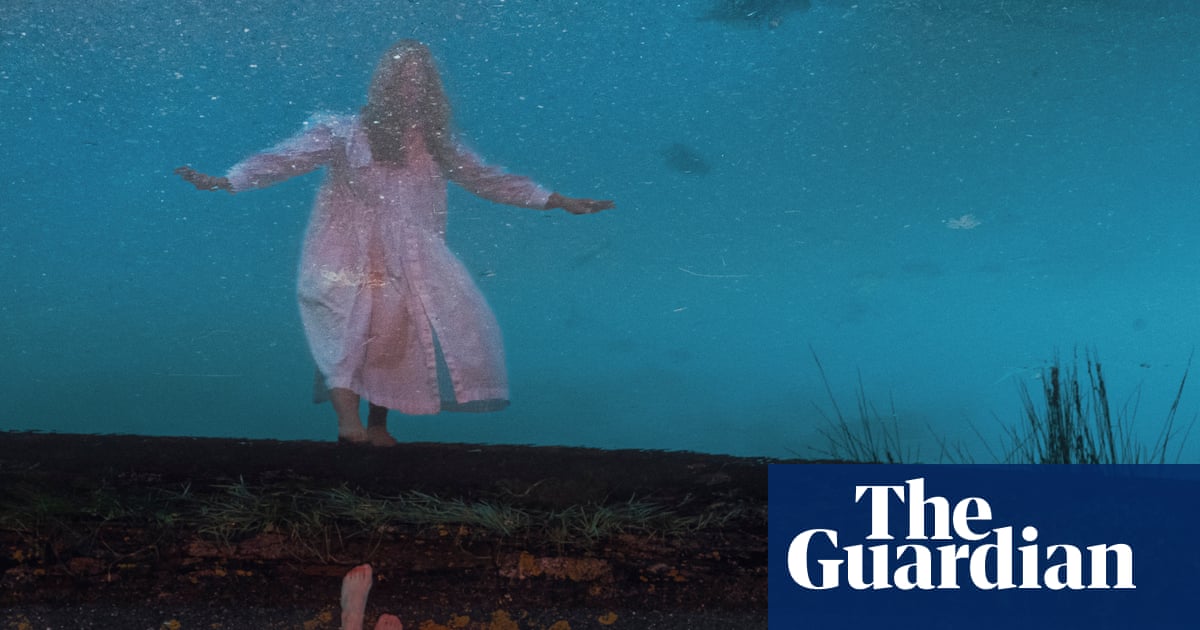
Stray Sod investigates a phenomenon in Irish folklore in which it’s said that enchanted patches of earth lead astray whoever steps on them. Inspired by first-hand accounts found in the Irish National Archives, Maria Lax reimagines rural Irish landscapes through this otherworldly lens. Says Lax: ‘There are certain places which the fairies have power over at night and if anybody goes in to them after dusk he cannot come out until morning though he may be walking all night’.
Stray Sod by Maria Lax is published by Setanta Books
Share
View image in fullscreen
In Irish folk tradition, there are many accounts relating the experience of people travelling alone, often at night, who suffer sudden, severe fits of disorientation and confusion while traversing the natural landscape. Such bouts were at times attributed to the influence of the fairies (who would often set wanderers astray for their own amusement) or the power of the
fóidín mearbhall
(stray sod), understood as an enchanted patch of earth which would profoundly disorient those who stepped upon it
Share
View image in fullscreen
While narrative accounts concerning the stray sod vary, they generally describe occasions in which individuals are forced to navigate a landscape characterised by its sudden shift into unfamiliarity and strangeness. Landmarks are erased, inverted or replaced with new and unidentified features. Impenetrable fogs, mists and coloured hazes descend and disorientate. Woods, walls and strange mountains suddenly loom, blocking all progress through the landscape. The scenery becomes entirely unrecognisable, indefinite and nameless as familiar reference points distort and slip away
Share
View image in fullscreen
The protagonists who relate these accounts are not eccentric waifs or odd characters, but individuals engaged in humdrum, day-to-day activities; working the land or taking a shortcut across a field. These narratives are most often characterised by their sudden occurrence in the areas just beyond the domestic commune of the town or village, typically taking place in the fields and roadways stretching out towards the unpopulated hills, forests, bog lands and pastures. These experiences play out not just at the peripheries of place, but of time, often occurring in the failing light of dusk
Share
View image in fullscreen
Lax says: ‘What could be more terrifying than losing your way in a place you thought you knew well? That was the question I kept returning to during the research phase, and ultimately was why I chose this particular topic and title. In the stray sod narratives of Irish folklore, there is an ever-present quiet terror in the knowledge that there are portals into another, darker world hiding in plain sight; one wrong step and you could be thrust into a land that is not yours. There is an awareness that the surface of our reality is a slippery one’
Share
View image in fullscreen
‘The old people would say: “That fog was magical. There is nothing you can do against the fog … Do you know what animal is best to have with you in fog? A good dog. There is no animal under the sky that is more lonesome than a horse in fog, but a dog will find the house, and if you follow him, you’ll be in no danger”’
Share
View image in fullscreen
‘I relocated to Ireland in order to make this project and spent countless hours wandering through the countryside in West Cork and elsewhere, often at night, searching for things to photograph. Driving through the narrow country roads in the dark is like entering a green labyrinth. There were moments when a fog would appear out of nowhere and stay for days, or a heavy storm would rise, and I understood how one could get very lost – in all meanings of that word’
Share
View image in fullscreen
‘Making Stray Sod and researching the archives made me think about the world of digital remembering. As the oral storytelling tradition is increasingly being replaced by social content and as archives move online, the fragile nature of memory was on the forefront of my mind when making this project. What are the stories we tell, and what will we leave behind? Instead of using archive imagery like I originally planned, I chose to treat my images as the archive. Using analogue distortion they have been pulled apart, glitching, and some completely beyond recognition’
Share
View image in fullscreen
‘The quiet moments by myself, taking photos in the darkness, brought me a calm unlike I’ve experienced anywhere else. I often work alone and usually bring just my camera, tripod and a flash with a custom filter on it that brings results that are almost impossible to control in the elements. Chance and change are things I don’t often get to explore in my commercial work, so I embrace it in my personal projects. Sometimes after battling all this in the rain and the wind, the resulting photograph comes out looking totally unexpected - occasionally for the better’
Share
View image in fullscreen
‘Delving into themes of folklore has become the expression of that interest in my artistic work. Written history is often about the big brush strokes of the power players, with regular people like ourselves often reduced to statistics and footnotes. Folklore could be described as the traditional beliefs, customs and stories of a community, passed through the generations by word of mouth. Folklore allows us to zoom in on the history of the everyman’
Share
View image in fullscreen
‘Even with all the knowledge available today we seek answers as frantically as ever. Tools and systems by which we seek them change, evolve and differ, yet answers stay elusive. Whether it’s ancient folk beliefs, religion or conversations with ChatGPT, what unites all of us regardless of our generation and our homeland is our eagerness to make sense of our luck and our sorrows’
Share
View image in fullscreen
‘In the stray sod narratives, finding your way back home requires transforming something about yourself, symbolised by the act of turning your clothing inside out. Often, help comes in the form of an animal, or another person. It is people travelling alone who seem most prone to losing their way, and connection is a powerful antidote to the isolation in which we lose ourselves. However, sometimes the only way out is to keep wading through the inhospitable darkness; to simply not give up, as we hope and trust that the sun will eventually rise again’
Share
View image in fullscreen
An anecdote from the National Archive reads: ‘In the end I sat down and turned my coat – I often heard it said that if you went astray and if you turned your coat, you would be all right and know where you were. I turned my coat, and when I looked around I found myself at Burrneagh Rocks, about two miles from where I started off’
Share
Explore more on these topics
Photography
Folklore and mythology
Ireland
Europe
Most viewed
Most viewed
‘A constant quiet terror’: Getting lost in Irish folklore – in pictures