Your support helps us to tell the story Read more Support Now From reproductive rights to climate change to Big Tech, The Independent is on the ground when the story is developing. Whether it's investigating the financials of Elon Musk's pro-Trump PAC or producing our latest documentary, 'The A Word', which shines a light on the American women fighting for reproductive rights, we know how important it is to parse out the facts from the messaging. At such a critical moment in US history, we need reporters on the ground. Your donation allows us to keep sending journalists to speak to both sides of the story. The Independent is trusted by Americans across the entire political spectrum. And unlike many other quality news outlets, we choose not to lock Americans out of our reporting and analysis with paywalls. We believe quality journalism should be available to everyone, paid for by those who can afford it. Your support makes all the difference. Read more
Human folklore has often claimed that “stolen food tastes better”, with the maxim resonating in Italian kitchens with the phrase “Il cibo rubato ha più sapore” to Japanese “nusumigui”, meaning secret eating is tastier.
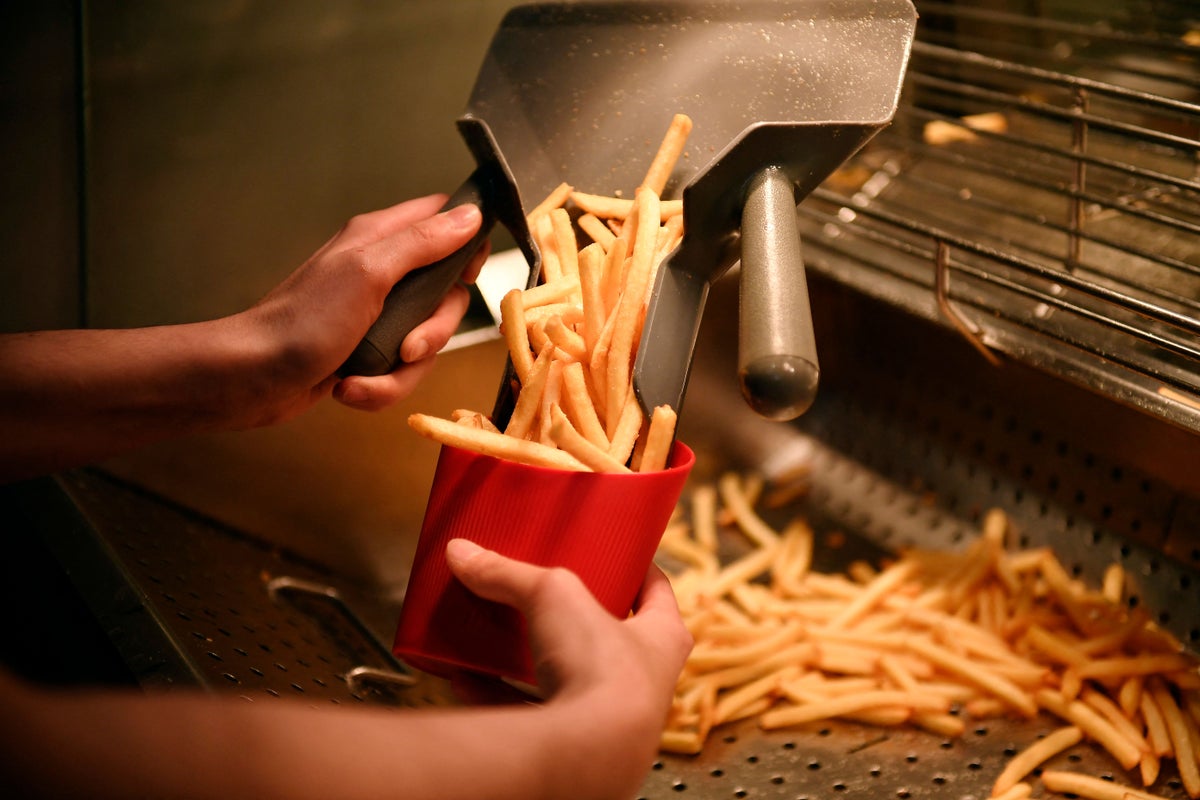
A new study has now revealed that this forbidden food does indeed taste better, with a set of participants ranking stolen French fries as nearly 40 per cent more enjoyable than those served directly to them.
As part of an experiment to investigate if “moral transgression might enhance gustatory pleasure”, 120 participants were each given the same chips to eat on four occasions.
Despite being identical servings, they were acquired in different ways.
open image in gallery The higher the risk, the saltier and crispier the French fries would taste ( Getty )
The participants would either be given their own portion directly, with the second portion gifted by another diner.
On the other two occasions, they would be instructed to take the French fries covertly from another person’s plate while they were distracted, and steal in another higher-risk scenario where a stern-looking stranger was present.
The study, conducted by Valentin Skryabin of the Russian Medical Academy of Continuous Professional Education in Moscow, found that the higher the risk, the tastier the fries were reported to be.
“Across covert-taking trials, guilt was positively associated with enjoyment, as was excitement, though neither independently predicted enjoyment once acquisition context was accounted for,” the study found.
“Our data reveal a social risk gradient: fries taken covertly from stern confederates were rated markedly superior to those obtained legitimately or through generosity, with guilt and self-reported arousal covarying with unauthorised consumption.”
Psychology has indicated that perceived threats which prohibit someone from acquiring an object can often increase desire and enjoyment, and that humans find small acts of transgression exciting.
Economists have also noted the appearance of scarcity and restricted access can make an object more desirable.
While the participants were encouraged to “steal” food, this was undertaken in controlled conditions, which evoked the emotions that accompany a transgression without there being any legal or criminal repercussions.