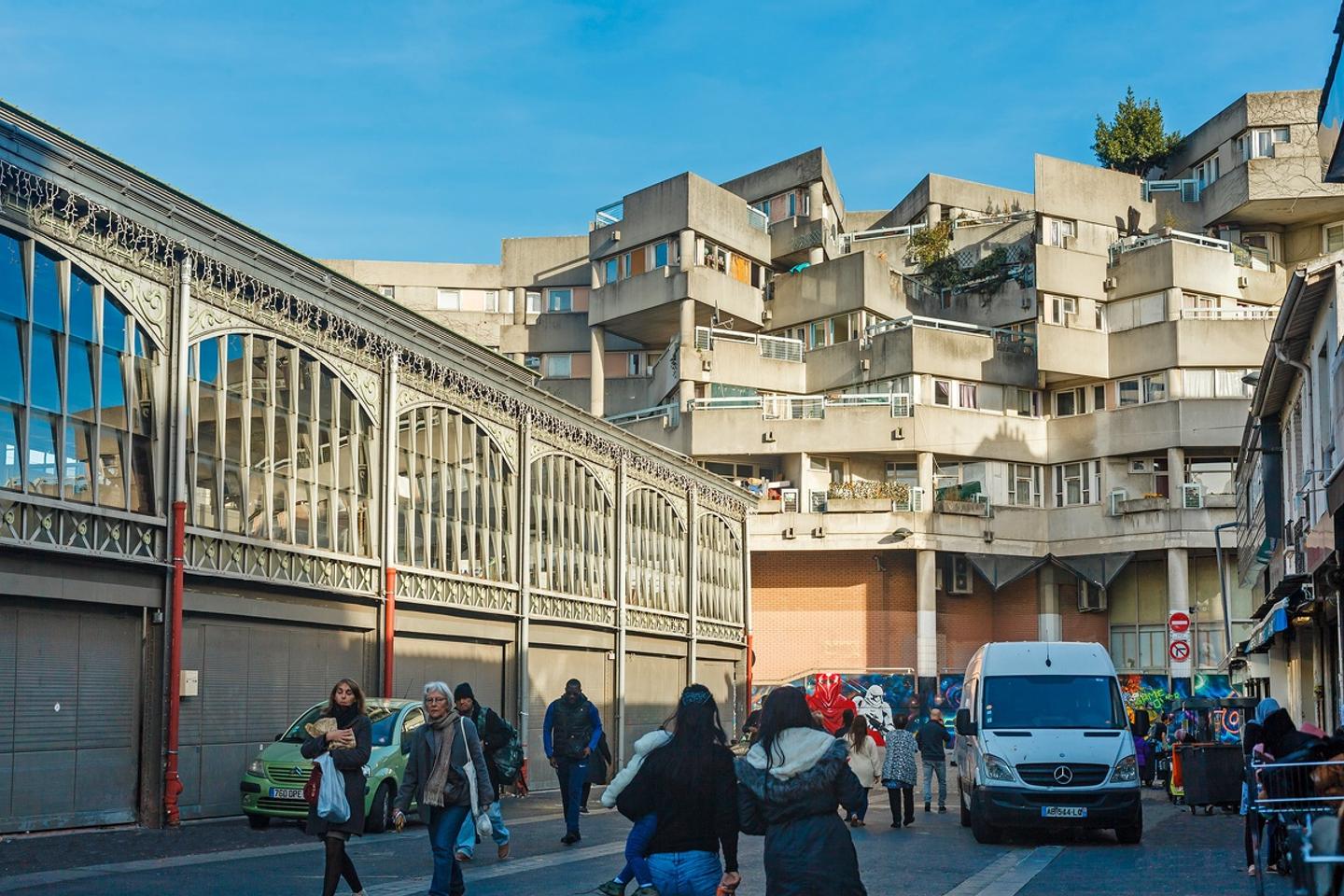
Îlot 8, in the background, seen from the market hall in Saint-Denis (Seine-Saint-Denis department) in May 2020. OLIVIER BOE
Everything seemed peaceful that radiant afternoon at the end of April. In the heart of Saint-Denis's historic center, on the concrete plaza of Îlot 8 housing complex – almost floating above the ground – a young girl skated by, a young man sat in the sun checking his phone, and three Portuguese architecture students looked up at the improbable volumes and terrace-gardens imagined by architect Renée Gailhoustet (1929-2023). Yet beneath this calm lay a decade-long urban struggle, waged by residents and a collective of architects and urban planners determined to save this emblematic complex – a testament to a certain vision of the city and the idea of "the commons." That battle may be nearing a turning point, ever since hard-left La France Insoumise (LFI) candidate Bally Bagayoko became mayor in the March municipal elections.
"Here, no two apartments are alike," said Dalila Ven as she showed her home full of nooks, crannies and terraces that seem to float in the sky. She has lived here since 1986, the year Gailhoustet completed the project, now considered one of her major works. She would never leave. Îlot 8, part of the Saint-Denis planned development zone, built between 1975 and 1986, symbolizes the political and cultural choice made by the Communist-led municipality during the long postwar period: putting working-class people – and thus social housing – at the heart of the city, and offering them innovative architecture and urban planning.
You have 75.24% of this article left to read. The rest is for subscribers only.