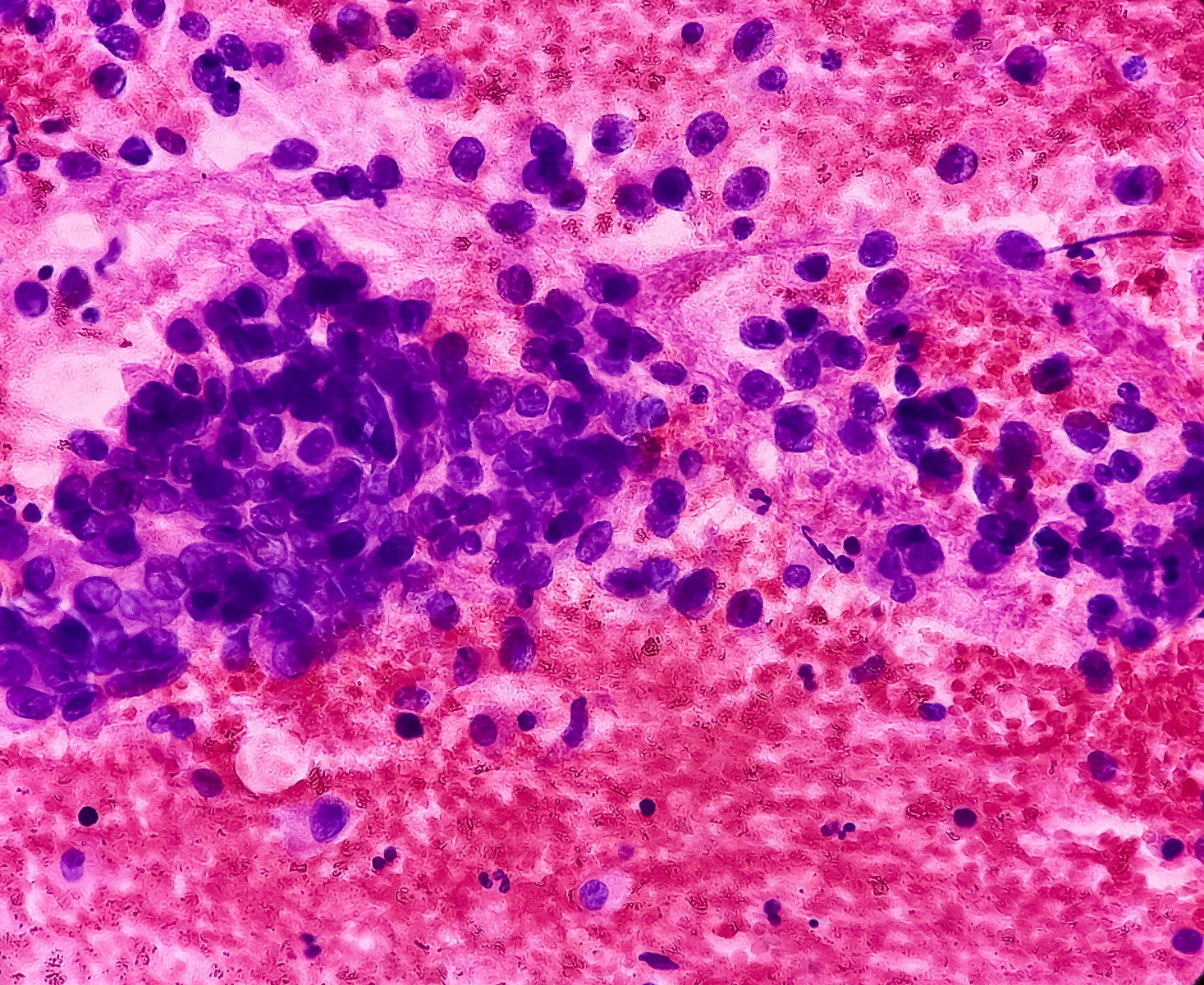
A team lead by scientists from the Universities of Manchester and Liverpool have revealed why a group of cancers common in older adults exposed to environmental damage behaves so differently depending on where they develop in the body.
The research partially answers a quandary puzzling scientists for decades on why squamous cell carcinomas (SCC) in the mouth, lungs, and skin often look similar under the microscope, but vary dramatically in how aggressively they grow and spread. Squamous cell carcinomas are a type of epithelial cancer.
Co-author Dr Amaya Viros from The University of Manchester says the key to the difference lies not in the cancer cells themselves, but in the fibroblasts—supporting cells in the surrounding tissue—that send powerful biochemical signals shaping how the cancer behaves.
The translational study published in Nature Metabolism is funded by Cancer Research UK, the National Institute for Health and Care Research (NIHR) Manchester Biomedical Research Centre (BRC) and The Royal Marsden NHS Foundation Trust and Institute of Cancer Research.
According to the study, fibroblasts from the mouth and lungs have strikingly different patterns of fat metabolism, producing and transferring different types of fats to nearby cancer cells.
The transferred fats act as molecular cues that push SCC cells to become more invasive through a process known as epithelial‑to‑mesenchymal transition, a change that allows cancer cells to move more freely and spread.
In oral cancers, fibroblasts supply cancer cells with sphingomyelins, a type of fat that activates the ceramide/S1P/STAT3 pathway, a chain of molecular events known to drive cancer cell migration and invasion.
In lung cancers, fibroblasts instead transfer another type of fat called triglycerides, which stimulate cholesterol production inside the cancer cells and fuel a highly invasive behaviour associated with poorer patient survival.