Your support helps us to tell the story Read more Support Now From reproductive rights to climate change to Big Tech, The Independent is on the ground when the story is developing. Whether it's investigating the financials of Elon Musk's pro-Trump PAC or producing our latest documentary, 'The A Word', which shines a light on the American women fighting for reproductive rights, we know how important it is to parse out the facts from the messaging. At such a critical moment in US history, we need reporters on the ground. Your donation allows us to keep sending journalists to speak to both sides of the story. The Independent is trusted by Americans across the entire political spectrum. And unlike many other quality news outlets, we choose not to lock Americans out of our reporting and analysis with paywalls. We believe quality journalism should be available to everyone, paid for by those who can afford it. Your support makes all the difference. Read more
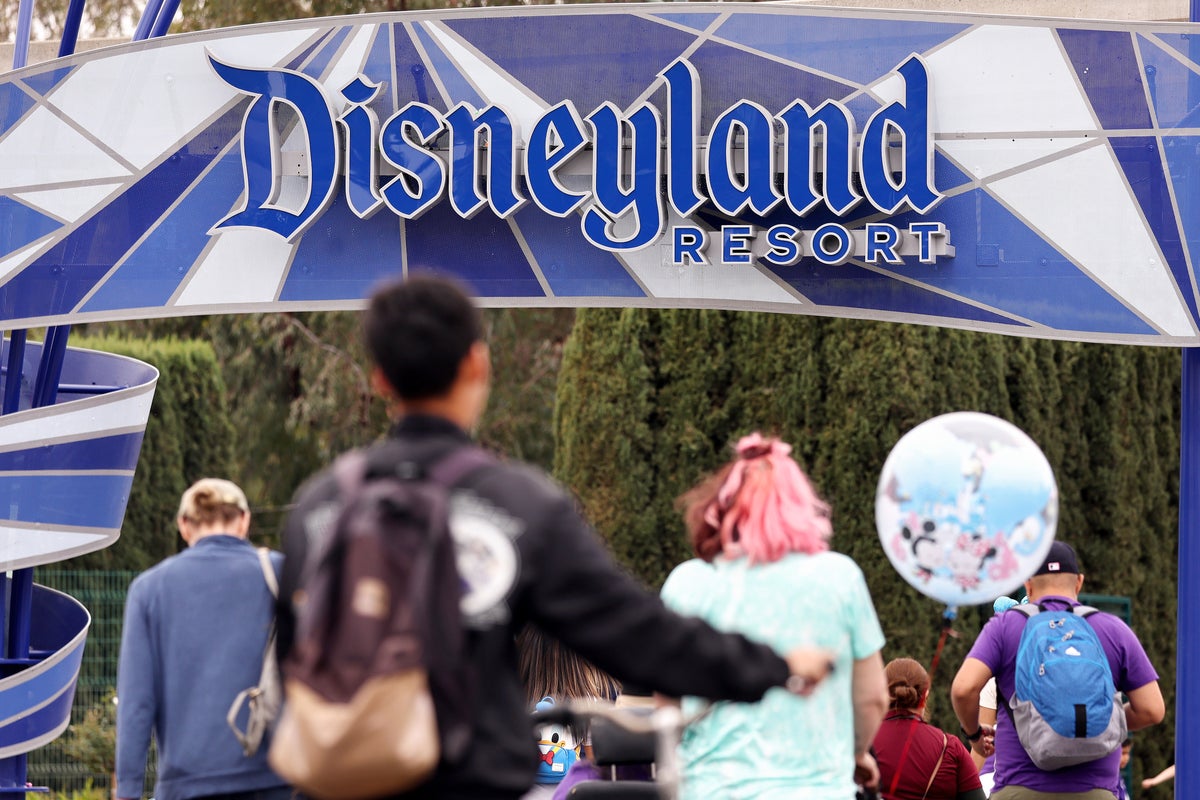
Disney is rolling out facial recognition technology to speed up entry and prevent fraud at its California parks.
Park-goers “may choose to use entrance lanes equipped with facial recognition technology,” where cameras capture a photo and convert it into “unique numerical values” to verify identities, the company said.
The images can be compared with pictures taken when a customer first used the ticket or annual pass. The system deletes the information within 30 days.
Disney says participation is voluntary and that entrances without biometric scanning remain available. Those lanes have cast members manually validate tickets and are marked with a silhouette of a head and shoulders with a slash through it.
The technology is meant to help make entering and re-entering the park easier and prevent fraud, Disney Resort officials told The Independent. Disney said on its website that it takes the “security, integrity and confidentiality” of guest data seriously, but also notes that “despite our best efforts, no security measures are perfect or impenetrable.”
open image in gallery Disneyland and California Adventure are rolling out facial recognition technology at entrances of the parks but guests can opt out, Disney said ( Getty Images )
“The Happiest Place on Earth” has become the latest in the entertainment industry to deploy the technology, following in the steps of many stadiums and arenas, including New York City’s Madison Square Garden.
Disneyland guests had mixed reactions to the recent rollout of the technology.
“Pretty much every other place is doing the same thing,” John LeSchofs, 73, told the Los Angeles Times. “The police, the government, they’re all using facial recognition. I don’t think it’s going to stop.”
Robert Howell, 30, who was visiting the park for the first time from Virginia, told The LA Times he hadn’t heard about the new policy but was worried about how the data would be used.
“It’s a little scary because it’s not clear how it’s going to be used,” Howell said. “With TSA I know that’s an option that you can opt out, but I didn’t realize you could here so I just did it.”
open image in gallery There are entrances at both parks that do not utilize biometric scanning, the company said ( AFP/Getty )
Other guests visiting with their children had concerns about how it might affect them. Sandra Contreras, who has a five-year-old daughter and an infant son, said she felt like she couldn’t opt out.
“When it came to me, I just did it,” she said. “But when they were going to do it for her it freaked me out a little bit, to be honest. I mean I felt like we had to do it, so she did it, but I think it’s more concerning for children just to protect their privacy.”
Facial recognition has been implemented at entertainment venues across the country, including Intuit Dome’s “GameFaceID” and Dodger Stadium’s “Go Ahead Entry,” both of which allow ticket holders to quickly enter the venue.
The technological advancements have sparked concerns among privacy experts.
open image in gallery Disney says the technology will make entering and re-entering the parks easier for guests ( Getty )
“The normalization of facial surveillance is really problematic,” said Ari Waldman, a professor of law at UC Irvine. “We can’t go around life hiding our faces, so this isn’t just next step in surveillance, it’s qualitatively different. In a world of facial recognition, when people leave their house it automatically means they’re identified.”
The American Civil Liberties Union has also raised concerns about facial recognition and other biometric technology being implemented at the 2028 Olympic Games in Los Angeles, according to the report.
Experts also warn that a rise in this technology may cause data breaches.
“If you collect this type of data you have put a target on your back for people to steal it,” said Adam Schwartz, privacy litigation director at the Electronic Frontier Foundation, a nonprofit that advocates against the government's use of facial recognition data.