Your support helps us to tell the story Read more Support Now From reproductive rights to climate change to Big Tech, The Independent is on the ground when the story is developing. Whether it's investigating the financials of Elon Musk's pro-Trump PAC or producing our latest documentary, 'The A Word', which shines a light on the American women fighting for reproductive rights, we know how important it is to parse out the facts from the messaging. At such a critical moment in US history, we need reporters on the ground. Your donation allows us to keep sending journalists to speak to both sides of the story. The Independent is trusted by Americans across the entire political spectrum. And unlike many other quality news outlets, we choose not to lock Americans out of our reporting and analysis with paywalls. We believe quality journalism should be available to everyone, paid for by those who can afford it. Your support makes all the difference. Read more
The U.S. government ratcheted up pressure on Tehran, imposing sanctions on 35 entities and individuals in Iran's shadow banking sector. It also threatened banks doing business with Chinese "teapot" refineries, accused of paying tolls for Strait of Hormuz passage.
The Treasury Department's Office of Foreign Assets Control (OFAC) said designated individuals and firms facilitated the movement of tens of billions of dollars tied to sanctions evasion and Iran's sponsorship of terrorism.
OFAC separately warned banks against doing business with firms paying the Iranian government or Islamic Revolutionary Guard Corps for the strait passage, citing the significant sanctions risk.
It singled out independent Chinese teapot refineries, mainly in Shandong province, given their role in importing and refining Iranian oil. Some had used the U.S. financial system for dollar transactions and to procure U.S. goods.
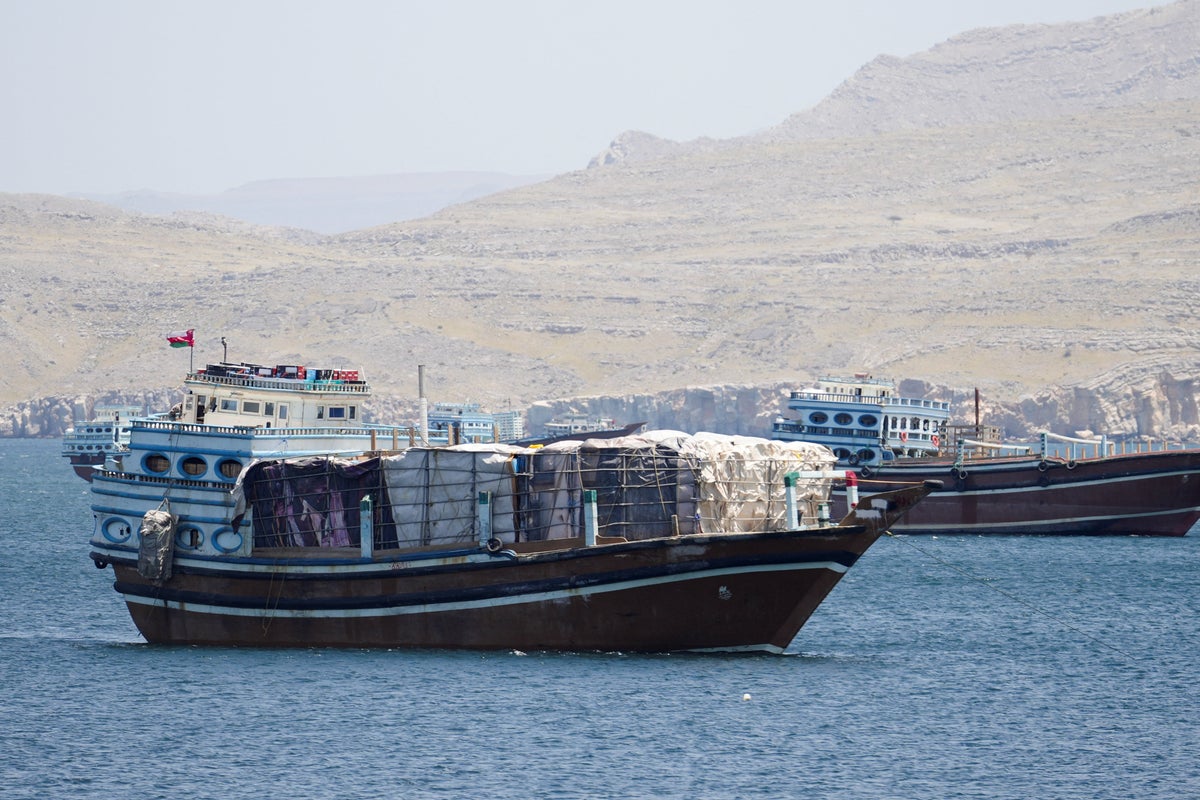
The designations were intended to expose and disrupt the mechanisms used by Tehran to receive payment for oil and other commodities and reduce its revenue, Treasury said ( Asghar Besharati/Getty Images )
China has said it opposes "illegal" unilateral sanctions.
Efforts to end the two-month Iran war remained at an impasse on Tuesday, with U.S. President Donald Trump unhappy at the latest plan from Tehran that proposed setting aside discussion of its nuclear program until the conflict was concluded and shipping disputes were resolved.
Treasury said Tuesday's sanctions targeted individuals and firms that allowed Iran’s armed forces, including the IRGC, to access the international financial system to receive payment for illicit oil sales, purchase sensitive components for missiles and other weapons systems, and transfer money to Iran’s proxies.
“Iran’s shadow banking system serves as a critical financial lifeline for its armed forces, enabling activities that disrupt global trade and fuel violence across the Middle East,” Treasury Secretary Scott Bessent said in a statement.
"Illicit funds funneled through this network support the regime’s ongoing terrorist operations, posing a direct threat to U.S. personnel, regional allies, and the global economy," he said, adding any institution that facilitated or engaged with these networks was at risk of "severe consequences.”
More than 1,000 actions taken
The designations were intended to expose and disrupt the mechanisms used by Tehran to receive payment for oil and other commodities and reduce its revenue, Treasury said.
Since February 2025, OFAC has imposed sanctions on about 1,000 Iran-related individuals, vessels and aircraft as part of a campaign to exert maximum economic pressure against Iran's shadow banking, money laundering and sanctions evasion networks.
Iranian banks cut off from Western financial systems rely on private companies known as rahbars, which manage thousands of shell companies overseas to execute payments for Iranian imports and exports. Those companies then coordinate with other firms to facilitate payments for firms facing sanctions.
The companies hit with sanctions include Farab Soroush Afagh Qeshm Company, which OFAC said works with Iran's Shahr Bank to enable Iranian oil sales, and two of its senior executives.
OFAC also designated several rahbar companies that it said work with Bank Sina, which is controlled by Iran's supreme leader, and the military-affiliated Bank Sepah, which has funded Iran's ballistic missile program, Treasury said.
OFAC designated two companies, Nix Energy and Tai Lung Trading, that Treasury said had been used to transfer millions of dollars on behalf of Iranian individuals that had been sanctioned in the past.
In a separate alert, Treasury underscored that no payments to Iran or the IRGC for safe passage through the strait would be authorized for U.S. persons or institutions, and that foreign financial institutions "risk exposure to sanctions" for engaging in transactions with anyone paying such "tolls."
The Trump administration has already imposed sanctions on five Chinese teapot refineries, including Friday's action against Hengli Petrochemical (Dalian) Refinery, one of Iran's largest customers of crude oil and petroleum products.
The U.S. sanctions, which block U.S. assets of those designated and prevent Americans from doing business with them, have deterred some larger independent refiners from buying Iranian oil. China buys more than 80% of Iran's shipped oil, 2025 data from analytics firm Kpler showed.
Brett Erickson, managing principal at Obsidian Risk Advisors, said the Trump administration should go after Chinese banks that were aiding Tehran more broadly.
“Washington keeps talking about waging a maximum pressure campaign, but it is still avoiding the one move that would actually matter," he said. "If you are not willing to target the Chinese banks propping up the regime in Tehran, you are not going for the jugular, you are running a charade.”