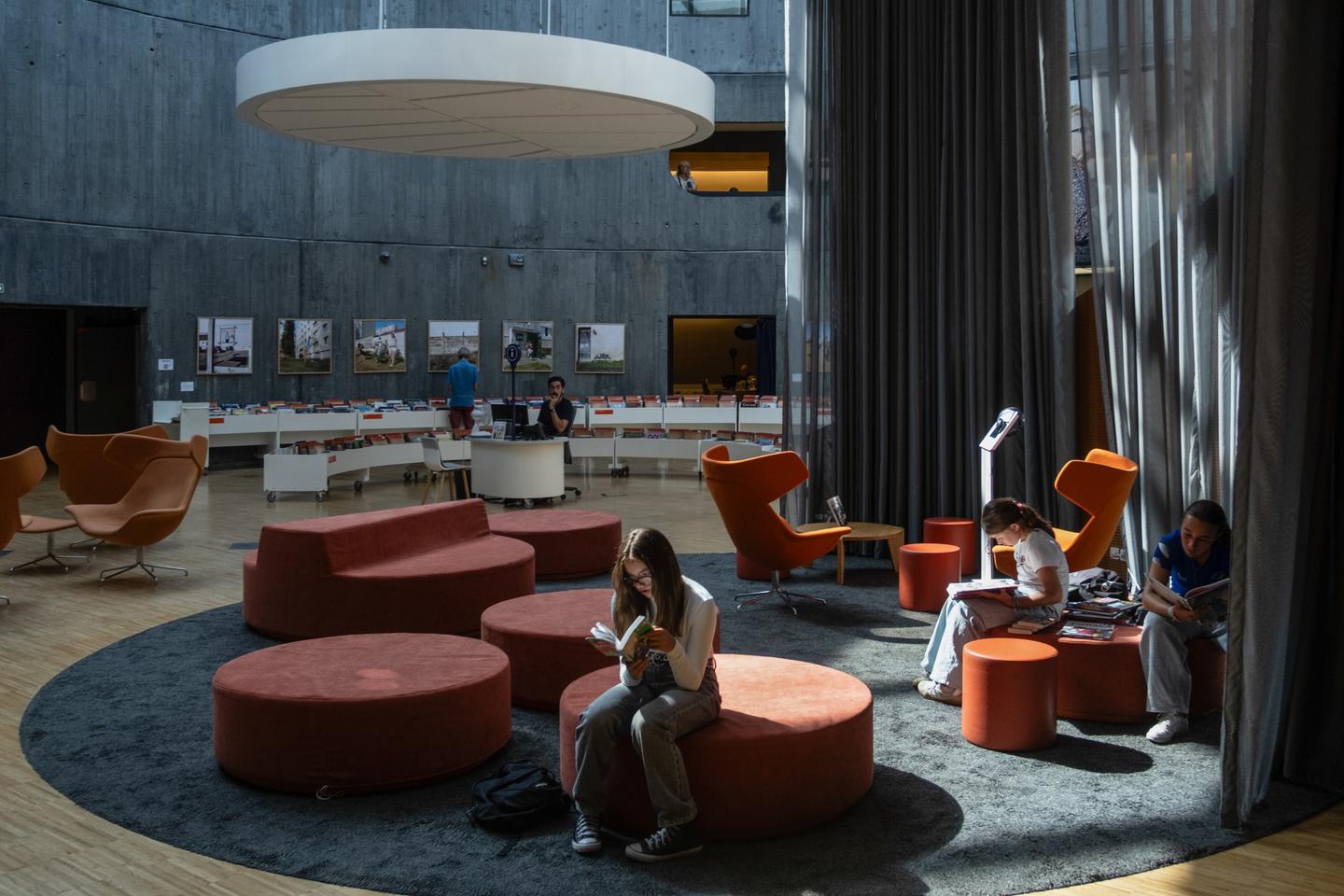
Stepping into a municipal library, such as the one in Montesson, in the western Paris suburb, means leaving the hustle and bustle of the street and entering a haven of calm and silence. Amid a hushed atmosphere, the reading areas feature cozy armchairs and multicolored shelves filled with books of all sizes, for all ages. Montesson's Louis Aragon Library is open to all and free to access, just like the 15,500 other libraries scattered across France. No registration is required to enter.
"To borrow books, DVDs or CDs to take home, you need a library card, which is issued upon presentation of a form of ID and proof of address, for an annual fee of €6.50 for adults," said one of the three librarians on duty on a Saturday in February, adding: "It's free for children, people under 26, job seekers and recipients of the RSA," a minimum wage for unemployed people. She sounded a little stressed, as the crowded library, packed with many adults and their children, gave the staff no respite that day. The 35,000 staff members who keep France's municipal libraries running work hard for their patrons, who can, at times, be demanding, as was evident in Montesson that day. The tension caused by the influx of borrowers was noticeable, and rude remarks could erupt at any time.
Indeed, even in the age of streaming, public libraries, very real spaces dedicated to reading, have seen their visits increase to the point where, in 2025, they exceeded 100 million admissions, not including those who simply drop in. "Attendance has continued to rise in recent years: after a 15% increase in admissions between 2022 and 2023, this trend was confirmed in 2024, and even more so in 2025," said the Culture Ministry.
Read more (from 2022) Subscribers only An emblem of French literary heritage reopens its doors
You have 82.97% of this article left to read. The rest is for subscribers only.