Your support helps us to tell the story Read more Support Now From reproductive rights to climate change to Big Tech, The Independent is on the ground when the story is developing. Whether it's investigating the financials of Elon Musk's pro-Trump PAC or producing our latest documentary, 'The A Word', which shines a light on the American women fighting for reproductive rights, we know how important it is to parse out the facts from the messaging. At such a critical moment in US history, we need reporters on the ground. Your donation allows us to keep sending journalists to speak to both sides of the story. The Independent is trusted by Americans across the entire political spectrum. And unlike many other quality news outlets, we choose not to lock Americans out of our reporting and analysis with paywalls. We believe quality journalism should be available to everyone, paid for by those who can afford it. Your support makes all the difference. Read more
A Ukrainian drone strike sparked a “massive” fire at a Russian oil refinery in Tuapse on Tuesday, as Kyiv stepped up its efforts to target a critical generator of funding for Vladimir Putin’s war chest.
It was the third attack on the Black Sea port facility in less than two weeks as the Ukrainian military sought to disrupt the Russian oil and gas industry, which accounts for a big slice of Moscow’s federal budget.
After the Ukrainian military claimed responsibility for the latest strike, Russia’s president Vladimir Putin said in remarks that were broadcast on Russian television that "drone attacks against civilian infrastructure are becoming more frequent”. “The latest example is the strike against energy facilities in Tuapse,” he added, “which could potentially cause serious environmental consequences.”
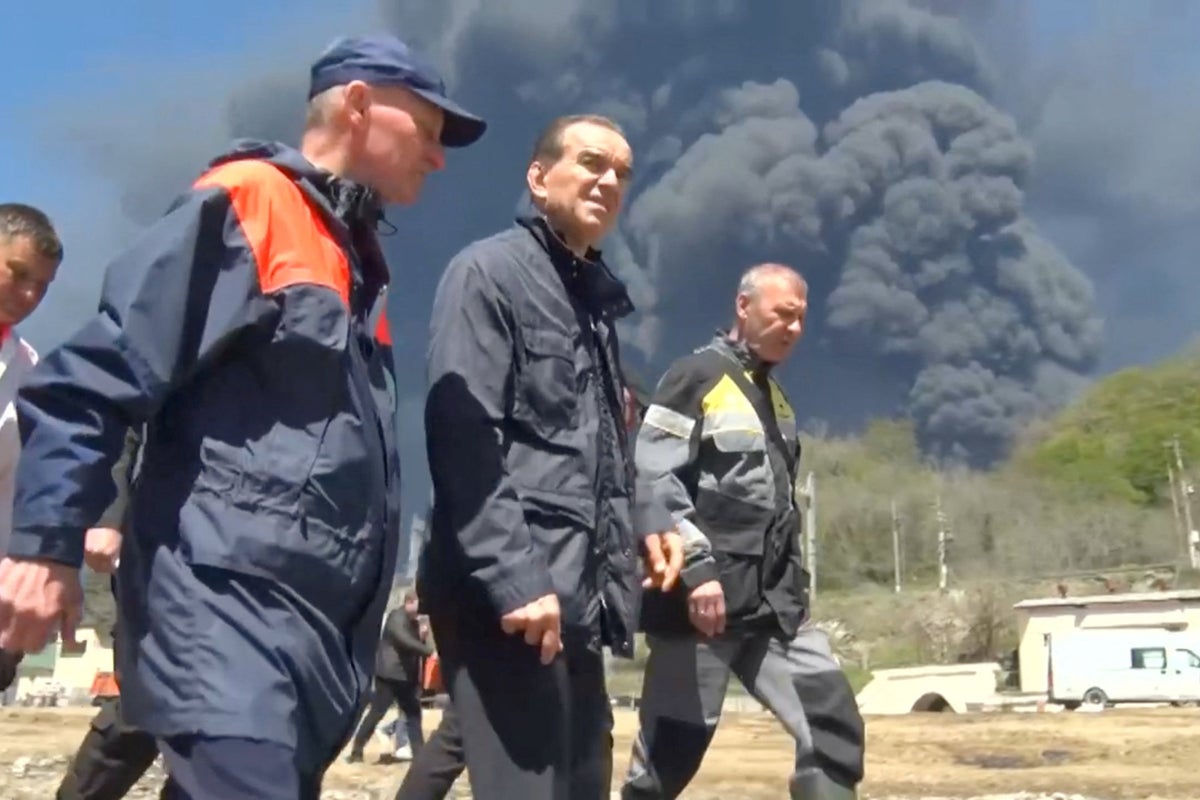
The president dispatched Aleksandr Kurenkov to Tuapse where the emergency situations minister said the situation was "complicated but controllable”.
open image in gallery Heavy smoke rises from at an oil refinery in Tuapse following a Ukrainian drone attack ( Reuters )
Regional governor Veniamin Kondratyev said firefighting teams were working to bring the blaze under control and a 300-member emergency crew would arrive at the refinery on Wednesday.
Citing the governor, Mr Putin had earlier said there was no major threat from the fire. “It seems there are no serious dangers, and people are managing to deal with the challenges they face on the ground,” he said.
open image in gallery Russia president Vladimir Putin chairs a security meeting in Moscow ( Reuters )
The refinery produces about 240,000 barrels of oil products, including naphtha, diesel, fuel oil, and vacuum gasoil, per day.
Satellite images showed massive clouds of black smoke billowing from the facility. One of the drone strikes on the facility also caused an oil spill at sea.
Mr Kurenkov said the flow of oil into the sea had been stopped and booms had been deployed to ensure the spill did not spread.
open image in gallery A satellite image of smoke rising from the Tuapse oil refinery which sells most of its products for export following a Ukrainian drone attacks in Tuapse Krasnodar Krai ( Reuters )
Authorities said the refinery had halted production on 16 April following a previous Ukrainian drone attack, which made it impossible to ship its production.
The multiple strikes on the facility so far have killed at least three people, local officials reported.
After the latest attack on Tuesday, Sergei Boyko, head of the Tuapse district, ordered people living in the area around the refinery to evacuate into a local school.
open image in gallery Smoke rises from an oil refinery after a Ukrainian drone attack in Tuapse ( Reuters )
Continuing Ukrainian attacks have caused anger among local communities who have demanded an explanation as to why Russian authorities haven’t bolstered air defences in the region, according to media reports. Some have even accused Moscow of being indifferent to their plight.
Moscow, meanwhile, accused Kyiv of exacerbating the global oil shortage sparked by the US-Israeli war against Iran by targeting its oil export facilities.
Ukrainian president Volodymyr Zelensky previously claimed that Russian exports weren’t significant enough to affect global market prices, rebuffing calls from Western allies to halt such strikes.