Your support helps us to tell the story Read more Support Now From reproductive rights to climate change to Big Tech, The Independent is on the ground when the story is developing. Whether it's investigating the financials of Elon Musk's pro-Trump PAC or producing our latest documentary, 'The A Word', which shines a light on the American women fighting for reproductive rights, we know how important it is to parse out the facts from the messaging. At such a critical moment in US history, we need reporters on the ground. Your donation allows us to keep sending journalists to speak to both sides of the story. The Independent is trusted by Americans across the entire political spectrum. And unlike many other quality news outlets, we choose not to lock Americans out of our reporting and analysis with paywalls. We believe quality journalism should be available to everyone, paid for by those who can afford it. Your support makes all the difference. Read more
Urban birds like pigeons, sparrows, and magpies are more scared of women than men, but scientists can’t figure out why.
In a recently published study, researchers found that birds were able to identify someone’s gender and will allow men to get an average of one metre closer before taking flight.
The findings, which were consistent across the 37 bird species studied, have been published in the British Ecological Society journal. Scientists now hope to figure out what makes women scarier than men.
Professor Daniel Blumstein, a co-author of the study from the University of California, said: “I fully believe our results, that urban birds react differently based on the sex of the person approaching them, but I can’t explain them right now.”
open image in gallery Birds consistently allowed women to get closer than men ( AFP/Getty )
The study was conducted across Czechia, France, Germany, Poland and Spain, and contained 2,701 observations.
It involved male and female participants, who were matched in height and clothing, walking in a straight line towards birds in urban parks and green spaces. Other birds included great tits, blackbirds, starlings, and woodpeckers.
Overall, women were able to get an average of 8.5 metres away from a bird before it took flight, while men were able to get 7.5 metres closer.
“This is maybe the most interesting part of our study”, said Dr Federico Morelli, a co-author of the study, from the University of Turin. “We have identified a phenomenon, but we really don’t know why. However, what our results do highlight is the birds’ sophisticated ability to evaluate their environment.”
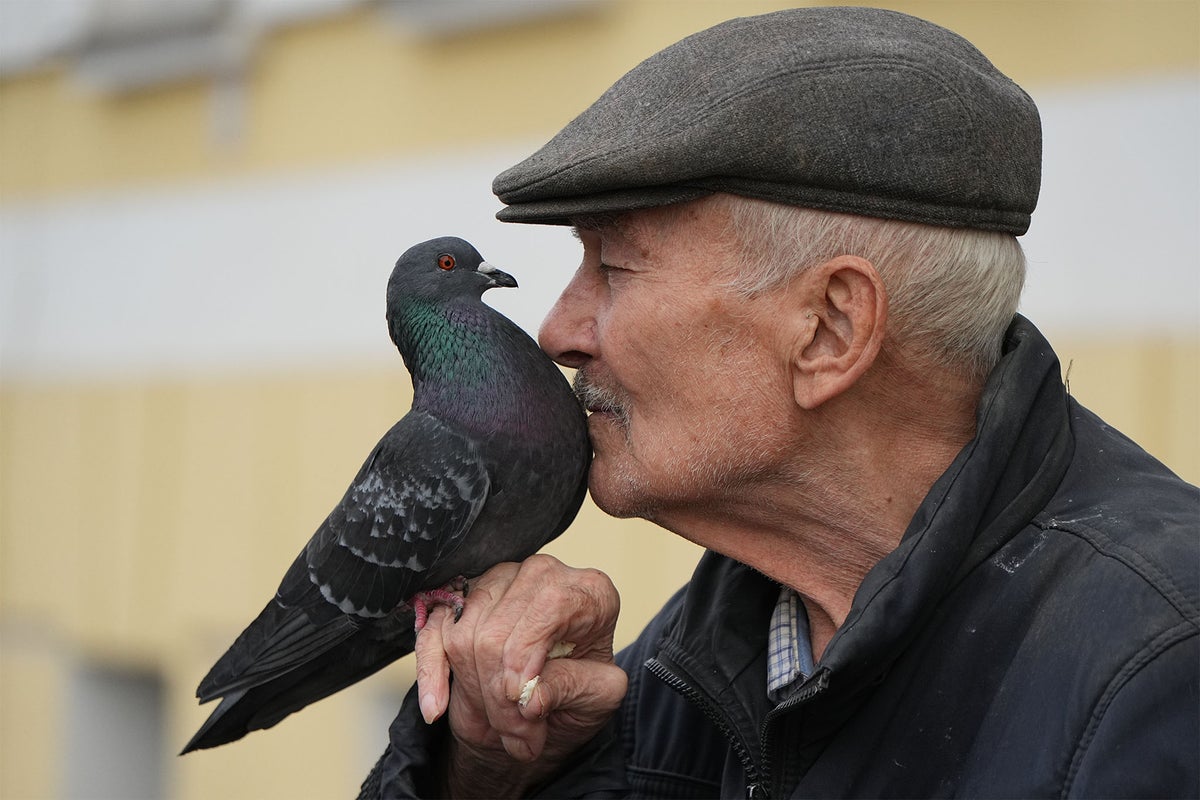
open image in gallery The study found that birds were able to differentiate between a man and a woman ( AFP/Getty )
The scientists found that urban birds were able to recognise the sex of the humans approaching them, but it is unclear what traits the birds were identifying.
They have speculated that they could be detecting people’s pheromones, body shape or gait, but say more research is needed.
Dr Yanina Benedetti, who also co-authored the study, said: “As a woman in the field, I was surprised that birds reacted to us differently. This study highlights how animals in cities ‘see’ humans, which has implications for urban ecology and equality in science. Many behavioural studies assume that a human observer is neutral, but this wasn’t the case for urban birds in our study.
“Urban birds clearly react to subtle cues that humans do not easily notice. Follow-up studies could focus on individual factors such as movement patterns, scent cues, or physical traits, testing them separately rather than grouping them under observer sex. This approach would help identify the specific cues birds detect.”