Your support helps us to tell the story Read more Support Now From reproductive rights to climate change to Big Tech, The Independent is on the ground when the story is developing. Whether it's investigating the financials of Elon Musk's pro-Trump PAC or producing our latest documentary, 'The A Word', which shines a light on the American women fighting for reproductive rights, we know how important it is to parse out the facts from the messaging. At such a critical moment in US history, we need reporters on the ground. Your donation allows us to keep sending journalists to speak to both sides of the story. The Independent is trusted by Americans across the entire political spectrum. And unlike many other quality news outlets, we choose not to lock Americans out of our reporting and analysis with paywalls. We believe quality journalism should be available to everyone, paid for by those who can afford it. Your support makes all the difference. Read more
Ryanair’s chief executive has warned that some European airlines could go out of business if spiralling jet fuel prices remain high throughout the summer.
Prices have surged dramatically since the war in Iran began on 28 February after the Strait of Hormuz, which, before the war, carried a fifth of the world's oil and gas, was blockaded by Tehran, leading to the worst fuel crisis for decades.
The price of a barrel of Brent crude oil to be delivered in June fell 0.5 per cent to $110.71 early on Wednesday, but it remains considerably more expensive than before the war began, when it cost around $70 per barrel. That rise has meant the price of jet fuel has risen nearly 84 per cent since the start of the conflict.
United Airlines and Lufthansa this week became the latest airlines forced to mull raising fares and scrapping flights as a consequence of that rise.
open image in gallery Ryanair chief executive Michael O'Leary called for the Strait of Hormuz to be reopened as soon as possible ( AFP/Getty )
Michael O’Leary, who has been Ryanair’s chief executive since 1998, believes the summer could present several challenges to its competitors if prices remain where they are.
Speaking to CNBC, Michael O’Leary said: “If pricing stays higher for longer this summer, we think a number of our airline competitors in Europe are going to face real financial difficulties.”
“I think there will be failures”, he added. “If it continues at $150 a barrel into July, August, September, then you’ll see European airlines fail and that, in the medium term, would probably be good for Ryanair’s business.”
Earlier this month, Mr O’Leary warned that fuel supplies could be disrupted by the war, amid fears of a shortage affecting the peak holiday season.
Willie Walsh, head of the International Air Transport Association, told Reuters on Tuesday that airlines could face shortages if the war does not end soon.
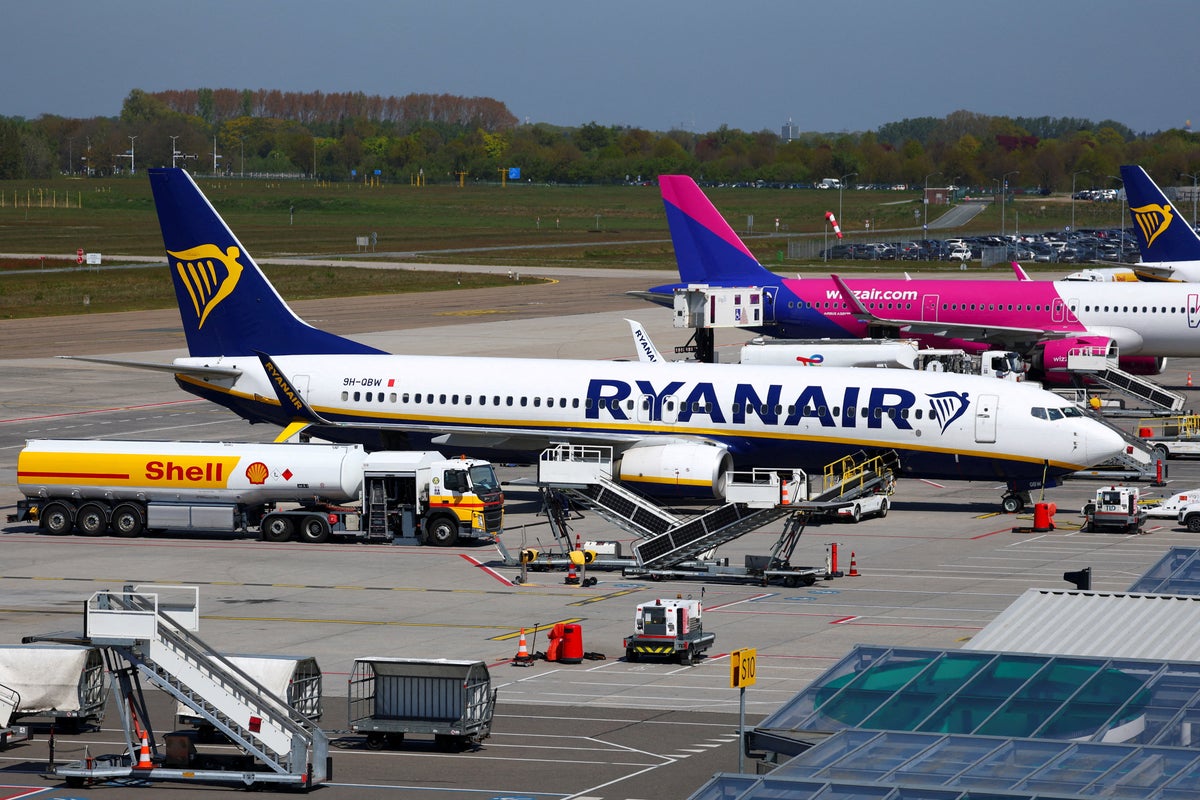
open image in gallery A Shell tanker truck refuels a Ryanair aircraft at Eindhoven Airport, Netherlands ( Reuters )
“There is a risk that we'll see rationing of fuel supply, particularly in Asia and Europe," Mr Walsh said.
He added, however, that the situation was not yet as bad as the disruption caused by the Covid pandemic in 2020, which led to travel demand plummeting and hundreds of billions of dollars in losses for the aviation sector.
To avoid such a situation, Mr O’Leary called for the Strait of Hormuz to be reopened as soon as possible, but said his airline will not increase prices even if supplies are affected.
He said: “We are the best insulated, most hedged airline in Europe.”
“We can guarantee people there’ll be no price increases, no fuel hedging, no fuel surge levy surcharges, regardless of what happens to summer supply,” he said.