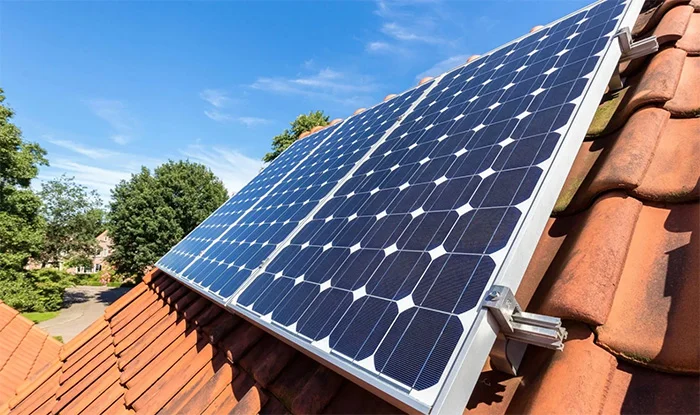
Rooftop solar power in Sri Lanka has reached a critical turning point as the country responds to the combined pressures of the economic crisis, rising electricity tariffs and national climate commitments. What was once considered an optional investment for affluent households is increasingly becoming a practical solution for ordinary consumers, businesses and industries seeking lower energy costs and greater independence from the national grid.
A former General Manager of the Ceylon Electricity Board observed that repeated tariff increases by the CEB and LECO have significantly accelerated public interest in rooftop solar systems.
According to him, many consumers now view solar power not as a luxury, but as a safeguard against future electricity price hikes and supply uncertainties.
The 2022 fuel shortage and prolonged power cuts further changed public attitudes toward electricity generation. Thousands of Sri Lankans began to recognise the value of producing power at home, while companies and hotels turned to large-scale rooftop solar systems to reduce overheads and improve their environmental image.
Sri Lanka currently supports rooftop solar through several policy mechanisms. Under net metering, surplus electricity generated by a household or business is exported to the grid in exchange for credits on the monthly bill. Net accounting allows credits to be carried forward, while the net plus scheme enables users to sell all electricity generated to the national grid at an approved tariff. These schemes have played an important role in encouraging private investment in renewable energy.
However, the sector still faces major constraints. The initial installation cost remains high for many middle-income families despite the long-term financial benefits. In addition, parts of Sri Lanka’s electricity distribution network are outdated, and transformers in certain areas cannot absorb large volumes of surplus solar energy. Lengthy approval procedures and delays in finalising agreements with utility providers have also discouraged prospective users.
Looking ahead, rooftop solar is expected to become a key pillar of Sri Lanka’s plan to generate 70 percent of its electricity from renewable sources by 2030. Energy experts believe the next stage of development will involve hybrid systems that combine solar panels with battery storage. As lithium-ion battery prices continue to fall globally, more households and businesses are likely to store daytime solar energy for use at night or during power interruptions.
Commercial users are also expected to adopt battery systems to reduce peak-hour electricity consumption and lower operating costs. At the same time, banks may expand green financing schemes to make solar systems more affordable, while private companies could introduce power purchase agreement models that allow consumers to install systems with little or no upfront investment.
The future of rooftop solar will also depend on the emergence of smarter electricity networks. Digital meters and real-time monitoring systems could improve efficiency, while peer-to-peer energy trading may eventually allow households with excess electricity to sell directly to nearby consumers.
The former CEB General Manager said Sri Lanka now has a rare opportunity to transform its energy sector through distributed generation.
He stressed that if administrative procedures are simplified and the national grid is modernised, rooftop solar could become the main source of electricity for millions of Sri Lankans rather than a limited alternative for a few.
By Ifham Nizam