Your support helps us to tell the story Read more Support Now From reproductive rights to climate change to Big Tech, The Independent is on the ground when the story is developing. Whether it's investigating the financials of Elon Musk's pro-Trump PAC or producing our latest documentary, 'The A Word', which shines a light on the American women fighting for reproductive rights, we know how important it is to parse out the facts from the messaging. At such a critical moment in US history, we need reporters on the ground. Your donation allows us to keep sending journalists to speak to both sides of the story. The Independent is trusted by Americans across the entire political spectrum. And unlike many other quality news outlets, we choose not to lock Americans out of our reporting and analysis with paywalls. We believe quality journalism should be available to everyone, paid for by those who can afford it. Your support makes all the difference. Read more
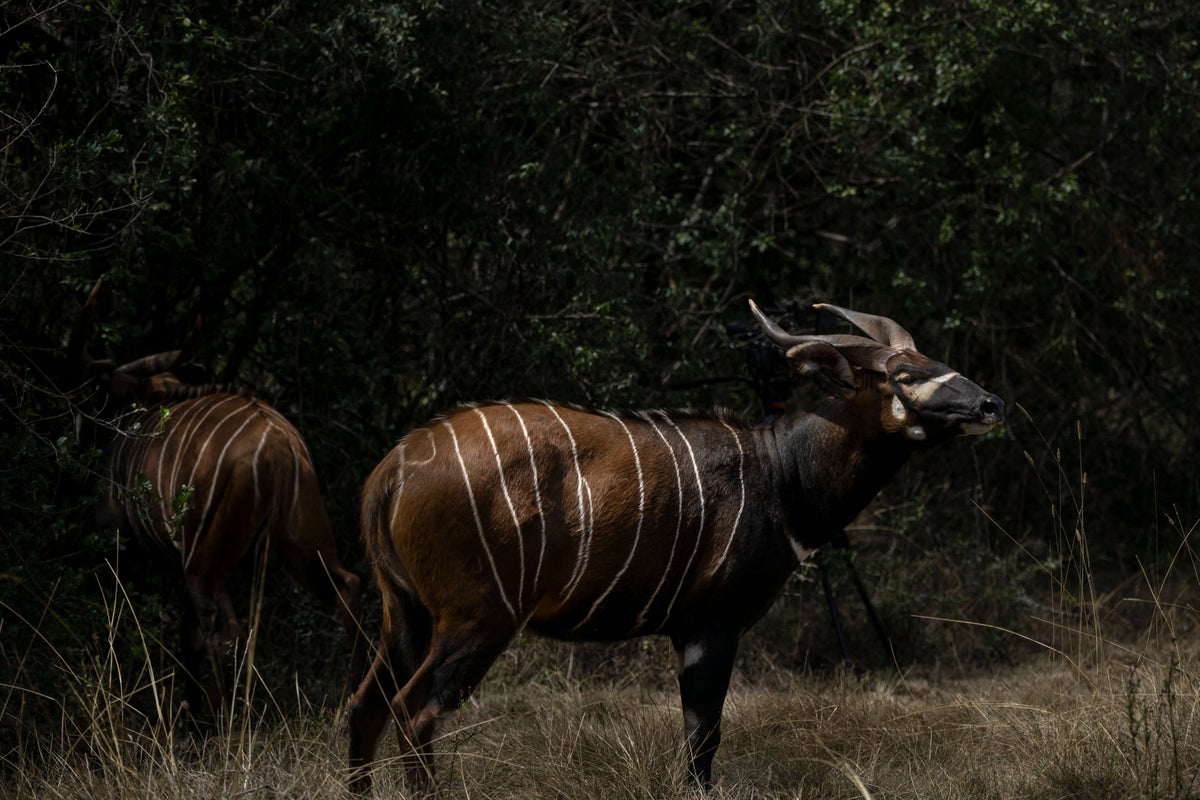
Four critically endangered mountain bongos have returned to their native Kenya after years under the care of a zoo in the Czech Republic, marking a significant boost for conservation efforts.
The rare antelopes, distinctive for their striking stripes, are classified as critically endangered due to poaching and widespread diseases.
The Kenyan government estimates fewer than 100 mountain bongos remain in the wild.
Many were originally sent to Europe in the 1980s following a devastating rinderpest outbreak that decimated thousands.
The four animals arrived from Dvur Kralove Zoo, transported in wooden crates aboard a KLM cargo flight to Kenya’s main airport.
They were met by Prime Cabinet Secretary Musalia Mudavadi and Tourism Minister Rebecca Miano, who hailed the event as a “homecoming of the majestic bongos”.
open image in gallery A rare mountain bongo leaps from a shipping crate after traveling from the United States to the slopes of Kenya in 2004 ( AP )
This marks the third such return in recent years, with the last one being in February 2025.
Following a period of quarantine and acclimatisation, the bongos will be transferred to the Mount Kenya Wildlife Conservancy, which currently houses 102 bongos, before their eventual release into the wild.
The conservancy, in collaboration with the government, operates a National Recovery and Action Plan for the Mountain Bongo, intending to use these new arrivals to interbreed and strengthen the existing gene pool.
Kenyan-raised nature explorers and filmmakers Jahawi and Elke Bertolli said that the new bongos will bring genetic variation that is critical for their conservation.
open image in gallery Kenya Wildlife Service personnel walk past four mountain bongos, a type of antelope, repatriated from the Czech Republic, upon arrival at Jomo Kenyatta International Airport in Nairobi ( AP )
They added that the species plays a key role in protecting the forests that are vital to Kenya’s water supply.
Czech Republic Ambassador Nicol Adamcova said the relocation reflects a long-standing partnership between the Czech Republic and Kenya in conservation and a shared commitment to protecting endangered species.
Mr Mudavadi said such milestones show what can be achieved when policy, science, and collaboration come together in pursuit of a shared conservation goal.
“I commend all stakeholders involved and assure you of Government’s unwavering support in strengthening conservation frameworks and ensuring that Kenya’s biodiversity continues to thrive,” he said.
Ms Miano said that bringing in genetically diverse bongos is a critical step to strengthen the species' breeding resilience.