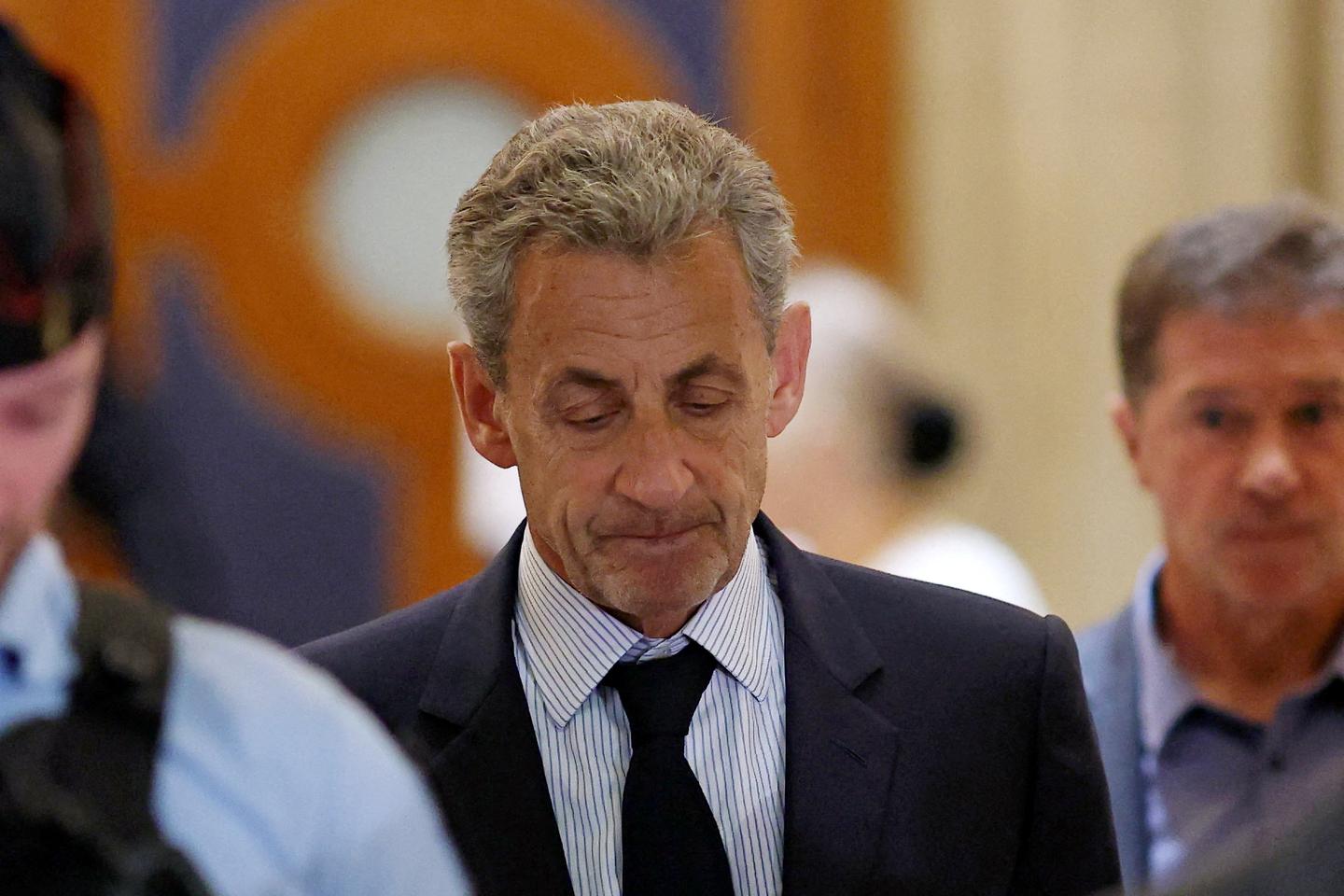
Nicolas Sarkozy at a Paris appeals court, on April 29, 2026. GONZALO FUENTES/REUTERS
It was a shrewd move. Nicolas Sarkozy was expecting a grueling day at the Paris appeals court after Claude Guéant, his former closest associate, levied detailed accusations at him in written statements. Instead, on Wednesday, April 29, he launched a vigorous counterattack, opening up a new line of defense: His lawyers produced a flood of figures aiming to show that, of the €6 million the Libyans had sent, half had not ever been meant to fund his 2007 presidential election campaign and ended up back in Libyan hands. While, at this stage, it is difficult to evaluate how accurate the rapidly presented calculations were, their impact on the trial was undeniable, as the court's attention inevitably shifted away from the thorny issues Guéant had raised.
The case continued to revolve around Abdallah Senoussi, Gaddafi's brother-in-law and head of the Libyan military intelligence service. Senoussi orchestrated several terrorist attacks, including the 1989 bombing of UTA flight 772 (which killed 170 people, including 142 French nationals). He was tried in France 10 years later, in absentia, and sentenced to life imprisonment. After that, Gaddafi spent years demanding that the international arrest warrant that was preventing his brother-in-law from leaving Libya be lifted. According to the prosecution, in exchange for this favor, Gaddafi would have happily funded Sarkozy's candidacy.
You have 81.62% of this article left to read. The rest is for subscribers only.