Windermere 'heating up' with 1.5C rise in 80 years
46 minutes ago
Share
Save
Add as preferred on Google
Samantha Jagger
North East and Cumbria
Paul Adams Photography
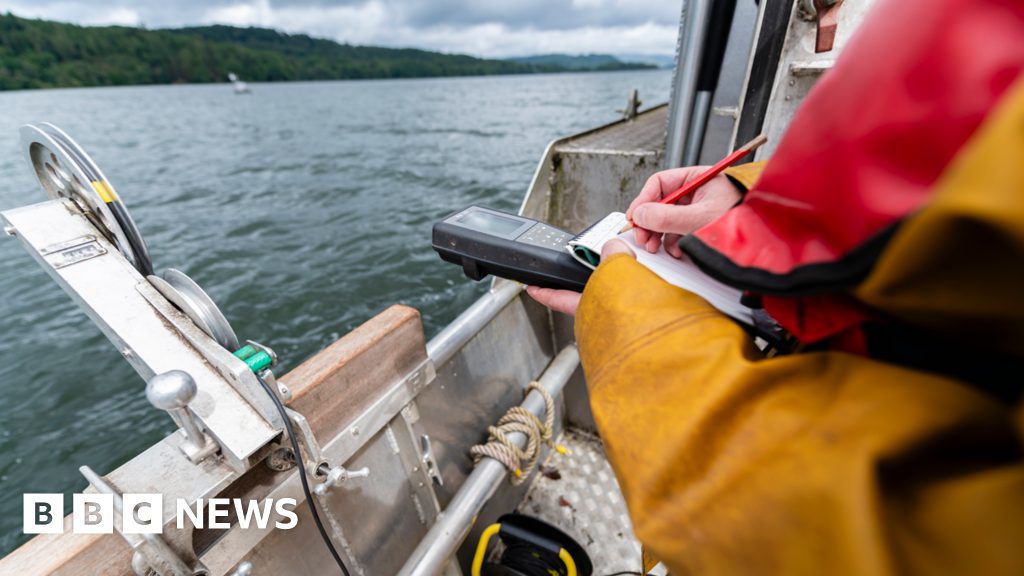
Windermere's temperatures have been monitored since 1947, but that is not the case for many UK lakes
The temperature of England's largest lake has risen by 1.5C in under 80 years according to ecologists, who have warned of a continued threat due to climate change, pollution and invasive non-native species.
The UK Centre for Ecology and Hydrology (UKCEH) said it had continually tracked the surface temperature of Windermere since 1947 and found the rise has been progressive rather than a series of occasional spikes.
Researchers also recorded lower oxygen concentrations at depth and said recent rapid growth of algae risked killing fish and other aquatic life.
UKCEH said research across all UK lakes was now essential to fill a "real gap in our ability to assess changes at the national scale".
"We're seeing the clearest signals yet that the Cumbrian lakes are heating up," Dr Stephen Thackeray said.
"2025 wasn't just an unusually warm year; it's part of a long-term shift that requires our attention and action."
Thackeray said there was evidence to suggest lakes across the UK "have, on average, been warming in recent decades", but there was a need for a single, coordinated, nationwide temperature dataset to get a truly accurate picture.
Paul Adams Photography
Windermere has a north and south basin, both of which are tracked by UKCEH
In recent years, Windermere's normally clear water has been
turning green
due to algal blooming, particularly during the summer with heat being one of the main drivers.
Thackeray said "climate, human activity, land use and species populations have all changed".
Windermere, he said, was seeing conditions that "favour algal blooms more often", including higher water temperatures, longer dry spells and intense rainfall washing nutrients into lakes.
"At the same time, changes in water chemistry can release historic pollution from sediments, adding to the problem.
"As the climate warms algal blooms are becoming more frequent, but it's not just an environmental issue - blooms can have real economic impacts.
"They can affect how safe and appealing lakes are for swimming, boating and tourism, which many local businesses rely on."
Jonathan London
Jonathan London operates a water sports company from Fell Foot by Windermere
Jonathan London, director of Stoked Watersports in Fell Foot, said people "weren't put off going into the water in warmer weather" but added it was a "complicated issue".
"In all our time operating, which has included 19,000 bookings, we've never had a report of sickness due to water quality from staff or customers."
London said he was pleased United Utilities and the Environment Agency recently took "proactive steps to address some concerns" by installing
two monitoring buoys
in the lake to gather information on data such as water temperature.
However he said he had seen green-blue algae blooms in recent years, which "tended to be localised to stagnant water by the shoreline".
"The worst I've ever seen it was in November 2024... a surprise given that most understand it to be a summer warmer water issue."
Jonathan London
Algal blooms appear to have increased in Windermere over recent years
Laura Lee, general manager of South Lakes National Trust, said the economy around the lake feels "like an ecosystem of its own", and for "small micro-businesses it feels fragile like the ecology".
She said the "biggest real impact on tourism around climate change was how it is reported and the impact this has on behaviour".
Lee said there had been perceptions "of a lake filled with sewage which is far from the truth".
She said that while the changing climate means lake temperature rises may increase sightings of blooms, there was improved reporting of conditions through apps and websites.
The National Trust said it wanted visitors to have a "real understanding of the changing lake" but also to feel empowered to play their own role in making a difference.
Follow BBC Cumbria on
X
,
Facebook
,
Nextdoor
and
Instagram
.
More on this story
England's largest lake to be monitored non-stop
Tourist influx turns Windermere green - report
Related internet links
UKCEH
Love Windermere
National Trust
Blue-green algae
Windermere
Cumbria
Windermere heating up with 1.5C rise in 80 years research shows