Your support helps us to tell the story Read more Support Now From reproductive rights to climate change to Big Tech, The Independent is on the ground when the story is developing. Whether it's investigating the financials of Elon Musk's pro-Trump PAC or producing our latest documentary, 'The A Word', which shines a light on the American women fighting for reproductive rights, we know how important it is to parse out the facts from the messaging. At such a critical moment in US history, we need reporters on the ground. Your donation allows us to keep sending journalists to speak to both sides of the story. The Independent is trusted by Americans across the entire political spectrum. And unlike many other quality news outlets, we choose not to lock Americans out of our reporting and analysis with paywalls. We believe quality journalism should be available to everyone, paid for by those who can afford it. Your support makes all the difference. Read more
The terror threat level for the UK has been raised from ‘substantial’ to ‘severe’ for the first time in over four years following the stabbing of two Jewish men in north London’s Golders Green on Wednesday.
The public should be “alert and vigilant” but not “alarmed”, security minister Dan Jarvis has said, adding that the decision to raise the level was “not solely as a result of that attack”.
Instead, it is in response to “an increase in broader Islamist and extreme right-wing threats”, he said. The stabbings, which were declared a terror incident by the Metropolitan Police, are the latest case of violence targeted towards the UK’s Jewish community.
Mr Jarvis said added that public should be reassured that the the police, intelligence services and government are “working round the clock to keep the public safe”.
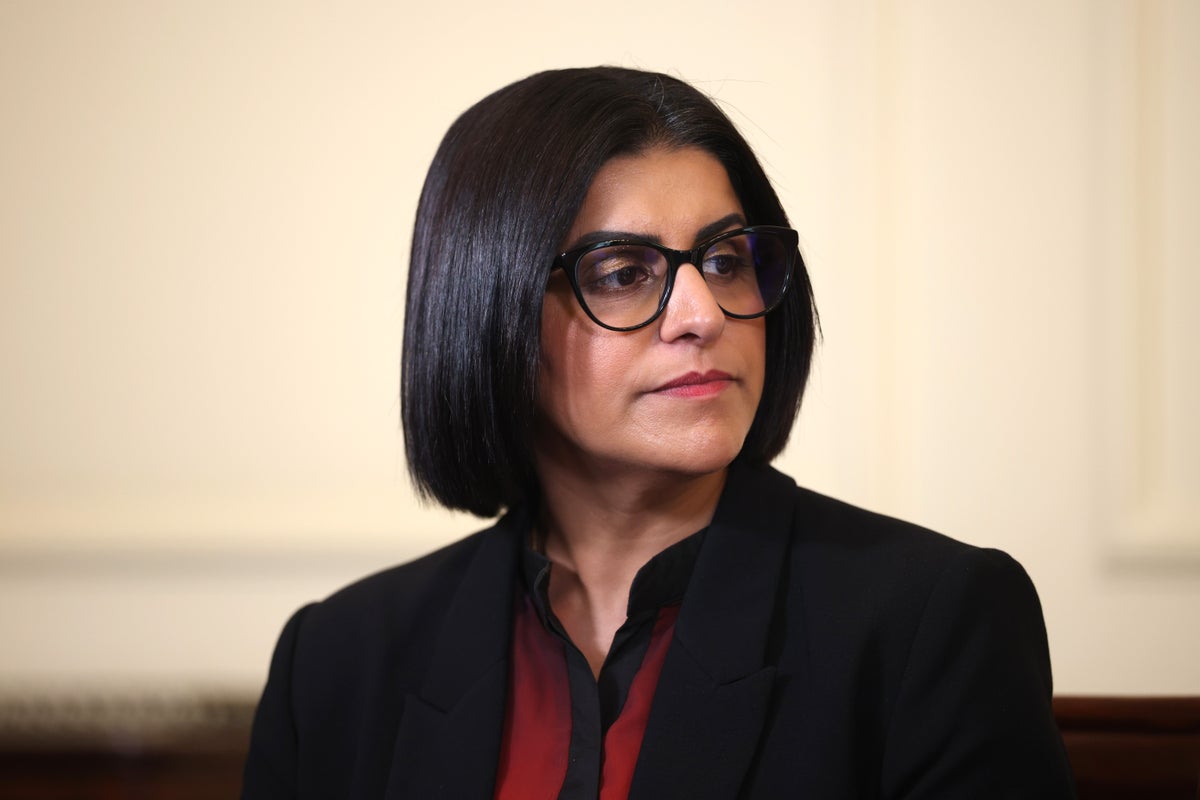
open image in gallery Home secretary, Shabana Mahmood, said: “Today, the national threat level has increased to ‘severe’, which means a terrorist attack is considered highly likely.” ( Getty )
Essa Suleiman, 45, is due to appear at Westminster Magistrates’ Court after being charged with attempted murder over Wednesday’s incident were announced on Friday.
The victims, Shloime Rand, 34, and Moshe Ben Baila, 76, were taken to hospital with knife wounds on Wednesday morning.
For the latest updates on this story, follow The Independent’s live blog
Home secretary, Shabana Mahmood, said: “Today, the national threat level has increased to “severe”, which means a terrorist attack is considered highly likely.
“I know this will be a source of concern to many, particularly amongst our Jewish community, who have suffered so much.
“As the threat level rises, I urge everyone to be vigilant as they go about their daily lives, and report any concerns they have to the police.”
Here’s everything you need to know about the new terror threat level:
What does the severe rating mean?
A severe level means that authorities believe an attack in the UK is “highly likely”.
How many levels are there?
Severe is the second highest out of five, behind critical, which means an attack is expected imminently. The other three levels are substantial (an attack is a strong possibility), moderate (an attack is possible but not likely), and low (an attack is unlikely).
Who decides the threat level?
A body called the Joint Terrorism Analysis Centre (JTAC), which was established in June 2003 and is based at MI5’s London headquarters.
The JTAC is comprised of representatives from 16 Government departments and agencies.
How is a judgment reached on the threat level?
A number of factors may be taken into account, including available intelligence, terrorist capability and terrorist intentions.
open image in gallery Sarah Sackman, Labour Finchley and Golders Green MP and courts minister stands next to Metropolitan Police Commissioner Sir Mark Rowley ( Getty )
How has the threat changed over the years?
The level was first made public in 2006. Since then, it has most often been at the severe level, and not been lower than substantial.
The critical level has been in place four times over the 20-year period: in August 2006, following a plot to detonate explosives on transatlantic flights; June 2007 over an attempted car bomb attack at Glasgow Airport; and in May and September 2017 after the Manchester Arena bombing and the Parsons Green District line attack respectively.
The UK’s rating was downgraded to severe a few days after the Parsons Green incident and remained there until it was lowered to substantial in November 2019.
The last time the level was raised to severe was in November 2021 after two attacks in the space of a month, with a car explosion outside a Liverpool hospital on Remembrance Sunday and the murder of Conservative MP for Southend West Sir David Amess in October.
It was downgraded back to substantial in February 2022, where it has remained since.
How long does a threat level remain in place?
It depends on how high it gets. The threat level has only stayed at critical on each occasion for a matter of days and is usually downgraded once authorities have arrested suspects or are confident there is no immediate risk of another attack.
The JTAC reviews the terror level every six months but does not always raise it following attacks. It considered increasing the level to severe just weeks after the downgrading in November 2019 after the London Bridge Fishmongers’ Hall attack but kept it at substantial.