Your support helps us to tell the story Read more Support Now From reproductive rights to climate change to Big Tech, The Independent is on the ground when the story is developing. Whether it's investigating the financials of Elon Musk's pro-Trump PAC or producing our latest documentary, 'The A Word', which shines a light on the American women fighting for reproductive rights, we know how important it is to parse out the facts from the messaging. At such a critical moment in US history, we need reporters on the ground. Your donation allows us to keep sending journalists to speak to both sides of the story. The Independent is trusted by Americans across the entire political spectrum. And unlike many other quality news outlets, we choose not to lock Americans out of our reporting and analysis with paywalls. We believe quality journalism should be available to everyone, paid for by those who can afford it. Your support makes all the difference. Read more
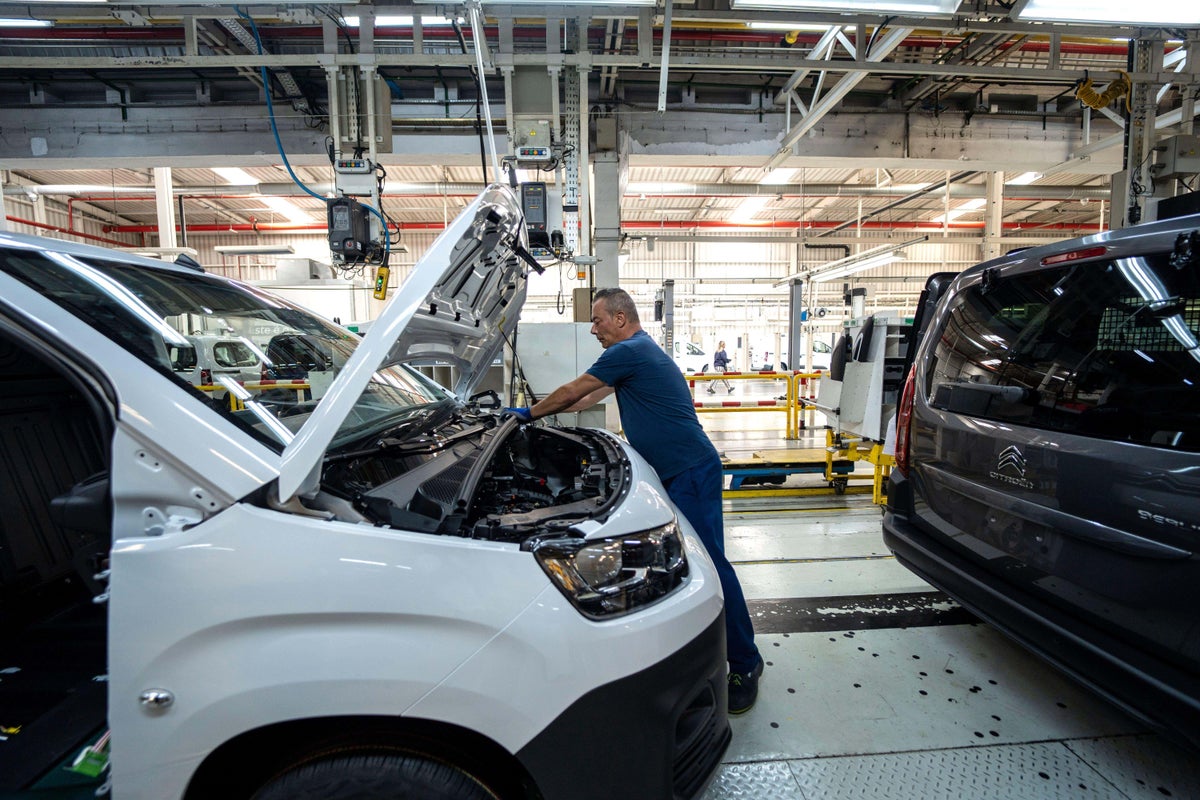
Activity in the UK’s manufacturing sector lifted to its highest level for almost four years despite pressure from the Middle East conflict, according to new figures.
Firms reported worsening delivery delays and heightened cost pressures as disruption from the war between US-Israeli and Iranian forces continues to have an impact on the global economy.
Nevertheless, the S&P Global UK manufacturing PMI survey, watched closely by economists, showed a reading of 53.7 in April, up from 51 in March.
It marked the highest reading since May 2022.
Any reading above 50 indicates that activity is growing while any score below means it is contracting.
Rob Dobson, director at S&P Global Market Intelligence, said: “April saw the growth rate of the UK manufacturing sector recover after being hit by the impacts of the war in the Middle East during March.
“The headline PMI rose to a near four-year high, as the trends in output and new orders strengthened.
“Staffing levels were also increased for the first time in 18 months.”
The survey showed that manufacturing production increased for the sixth time in the past seven months, amid improved new order intakes.
Companies highlighted stronger new orders from the UK and overseas as clients brought forward purchases in an effort to mitigate potential supply chain delays and future price increases.
Despite positive growth, the data however still pointed to significant pressure on firms due to the conflict.
It found that reported difficulties in their supply chains, including shortages of freight capacity, port disruptions and customs delays.
Supplier delays and related shortages led to a further “steep acceleration” in price inflation for firms, with this increasing at the fastest pace since June 2022.
Optimism among firms also fell to its lowest level in a year as a result.
Matt Swannell, chief economic adviser to the Item Club, said: “Below the surface the manufacturing sector is already beginning to feel the effects of the Middle East conflict.
“The jump in activity was driven in part by companies building up inventories in the face of supply chain disruption, while there are already signs that disruption to shipping is holding back production.”