Your support helps us to tell the story Read more Support Now From reproductive rights to climate change to Big Tech, The Independent is on the ground when the story is developing. Whether it's investigating the financials of Elon Musk's pro-Trump PAC or producing our latest documentary, 'The A Word', which shines a light on the American women fighting for reproductive rights, we know how important it is to parse out the facts from the messaging. At such a critical moment in US history, we need reporters on the ground. Your donation allows us to keep sending journalists to speak to both sides of the story. The Independent is trusted by Americans across the entire political spectrum. And unlike many other quality news outlets, we choose not to lock Americans out of our reporting and analysis with paywalls. We believe quality journalism should be available to everyone, paid for by those who can afford it. Your support makes all the difference. Read more
Consumers have been taking fewer trips in the car to cut back on fuel and spending less on meals out in the face of the Iran war, new data suggests.
The conflict raising the spectre of interest rate hikes also prompted a rush in mortgage activity in March.
Recent customer data from banking group NatWest suggests that households and businesses have made adjustments to their spending and borrowing activity in response to concerns about the economic impact of the Middle East energy shock.
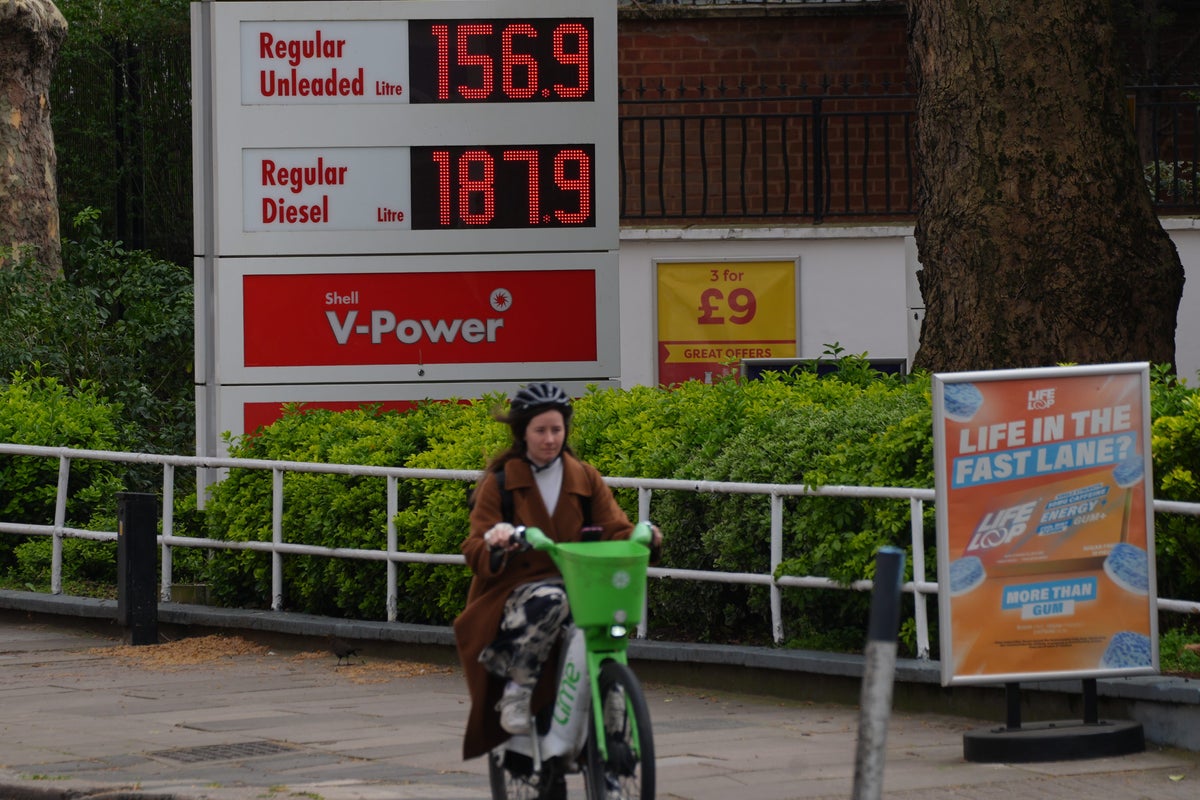
It showed that 10-20% less fuel was being purchased compared with a year ago, indicating that drivers were taking fewer trips – a trend that was most pronounced among people over 65.
Spending on eating out has dipped by about 3.5% with more customers seeking out value for money.
Non-essential spending was nonetheless slightly higher year-on-year, at 0.5%, and NatWest also said there had not been any significant rundown in savings with people continuing to put cash into current accounts.
Paul Thwaite, NatWest’s chief executive, said households and businesses were being “more proactive than ever” in adjusting their behaviour in response to the war and other economic concerns.
The bank’s data showed a rush in mortgage activity in March, particularly for remortgages, with around 4,000 applications received in a single day – some six times its typical daily volume.
It suggested this reflected people wanting to lock in lower mortgage rates at a time when rates were beginning to rise sharply following the conflict.
Separate data published by the Bank of England on Friday showed the number of mortgage approvals made to homebuyers jumped to a four-month high in March as urgency to secure loans ramped up across the market.
Mr Thwaite said “mortgage markets have been strong for the first quarter of the year in reaction to the potential for interest rates not coming down, and there was a lot of acceleration of remortgage activity during March”.
“That’s again very proactive, but very rational by customers,” he said.
When it comes to business activity, the bank’s data indicated that some firms were adjusting their plans or putting big spending plans on hold.
This was more applicable to manufacturing firms who are particularly exposed to higher energy costs, while the services industry has been more resilient.
Mr Thwaite said: “There’s a little bit more pause for thought around investment and hiring.
“But the big structural things like infrastructure, energy, utilities, project finance – there’s still very strong demand on that side.”
He added: “Despite increased uncertainty in recent weeks, we’ve seen strong customer activity and a good level of resilience through the first quarter.”