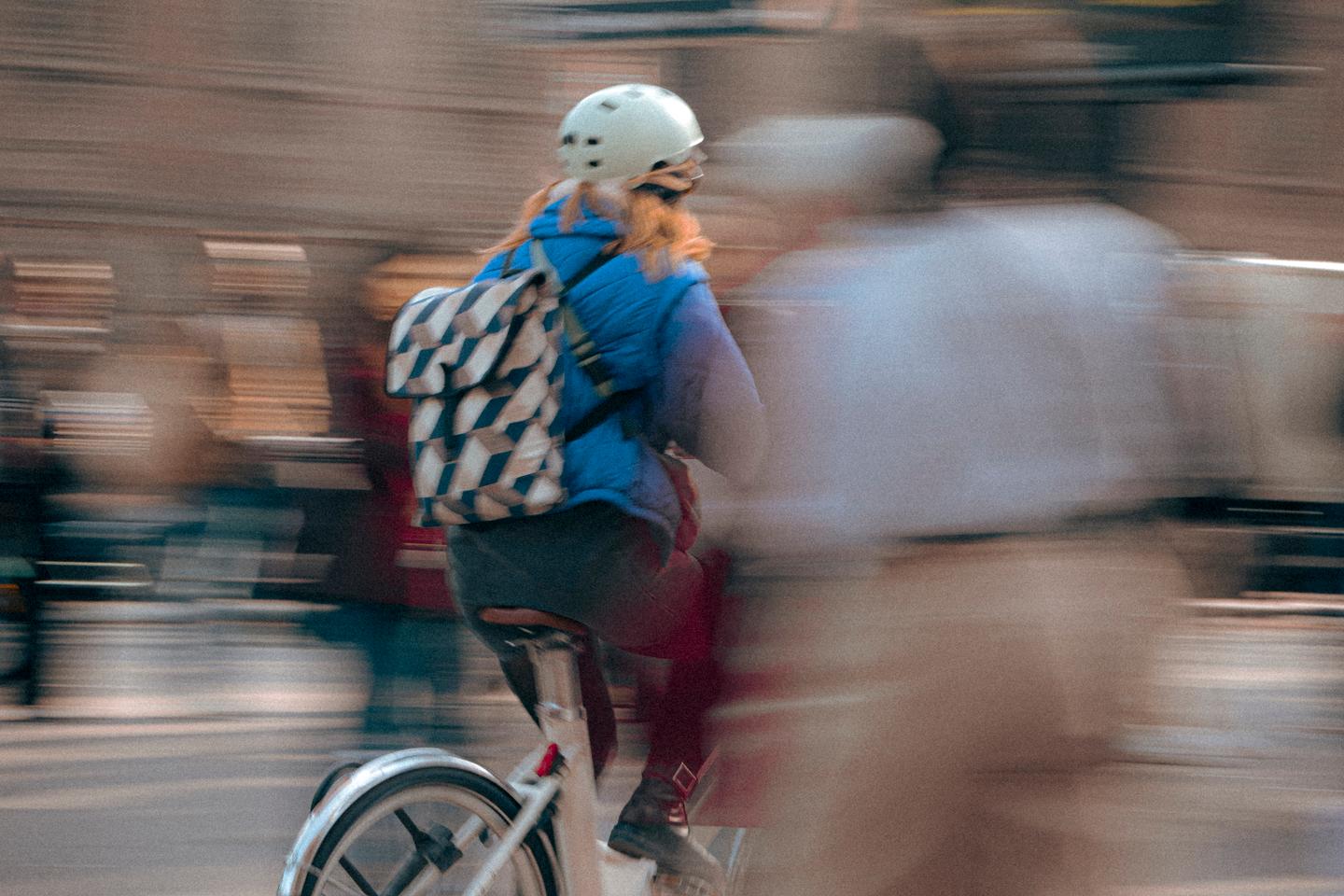
In Paris, on April 15, 2026. PAULINE BALLET FOR LE MONDE
"It didn't last long, but I was very scared," said Claire Grimout, a teacher in her forties who lives in Castelnau-le-Lez, a suburb of the southern French city of Montpellier. One day, while riding her electric bike, she was exiting a residential street that led onto a roundabout when she noticed a car, which had been forced to slow down because of a speed bump. "The driver got angry and threw his hands up. Through the open car window, I pointed out to him that I had right-of-way," she said. "We were heading in opposite directions when I saw, in my rearview mirror, that he had raised his middle finger. I shouted, 'Asshole!' I shouldn't have insulted him. It doesn't help anything."
It was then that the incident took a terrifying turn, said Grimout. The man, who seemed to be in his thirties and was driving a sports car, "immediately spun the wheel, made a U-turn, then drove very fast in my direction." "I cycled away as quickly as I could and took refuge, when I was able to, in a pedestrian street. My heart was racing. I knew that he could kill me with his car if he wanted to. For several days, I was afraid I might run into him again. I am deeply convinced that the situation would have been different if I had been a man." Two years later, Grimout still feels a slight sense of guilt.
You have 89.62% of this article left to read. The rest is for subscribers only.