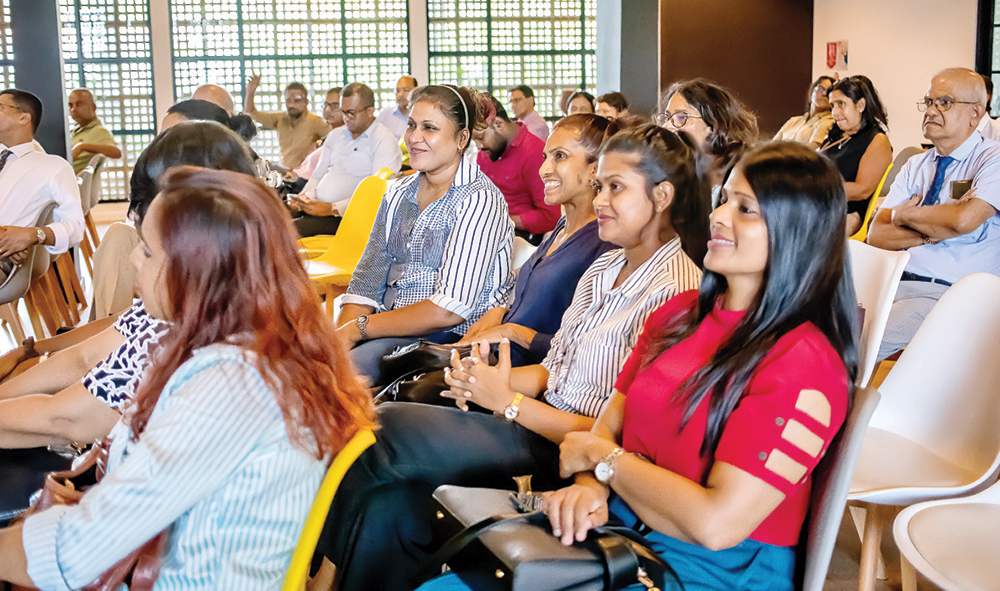
In an emotionally charged and inspiring gathering that brought together business leaders, healthcare professionals, philanthropists and community organisations, Sri Lanka, this week, reaffirmed its determination to defeat one of the country’s most preventable yet devastating diseases—cervical cancer.
The event was more than a formal announcement of financial assistance. It was a story of legacy, compassion, partnership and hope. It was also a reminder that when private enterprise, government institutions and civic organisations stand together with a shared purpose, lives can be saved and futures protected.
At the centre of the initiative was a renewed commitment by Dilmah and the Fernando family to continue funding cervical cancer screening programmes, in partnership with the Ministry of Health and Rotary.
The programme, which has already helped thousands of women through early detection, will receive a further Rs. 50 million this year, enabling 20,160 additional screenings.
This follows an earlier Rs. 75 million commitment made in January 2024 under a Memorandum of Understanding signed between Dilmah, Rotary and the Ministry of Health.
A Son Honours a Father’s Vision
Delivering one of the most moving speeches of the event, Dilmah Chairman/CEO Dilhan C. Fernando reflected on the values of his late father, Merrill J. Fernando, founder of Dilmah, whose philosophy continues to guide the company.
Fernando said his father began his journey in 1950 not merely to create a successful tea business, but to build a company that would improve lives and protect nature.
“My father started on a mission to make the world a better tea,” Fernando said. “Now, better tea is always welcome because it implies good taste, but his vision was quite different. It was about tea that would have an impact on the lives of people and on natural ecosystems.”
He said he and his brother Malik were blessed to steward a business that values kindness to people and the environment as much as profit.
“Businesses do not exist to make profit. Businesses exist to create value,” he said. “Value begins with people and livelihoods. It continues through nature, which is an inextricable part of welfare. And if you get those two right, then you have the right to secure economic value.”
Fernando said learning that hundreds of Sri Lankan women were dying annually from cervical cancer—an entirely preventable disease—was deeply disturbing.
“It was something that was really quite abhorrent to us,” he said. “An entirely preventable form of cancer should not be taking so many lives.”
He said the contribution was not about publicity or recognition.
“We announce this not to boast, but in appreciation of all those who made it possible, particularly my father, because that is how it is possible for us to make this assistance.”
Thousands of Lives Already Touched
Fernando said the true value of the investment could not be measured in rupees alone.
“That value may seem like a big number, but it is insignificant when you consider that it has saved thousands of women from the scourge of cancer and in many cases helped them avoid late-stage disease.”
He praised Sri Lanka’s healthcare system for maintaining an admirable record, despite national hardships.
“Whatever anyone may say about systems or governance, the fact is Sri Lanka’s healthcare system has an enviable track record,” he said.
Rotary’s Promise of Early Detection
Representing the Rotary Club of Colombo, former Rotary International President K.R. Ravindran delivered a powerful message on the life-saving power of partnerships.
“This is not a discussion. This is a promise of early detection,” Ravindran said. “Cancer, especially cervical cancer, does not arrive with a bell ringing or a warning. It whispers, and so often by the time it is heard, it is too late.”
He spoke emotionally of the grief caused by delayed diagnosis.
“For millions of women, that whisper is a devastating reality. Families left grieving—that is the reality.”
Ravindran recalled how Rotary had earlier established a stand-alone early detection centre offering free screening for breast, cervical and oral cancers. Through those efforts, more than 120,000 women had access to screening.
“During that journey, we learned something profound,” he said. “Early detection is not just saving lives. It transforms fear into hope, into possibility.”
That experience led Rotary to intensify efforts against cervical cancer, supported by overseas partners who introduced expertise and advanced screening technology.
A Crisis That Nearly Stopped Progress
Ravindran revealed that Sri Lanka’s financial crisis nearly derailed the programme when funds for HPV testing kits became unavailable.
“Without the money, the whole thing would have gone awry,” he said.
It was then, he said, that Dilmah stepped in.
“They did something far greater than simply giving money. They made scale possible. They made continuation possible. They made impact possible.”
He paid tribute to Merrill J. Fernando’s values.
“He believed business was a matter of human service. It was not just about making money. He did not just speak it. He lived it.”
He added that Dilhan Fernando had strengthened that legacy through direct leadership and compassion.
Sri Lanka Can Lead the World
Ravindran said Sri Lanka has every reason to believe it can become one of the first countries in the world to eliminate cervical cancer by 2030.
He cited the country’s literacy, school vaccination programmes, far-reaching public health system and highly respected midwife service.
“One thing we have to be proud of is our public health service,” he said. “And we have an excellent midwife system. If you involve the midwives, you are effectively empowering the community.”
He concluded with a message of hope.
“I think this country can become one of the first countries to be rid of this disease. Perhaps one day no woman in Sri Lanka will ever again hear the whisper of cervical cancer.”
Science, Prevention and Public Health
Consultant Community Physician Dr. Nadija Herath, of the Family Health Bureau, explained that cervical cancer is caused mainly by persistent infection with the Human Papillomavirus (HPV), which can take years to develop into cancer, if left untreated.
She said this makes screening especially important because pre-cancerous changes can be detected and reversed.
“The most important thing about this cancer is that it is preventable,” she said. “If identified early, women can be fully cured and live normal lives.”
Sri Lanka’s Well Woman Clinic programme, introduced in 1996, currently focuses on women aged 35 and 45.
Dr. Herath said the country is now expanding the use of HPV DNA testing, which offers much higher sensitivity than traditional methods.
She added that outreach clinics in factories and underserved communities would be strengthened, ensuring women can access services close to where they live and work.
Cancer Society Calls for Social Change
President of the Sri Lanka Cancer Society, Anoja Karunaratne, said awareness and stigma remain serious barriers.
“We need to take this message beyond hospitals and clinics—into schools, workplaces, religious institutions and community groups,” she said.
She stressed that women should view screening as a normal and responsible part of healthcare.
“Women must not fear screening. They must see it as routine care that can save their lives.”
A Partnership with Purpose
Throughout the event, one theme stood above all others—the power of unity.
Government institutions brought infrastructure and expertise. Rotary brought leadership and international support. The private sector brought resources and purpose. Civil society brought compassion and outreach.
Ravindran summed it up simply:
“This is not just institutions coming together. It is values coming together.”
“When governments, civil society, global networks and responsible businesses all come together, we do more than fight disease—we change destiny.”
Hope for Every Woman
As Sri Lanka moves toward the World Health Organisation goal of eliminating cervical cancer as a public health threat by 2030, the gathering offered more than policy announcements. It offered confidence that progress is possible.
It reminded the nation that some of the greatest victories are won not in boardrooms or conference halls, but in clinics where disease is detected early, in families spared grief, and in women given the chance to live healthy, full lives.
And in that shared effort, Sri Lanka may yet become a global example of what compassion, courage and collaboration can achieve.
By Ifham Nizam