Just outside of Fort Carson – the largest desert town in Grand Theft Auto: San Andreas – is the “Lil Probe Inn.” Right at the top of the road that takes players to “Area 69,” I was utterly captivated by it when I first played the game some 21 years ago, and in my most recent playthrough, that feeling hadn’t really changed. It’s a small, rustic bar, defined by the energy of mystery, intrigue, and more than a bit of nuttiness that defines the world of UFO-truthers and alien enthusiasts. But what struck me this time around is the a e s e t h i c s of it all. The bar is lonely; Fort Carson is even lonelier, a town of motels, fast food, and travelers, evoking the Americana imagination of Route 66 and the desolate loneliness of the inhabitants of the motels that litter such towns – addicts, hustlers, loners, all trying to lay low in a state of ambivalence, hoping they can eventually figure out the next move as the desert sun bears down, the shadows dancing in their dank motel rooms.
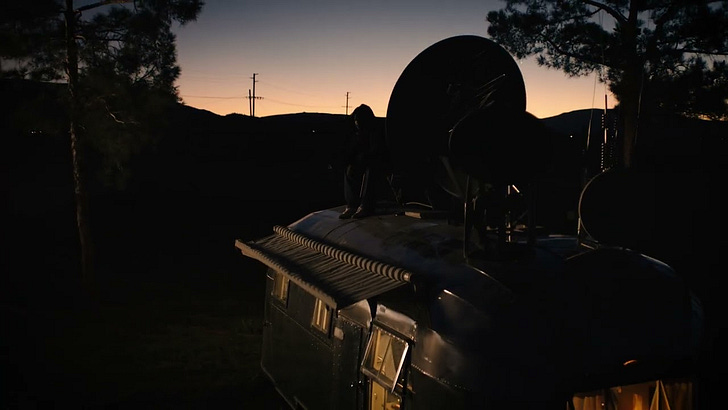
Isaiah Rashad evokes such a world on his newest album, It’s Been Awful, right down to some of the visualizers using a single-trailer home parked in the middle of an empty desert. The title is certainly fitting; after the success of The House is Burning, Rashad was outed as bi-sexual due to a leaked sex tape, which occurred right when Hip Hop was in the midst of a definite, notable swing back towards a nigh-endless conservativism that blended zoomer streamer culture with the genre’s old-school anti-Semitic and homophobic past; in the past five years since that album, we also learn that Zay had to overcome a methamphetamine addiction. I grew up in a community with a heavy penchant for meth; a lot of missing teeth, frayed-wire minds, and a love for breaking into cars just to steal the change in the cup-holder. Luckily for everyone, Rashad has overcome his addiction and channeled it into one of the year’s strongest albums so far, a moody, meditative record that is beset by only the occasional miss.
Across the past 13 years of his music, we have witnessed a split in Rashad’s approach to lyricism, encapsulated in the two verses on “Happy Hour.” The first verse reflects his more recent “free-wheeling” approach, defined by freestyled lyrics, a greater degree of repetition, and more of a penchant for slurring. “It’s profit over love, baby, Yeah, I probably do the dash, baby, Depend on where you at, baby, Drop-pin it on the map, baby, I’m itching for my scratch, baby,” and so on. It is an approach that made THIB catchy, fun, but without the same feeling of profoundness that defined his first two albums. The second verse of “Happy Hour” encapsulates what I would call his “focused” approach:
“I try to balance-beam
Between this life and racing death
And as I gather speed
Looking to my left and to my right
I’m almost down the street
I fought so hard, then fell so low to get this far
The doctor say that shit been fucking with my heart
But I can’t barely sleep
Chasing money, love, and all of the amphetamines…”
It is a verse that reminds one of the hardship of “Heavenly Father,” the detail of “Rope//Rosegold,” the emotionality of “Tranquility.” What makes It’s Been Awful work is that most of the rapping is defined by his focused approach, with the free-wheeling approach applied more to the pop-ish moments. “The New Sublime” opens with him arguing that he’s “cut from a sinful nature and I feel afflicted,” setting the tone for an album that brutally, bluntly addresses the awfulness that inspired this record. “Act Normal” confronts sex, and sex addiction, in reflective terms that might make Sigmund Freud blush; “Do I Look High?” and “Ain’t Givin Up” examine his drug addiction in terms that would make the crew of A&E’s Intervention turn the cameras off out of a rare sense of dignity; “Scared to Look Down” and “10 States Away” are wake-up calls, reflections on the passage of time, the mistakes that were made, and the need to right some wrongs before it’s too late, creating an urgency amidst the laid back flows and soft instrumentation. And even outside of the lyrical urgency, there is the one-two punch of “Boy in Red” and “Supaficial,” as well as “M.O.M.” “Boy” is a love song without the love, him and SZA coming back together for a track less about longing for someone, and more about longing for someone to fill the space, the perfect soundtrack for two loners to come together for a night and to then vanish from each other’s lives in the morning. “Supaficial” and “MOM” are the bounciest joints on the album, but one has to tune out the lyrics to dance without feeling the weight of our current condition; lyrics such as “Awful, often off the coffin, aren’t you? Piece by piece to piece me back is torture” and “Please give me time, don’t be ticking the bomb to death, Wait, come alive, don’t be doing a line again, In the car late waiting outside, damn, you must be reading my mind” bring the listener back down to earth, reminding us that we are trying to dance in the midst of a world that is spinning off its axis. The album is littered with moments that remind me of I became such a fan when Cilvia Demo dropped; his undiscerning delivery could move one from pure joy and existential melancholy to absolute devastation in the blink of an eye. It’s Been Awful has many of those moments, making the best of a period of time that would devastate anyone.
Occasionally, his more free-wheeling approach leads to a few bumps in the tracklist. “Same Shit” was a bad choice of a first single, with Rashad jumping from point to point over a familiar, lackluster beat that breaks up the energy of that early-track run – one wishes it had been a promotional single that didn’t make the album. Even worse, though, is the one-two punch at the end of the album, with “SUPERPWRS” and “719 Freestyle” acting as the soundtrack for when one leaves the downtrodden motel and returns to their previous life in the big city; unfortunately, between the boring up-tempo trap beats and the jumpiness of the verses, the tracks feel like bonus joints following the slow-build catharsis of “Nuthin 2 Hide,” rather than an integral part of the tracklist. And while I do like “Cameras” more than some, it is another point in the tracklist where the energy feels suddenly, unexplainably disrupted.
These issues were more prominent in my mind during my first listen; the second time around, they were merely faint miscalculations, nowhere near enough to derail the experience. Rashad has stripped himself to his soul on this record, managing to turn harrowing experiences into a diverse, melodic listen, one that has a way of burrowing itself into your mind and demanding repeat spins so that another bar captures your attention. I expect it to be divisive going forward, as the softer production leads to fewer “tracks for the banger playlist,” but no one can fault Rashad when it comes to the album’s honesty and atmosphere – and at a time when so many records seem unwilling to go into any detail, Zay’s decision, in the name of self-critique and self-actualization, is brave and most welcome.