The apparent suicide of an Assistant Director of the External Resources Department (ERD) of the Ministry of Finance, who was among the four officials suspended over the alleged USD 2.5 million cyber fraud, adds personal tragedy to a growing public concern about the overall competence of the NPP government and its stubborn inability to come clean and explain not infrequent infringements of government protocols and procedures. Indeed, there have been too many of them one after another and they cannot all be ‘disappeared’ by claims of inexperience, suggestions of innocence, or assertions of honesty. April 1971 was called Sri Lanka’s politically cruellest month. April 2026 has been quite a cruel month for the NPP government.
That four suspended senior officials, two Directors, an Assistant Director and Additional Director, over cyber fraud is symptomatic of the rot at the head of the civil service. Besides the USD 2.5 million (Rs 800 million) the cyber fraud at the Treasury, there was a bank fraud at the National Development Bank to the tune of Rs. 13.2 billion, the largest by far in the country. While the cyber fraud shows Sri Lanka is fast maturing in cyber crimes as in other increasingly wired economies, the NDB is fraud has been described as yet another instance of turmoil that Sri Lanka’s financial sector regularly goes through.
To wit, the 2002 collapse of the Pramuka Savings and Development Bank and the 2006 bankruptcy of the Golden Key Credit Card Company. Except the NDB has a substantial government role in it, and despite the assurances by the Central Bank that the NDB’s total assets, customer accounts and capital adequacy are safe and well regulated, the shock of the scandal cannot be minimized. Five bank officials, including a manager, an executive assistant and a bank assistant, are involved in the racket and in custody.
A fraud of a different kind involving coal importation has rocked the power industry triggering belated resignations of the Energy Minister and the Ministry Secretary. The former is an Electrical Engineer and the latter an Electrical Engineering Professor. The two should have known better and done better. A Commission of Inquiry has been set up to probe the entire coal saga from its beginning to now.
Previous to these, there was the furtive release last year of 323 containers from the safe harbour of the customs. The containers had been red-flagged by computer for inspection, but was released through human intervention. Unlike the other three scams, the container release had direct government involvement in it and the ostensible reason was to relieve the port of congestion. But no one has provided any explanation as to why a specific set of 323 red-flagged containers were picked for free passage.
Cumulatively the four scandals scream about the rot that permeates the whole continuum of the economy from the private sector to government departments. It seems quite acceptable nowadays to judge bureaucrats by the shade of the government that appointed them. The NPP has been taken to task for blaming Rajapaksa officials and Wickremesinghe officials for the faults of the NPP government. By that token, when this government gets its turn to go out of office, its successors will be blaming NPP officials for the new government’s difficulties.
Already, the government’s pick for the Treasury Secretary, Harshana Sooriyapperuma, is under fire from all fronts for all reasons. This appointment is straight out of the playbook for Central Bank Governor appointment that started with Chandrika Kumaratunga and later vigorously acted out by Mahinda Rajapaksa and Ranil Wickremesinghe. This new Secretary appears to be among a quite few professional beneficiaries out of the JVP-NPP fusion, but they could be assigned to contribute to and benefit from positions where they have prior experience and cause least harm. Not for high-level apprenticing at the Treasury or the Central Bank. The country has seen enough of the Cabraals and the Mahendrans. Now there is a Sooriyapperuma, perhaps with a more nationalistic flavour but not necessarily with the requisite competence. Where is the JVP/NPP difference – at least in style, even if not in substance?
Whose Responsibility?
Legacy blaming of government officials is certainly new, and it might be a stretch but it is also not far fetched. Blaming government officials is the upside version of the old school of taking political responsibility. That is when ministers take responsibility for serious government failures even if officials are the ones who really screwed it up. Now ministers blame officials and the previous governments who appointed them. Political resignation of ministers is a time honoured British and Commonwealth traditions. This tradition is being upended by the insistence on the resignation of everyone except the minister. Only lying to parliament is serious enough for a minister to resign; for everything else it is the officials who take the blame and with it the sack.
In Britain, ministers resign for a host of reasons. Policy and political differences account for most. The hapless current British Prime Minister has already suffered resignations of 13 ministers in less than two years. The clownish Boris Johnson had nearly 50 of them bolt from his stables, while Margaret Thatcher had the fewest of them, but one of them – that of the very, very mild mannered Sir Geoffrey Howe – forced Thatcher herself to resign.
Australia has a strong tradition of ministerial resignations. Of the 99 resignations since 1901, 37 have been over differences with the Prime Minister, 20 over policy, and 18 for unsavoury reasons: pecuniary interest, abuse of financial privileges, and misleading parliament. Serious train accidents trigger resignations by railway ministers, and India has had a number of them, including the 1956 resignation of Lal Bahadur Shastri who resigned from the Nehru Cabinet in 1956 after two bridge collapsing accidents in the present Telangana and then then State of Madras, now Tamil Nadu. Quiet and competent, Shastri became India’s Prime Minister after Nehru’s death in 1964 and served until his untimely death two years later. Such resignations were symbolic acts of taking moral responsibility, over and above fiduciary accountability.
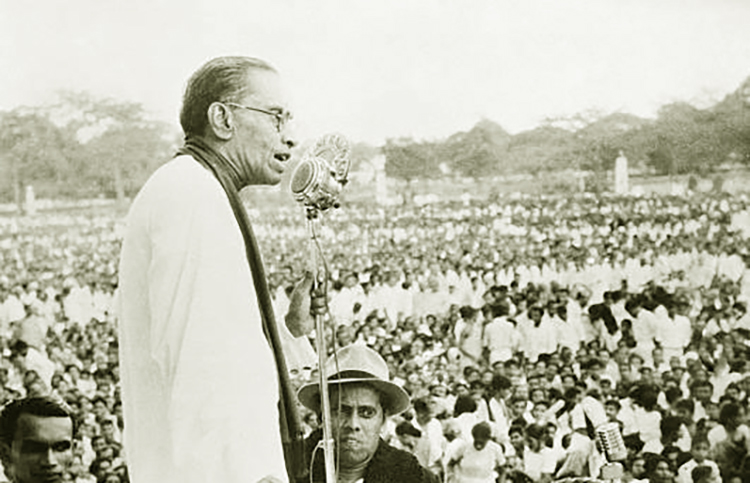
There have not been many, rather any, principled resignations in Sri Lanka. SWRD Bandaranaike threatened resignation during the State Council days, but did not follow through. He later resigned very dramatically from the first UNP government, but for a very political reason – that of forming his own party and to form his own government – which he did, in 1956, but not quite the way he would have – to the manner born – liked to. But SWRD and Dudley Senanayake, like his father DS, were men of honour and honesty. It was SWRD’s refusal to favour licensing of vested interests in the shipping business and sugar production that allegedly led to his assassination. We are in qualitatively in different times now. And not just in Sri Lanka.
Whither NPP?
The recent high-level NPP resignations were neither spontaneous nor morally persuasive. And the fiduciary part, if at all, is yet to come. The only retribution so far is the unfortunate suicide of a former Assistant Director of the External Resources Department. That is a personal tragedy but it does not answer any of the public questions. The President’s May Day speech in Nuwara Eliya, going by its first reports, is full of fighting past misdoings, but nary a word about the current ongoings. Holding a May Day rally in Nuwara Eliya as opposed to Colombo is in itself revealing.
The President and the NPP have a strong rapport with the Malaiayaka Tamils. That is positive for the latter, but if only the President would also help them by holding the Provincial Council elections without delay. The point being, the Malaiayaka Tamils are the biggest unintended beneficiaries of the Provincial Councils. They have been able to use their restored citizenship and voting rights to directly represent themselves in the Provincial Council and the local bodies of the Central Province where they have the most numbers. The continued shutting down of the Provincial Council is depriving them again of their democratic rights. Be that as it may.
In his May Day speech President Anura Kumara Dissanayake spoke about “intensifying legal action against corruption and organized crime,” and claimed that “a series of high-profile cases are moving through the courts under strengthened state institutions.” But he made no mention of the daylight robbery going on in the economic departments of the state, and how his administration is planning to tackle that.
Digital financial fraud is a fast growing business with multiple manifestations, including information stealing and hijacking, accessing accounts, faking identities, compromising emails, and all manner of commercial scams. Even advanced countries are having their hands full in dealing with smart digital thieves. Inasmuch as the NPP government is gung ho about digitizing Sri Lanka, it should also demonstrate how it plans to measure up to emerging digital thieves in the country. Are the sleuths who seem very adept in chasing the alleged abuses like that of Ranil Wickremasinghe, as capable in tackling the more artful digital fraudsters? That is the question.
What is worrisome is the recent reported incident involving a ‘home protest’ by a political provocateur targeting the residence of the Treasury Secretary and the “shit attack” retaliation against him allegedly by government supporters. Both actions are bad and it is pointless arguing which is worse. But it is up to the government to preserve public order and decorum without provocations and retaliations. Clean Sri Lanka should have no place for public dissemination of human waste.
Whither NPP? – is a timely question and the answer to it depends on how the NPP government handles itself going forward. It is still a young government, but it also showing signs of old age that emerge when a government promises too much and delivers too little. All the scams that are now preoccupying public commentaries may not be traceable to any or all of the cabinet ministers. That has been a feature of all previous governments this century. But the NPP’s fault has been its stubbornness not to acknowledge misdoings no matter who caused them, to come clean with all the information, and to give the public the comfort that the government knows what it is doing. This has to change, but whether it will is the question.
by Rajan Philips