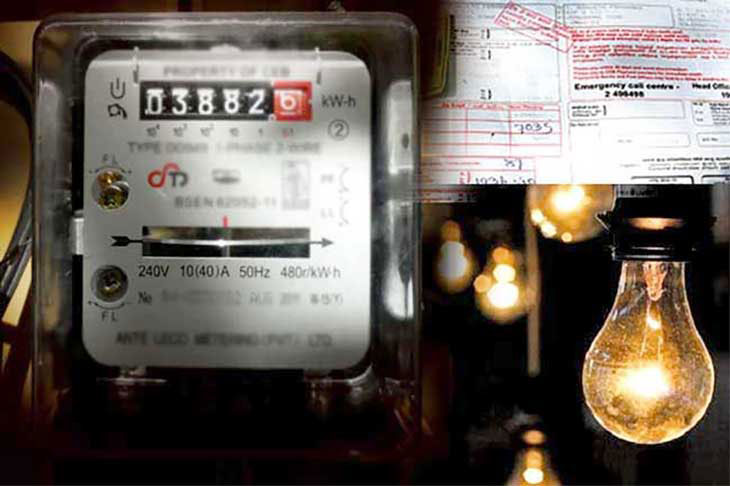
The power cuts are already here. Perhaps, even before the date predicted by the Public Utilities Commision of Sri Lanka (PUCSL. The peak load has gone well past the threshold they indicated as the tipping point of 3030 MW of peak load. It is now will past 3100 MW and growing, perhaps triggered by the continued heatwave making the use of air conditioners and fans more frequent and by a wider group of consumers. The government insists there is no intention of power cuts but each of us have experienced some form of power outage, without notice, at some time or other.
It is in this scenario that the Ceylon Electricty Board (CEB), or whatever it is called now, had directed all roof top solar projects, over 300 MW capacity, to shut down for the period 10th April to 20th April.
This is in addition to the curtailment of all ground mounted solar and wind projects, and even mini hydro projects, without compensation, going on for some months.
One year of inaction by CEB with the problem staring in the face
If will be recalled that the same demand was made in April, 2025, after the debacle of the countrywide blackout on 9th February, 2025, whether caused by a monkey or otherwise.
The question to be raised is what steps have been taken by the then CEB, or the Ministry to anticipate the situation this year, too, and to try and mitigate the same.
The easy answer is absolutely nothing. If at all what has been done is unilaterally prevent any further addition of Roof Top Solar PV, under the provisions of the Surya Bala Sangramaya (SBS), is, undoubtedly, the only short term and economical means to add low cost renewable electrical energy to the grid.
The architect of the SBS, the Sustainable Energy Authority is deafening by their silence, when their signature project of prime national importance has been sabotaged, and now even the performance of the already installed systems are being curtailed.
This action is totally unbelievable when the use of expensive oil-based generation will continue unabated, even during the day, when there is so much solar energy already installed. Of course, the age-old excuse will be trotted out, of the non-firm nature of Solar and Wind and problems of grid stability, etc.
Many useful and practical solutions to face the growing issue of how to integrate the essential low cost but variable resources of solar and wind to the grid as an aftermath of the blackout were discussed over a year ago.
But nothing seems to have even been attempted. The most prominent among these was the proposal to add 300 MW of grid scale batteries, as indicated in the already-approved Long Term Electricity Generation Plan ( LTEGP 2024 – 2044,) of which 100 MW should have been in use by 2026. The tender for the addition of 16 X 10 MW battery storage at selected grid substations was called over a year ago. Some expectation of sanity
It is under these circumstances that the PUCSL called for a stakeholder consultation on the 10th April, 2026, after circulating a concept note, which was well attended. It was a breath of fresh air, in view of the downhill slide of the entire electricity sector in the recent months compounded by the raging controversy of the coal scam and the rapidly increased use of expensive diesel, in addition to the other fossil fuels, just to keep up the generation to match the demand. The double whammy of the doubling of the fuel prices , exacerbated the hit on not only the consumer’s monthly bill, but the national economy and balance of payments.
Therefore, it was most encouraging to note from the PUCSL’s concept note that sanity has prevailed at last. We have been demandin–g some concrete strategies and time based targets to rid at least the electricity sector from the use of expensive, polluting fossil fuels, commencing with oil. This is the only means by which the utility could hope to achieve some degree of economic and financial viability. They have continued to burden the consumer and the country by continually jacking up the consumer tariff, while ignoring any prudent means to clean up their Act. As a matter of interest, the CEB’s own data of 2023 shows that it is possible to save some Rs 113 Billion annually by replacing all oil-based generation using renewables. The country could have saved over $ 700 Million in Foreign Exchange and the Consumer Tariff could have been lowered by Rs 7.00 per Unit across all segments of consumers.
Therefore, the PUCSL concept paper out lines, some credible measures to eliminate the use of all of forms of oil for power generation in stages. The three tier of approach, outlined as option 1 to 3, reproduced here, should be commended for adopting a pragmatic approach, with very good chance of success.
Proposed options by PUCSL
(See Options 1 Peak Shaving Approach by 2027 and Option 2: Eliminating 2.06 GWh/day of diesel-based generation)
Considering even the recent past when we achieved a status of zero oil use, as compared to the present sorry status, this is not an extremely difficult task. We will have to substitute Solar PV to bridge the gap of reduced Hydro during dry months.
(See diagram 1)
RE Contribution 69% % Oil Usage 6.2 % No Diesel
(See diagram 2)
In Contrast on 30th March RE Contribution was only -43,5%
and oil use has gone up to -29.59%
However, as outlined in the introductory paragraphs of the concept paper, the driving force to promote this change is the early declaration of appropriately worked out tariffs for installation of storage batteries and delivery of the stored energy to the grid.
With the total lack of progress of proposals in the LTEGP 2025-2044 by the state institutions, it is prudent to assume any future initiatives can only come from private sector participation.
Using the power granted by the recently ratified Electricity Act NO, 36 (As amended) the PUCSL has moved with commendable speed to develop the Feed in Tariff declarations needed to enable the achievement of the above objectives and a further stakeholder consultation was held on the 24th of April when more detailed proposals were put forward.
However, although the responsibility of publishing the tariff remains with the PUCSL, unless the National System Operator ( NSO ), tasked with the planning and implementation of Electricity Sector developments , takes urgent action to implement the desired changes as a highest priority task, nothing will be gained to help the country to get out of this quagmire.
The Consumer Continues to be Burdened.
Further, as the time table proposed by the PUCSL itself indicates, even the first of the options can be implemented only in 2027, with the others following up to the year 2030.
These are very encouraging time targets and the consumers will eagerly await their achievement.
However, the threat of power cuts, as well as continuing increase in consumer tariff to fuel the use of diesel for power generation, is real and current. A further tariff increase of 18% has been demanded by the NSO, on top of the 15% granted on 1st April, 2026.
The Immediate Options Available to Consumers.
a) The CEB now refuses to provide any grid connection for integration of any rooftop solar PV systems under the Surya Bala Sangraamaya.
b) The only way available to the consumers is to install Off grid roof top solar systems with adequate batteries to be none dependent on the grid. Use the grid only during the off peak hours.
c) During most periods of the year, even under cloudy conditions there is some solar generation. To ensure the daily consumption is more than covered by the solar input and any surplus is used to charge the battery, to the level adequate to manage the evening and peak hour demand, the capacity of the solar panels and battery have to be determined.
d) It is to be noted that although only the relatively high-end domestic consumers could find the proposed scheme financially feasible under the present cost regimes, which will improve further when the second tariff increase is announced shortly, to those consuming over 250 Units/Month, their engagement has a sector wise positive implication which is beneficial to all levels of consumers.
e) The scheme will operate in an off grid mode, without exports to the grid at any time. Therefore, they will not contribute to the often voiced worries of over voltage, instability and variability in the national grid.
f) Once the PUCSL announces the required FIT and the NSO or the Distribution Companies institutes the necessary facilities, such as smart meters, such consumers, too, can further assist the grid by export of any excess they generate.
Proposal to Avoid Power Cuts Implementable by Domestic Consumers
There are several drivers which will attract the potential ” Prosumers” to adopt this option without delay.
* The consumer tariff will continue to rise
* Even the former Roof Top Solar Systems, without batteries, does not provide power during the power cuts or blackouts
* At present day prices, the investment is financially feasible, based on the savings of the current level of monthly electricity bill. A substantial bank loan can be comfortably settled from the savings
* Now cooking with electricity is no longer a financial burden but can save one from the cost and danger of LPG shortages and queues
* What you, do based on your economic ability, will be a service to all consumers as the resultant reduction of Peak Demand means the use of Diesel can be gradually reduced and the lower end consumers, too, will benefit.
* You will enhance your green credentials with your own financial benefits.
The overall benefit to the grid and other consumers
If the element of exorbitant cost of diesel-based generation is removed then there is no need for the increase of consumer tariff for all consumers.
What is more important is that trimming the peak load would drastically reduce the need for any power shredding that is happening on the sly now and thereby benefit all consumers,
The summary of Financial Analysis illustrating the viability based on currently available data is given here. This will improve drastically if a further increase in consumer tariff is granted, which appears inevitable. (See Table 01 – The basic data used for this analysis is available on request.)
by Eng Parakrama Jayasinghe
parajayasinghe@gmail.com