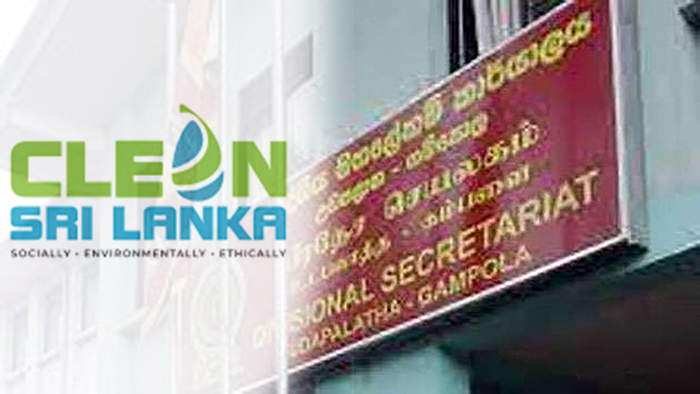
The Sri Lanka Association of Divisional Secretaries and Assistant Divisional Secretaries (SLADA) has written to the Secretary to the President requesting the withdrawal of a decision to appoint “Clean Sri Lanka” coordinators at provincial, district and divisional levels, warning that it could seriously undermine the independence of the public service.
In a letter, signed by SLADA President R. Senthil and Secretary R. M. Nuwan C. Hemakumara, the Association has referred to a directive issued by the Secretary to the President, dated March 20, 2026, instructing District Secretaries to appoint coordinators for the programme and to provide them with facilities within Divisional Secretariat offices.
The Association has noted that Sri Lanka already has a long-established administrative framework to ensure effective public service delivery, spanning ministries, departments, provincial councils, district and divisional secretariats down to Grama Niladhari divisions. This system is supported by internal audit units, the National Audit Office, and coordination committees at divisional, district and national levels, which oversee and review programme implementation.
The SLADA has acknowledged that specific officers have already been assigned at divisional level to implement activities under the government’s Clean Sri Lanka initiative, which is being monitored
through existing community development committees and coordination mechanisms.
The association has expressed concern over the appointment of separate coordinators at district and divisional levels and the instruction to allocate office space and attach public officials to support them. It has argued that divisional secretariats are neutral public service institutions that provide services to all citizens without political, religious or ethnic bias, and that their independence must be safeguarded.
While acknowledging some isolated instances of politically influenced conduct by a small number of officials, SLADA stressed that the overall administrative structure has functioned as an independent and depoliticised system that has earned public trust.
The association further pointed out that the current government’s policy framework emphasises efficient and impartial public service delivery without interference in the independence of state institutions.
It has warned that appointing politically connected coordinators within divisional secretariats and attaching government-paid officials to them could seriously compromise administrative neutrality and may also raise legal concerns.
SLADA said previous attempts to introduce similar arrangements had been resisted, adding that the current system already allows for effective coordination, monitoring and review of government programmes, including Clean Sri Lanka.
Accordingly, the Association urged the President’s Secretary to revoke the decision and allow existing administrative mechanisms to handle programme implementation. It warned that any such precedent could have long-term adverse implications for the independence of the public service, and expressed hope for a reconsideration of the directive, stating that it would not cooperate with the current arrangement unless the request is addressed.