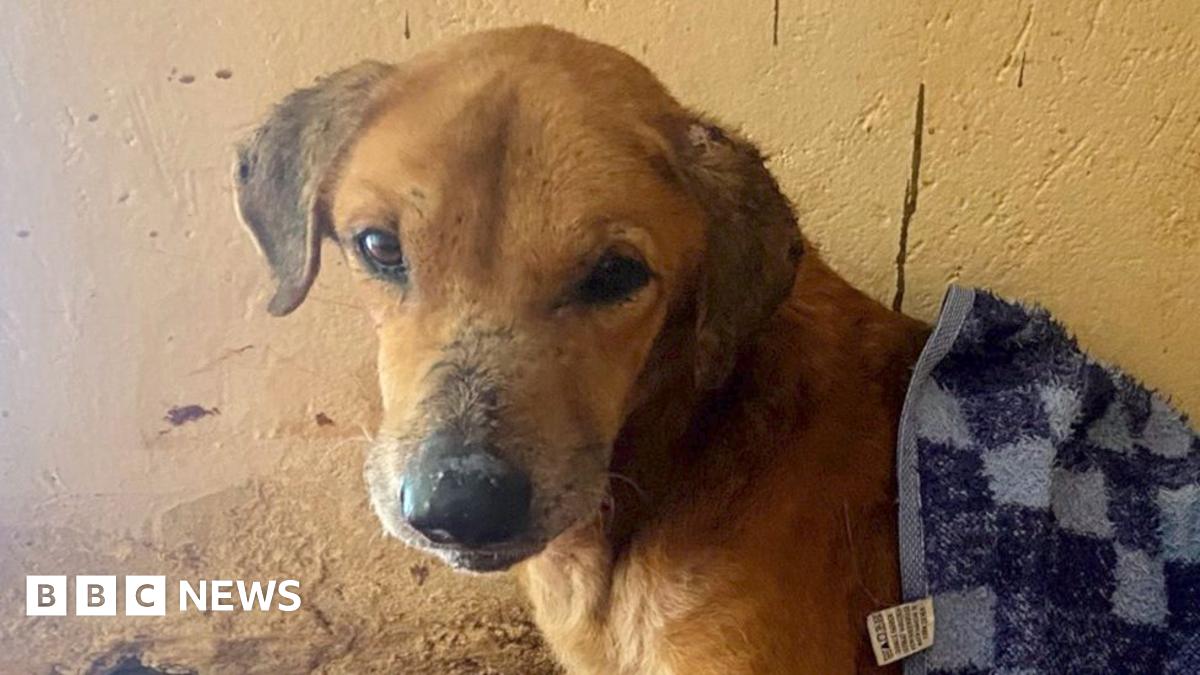
A dog with rust-coloured fur lies at the side of a road. He looks peaceful, but as the TikTok video pans from his face to the rest of his body, severe injuries to his hind legs appear.
The dog is not resting. He is panting, presumably in pain.
Text on the 15-second clip tells viewers that this dog "got into an accident" and asks them "to save his life" by donating through an online link.
In the three weeks after the video was first posted on 8 January last year, this dog was featured in hundreds of other fundraising campaigns, by at least a dozen accounts.
A social media user from the UK named the dog Russet, which reflected the colour of his coat. Thousands of dollars were raised for his treatment. But he never got better.
BBC Africa Eye has discovered that this dog in Uganda was a prop in a scam that solicits donations for animals in distress, part of a hidden industry profiting from cruelty.
It is impossible to conclusively establish what caused Russet's injuries, but BBC World Service journalists managed to piece together parts of his story, which suggest he endured prolonged suffering, regardless of the cause.
The story connects a town in Uganda with animal lovers thousands of miles away. They are coaxed into parting with their money through emotional images, lies and the exploitation of Western stereotypes of Africa such as endemic poverty and widespread indifference towards animal welfare.
But it is dogs like Russet who pay the biggest price.
He was filmed in Mityana, a trading centre around 70km (43 miles) from Uganda's capital, Kampala.
The town has become infamous among online animal rescue activists around the world for one thing - sham dog rescue shelters.
Ugandan scammers have realised just how popular dogs are in Europe, North America and Australia, and how easily social media's obsession with dogs can be converted into cash.
"There are young men in the [Ugandan] countryside who are always looking for anything to do on the internet," Bart Kakooza, chairman of the Uganda Society for the Protection and Care of Animals, tells the BBC.
"On the other side, in the Western world, people are very passionate about animals. These young men realised they can make money if they can get a dog."
It is impossible to say how many social media accounts operate from Mityana. But collectively, they have flooded Instagram, TikTok, Facebook and YouTube with videos of pitiful-looking animals - mostly dogs and cats, but even rabbits – with commentary pleading for donations to shelter, feed and treat them.