Science News
from research organizations
The da Vinci bloodline is unlocking the geniusâs genetic secrets
Leonardo da Vinciâs DNA may soon be uncoveredâunlocking the biology behind historyâs greatest genius.
Date:
May 4, 2026
Source:
Leonardo da Vinci DNA Project
Summary:
After centuries of mystery, scientists are edging closer to uncovering Leonardo da Vinciâs biological secrets. A massive 30-year effort has mapped his family across 21 generations, identified living male descendants, and even confirmed shared DNA markers that stretch back to the Renaissance. Meanwhile, excavations at a family tomb in Vinci could provide ancient remains for comparison, raising the possibility of reconstructing Leonardoâs genetic profile.
Share:
Facebook
Twitter
Pinterest
LinkedIN
Email
FULL STORY
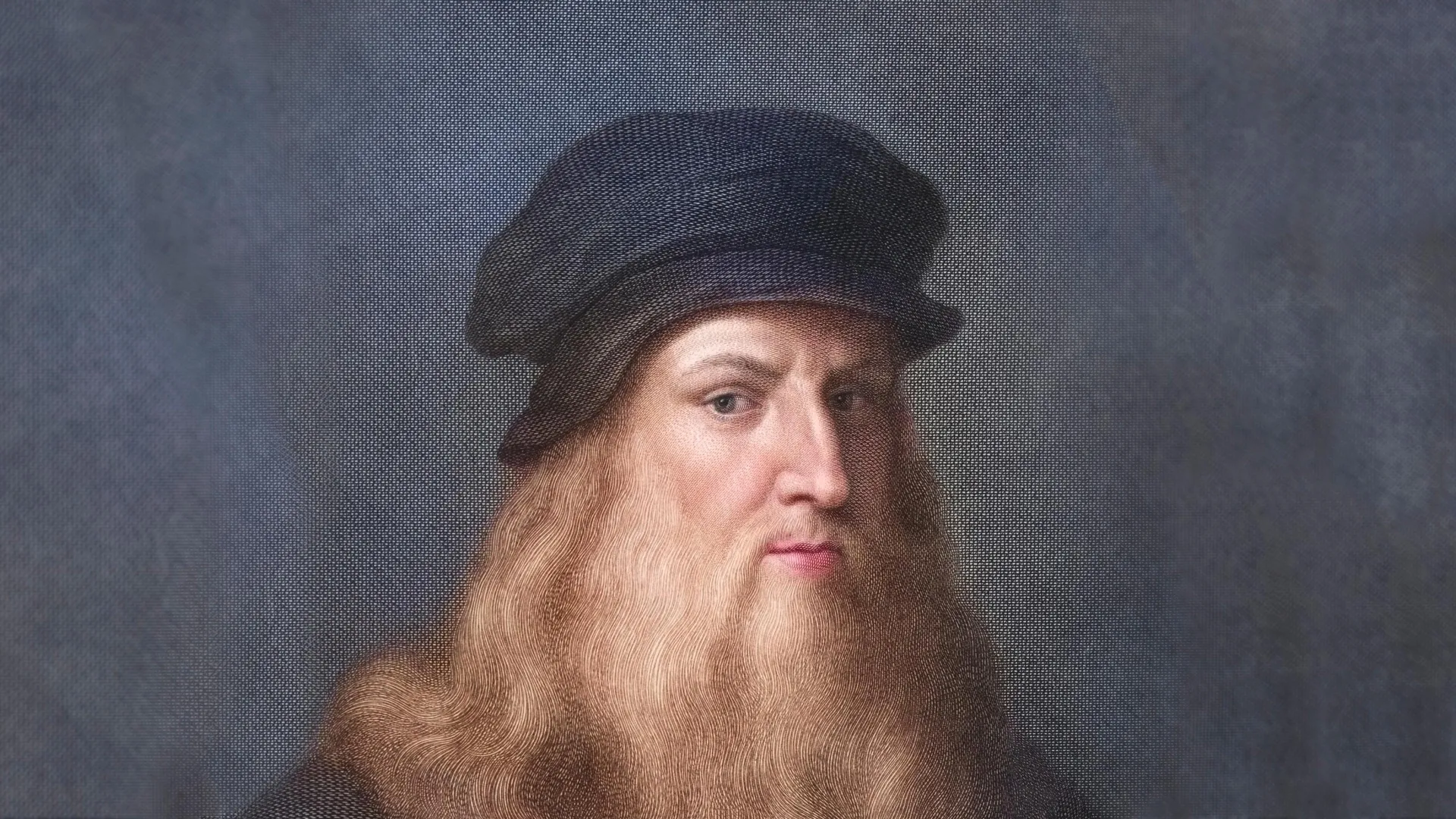
Scientists are closing in on Leonardo da Vinciâs DNA by linking living descendants to centuries-old remains. The breakthrough could reveal secrets behind his geniusâand even verify his artworks. Credit: Shutterstock
For more than 500 years, Leonardo da Vinci has been admired as a brilliant artist, inventor, and thinker whose talents seemed far ahead of his time. Now, an ambitious international effort known as the Leonardo DNA Project is bringing scientists closer than ever to uncovering the biological roots of his genius.
A newly published book, "Genìa Da Vinci. Genealogy and Genetics for Leonardo's DNA," brings together three decades of research led by Alessandro Vezzosi and Agnese Sabato of the Leonardo Da Vinci Heritage Association in Vinci. Supported by the Municipality of Vinci, the work reconstructs an extensive family tree stretching back to 1331. It spans 21 generations and includes more than 400 individuals, creating the foundation for an unprecedented attempt to rebuild Leonardo's genetic profile.
By carefully studying archival records and historical documents, the researchers were able to map out previously unknown branches of Leonardo's family. In the process, they identified 15 living male descendants linked directly through the paternal line to Leonardo's father and his half-brother, Domenico Benedetto.
DNA Testing Links Living Descendants
This discovery opened the door for genetic analysis. David Caramelli, who coordinates the anthropological and molecular aspects of the Leonardo DNA Project and leads the Department of Biology at the University of Florence, worked with forensic anthropologist Elena Pilli to analyze DNA from six of these descendants.
The results showed that segments of the Y chromosome matched across the participants. Because this chromosome is passed from father to son with little change, the findings confirm a continuous male lineage within the Da Vinci family dating back at least 15 generations.
Ancient Tomb Could Hold Crucial Evidence
Researchers have also identified a Da Vinci family tomb at the Church of Santa Croce in Vinci. Archaeological excavations are currently underway in collaboration with the University of Florence. The site is believed to contain the remains of Leonardo's grandfather Antonio, his uncle Francesco, and several half-brothers, Antonio, Pandolfo, and Giovanni.
Anthropologists Alessandro Riga and Luca Bachechi have recovered bone fragments from the site, some of which have been radiocarbon dated. One specimen, consistent in age with Leonardo's relatives, has already undergone paleogenomic testing. Early analysis suggests the individual was male.
"Further detailed analyses are necessary to determine whether the DNA extracted is sufficiently preserved," says Caramelli, who is also President of the University Museum System. "Based on the results, we can proceed with analysis of Y chromosome fragments for comparison with current descendants."
If the Y chromosome from these remains matches that of living descendants, it would strengthen historical records and family lineage reconstructions. It could also make it possible to analyze biological traces connected to Leonardo himself, including material left on manuscripts or artworks, potentially enabling scientists to reconstruct his DNA.
A Global Scientific Effort
The Leonardo da Vinci DNA Project began in 2016 and is coordinated from The Rockefeller University in New York. It brings together institutions including the J. Craig Venter Institute in California and the University of Florence, with support from foundations such as the Achelis and Bodman Foundation (New York) and the Richard Lounsbery Foundation (Washington, D.C.).
The project focuses on tracking the Y chromosome, which passes largely unchanged through generations of males.
"Our goal in reconstructing the Da Vinci family's lineage up to the present day, while also preserving and valuing the places connected to Leonardo, is to enable scientific research on his DNA," says Vezzosi. "Through the recovery of Leonardo's DNA, we hope to understand the biological roots of his extraordinary visual acuity, creativity, and possibly even aspects of his health and causes of death."
"Even a tiny fingerprint on a page could contain cells to sequence," says Jesse H. Ausubel of The Rockefeller University and director of the project. "21st-century biology is moving the boundary between the unknowable and the unknown. Soon we may gain information about Leonardo and other historical figures once believed lost forever."
Beyond DNA: New Insights Into Leonardo's Life
The book goes far beyond genetics, offering a detailed exploration of Leonardo's world. Across 21 chapters, it examines historical, geographical, and genealogical evidence to better understand the environment in which he lived.
Researchers identified seven Da Vinci family homes in the village and castle of Vinci, along with two properties once owned by Leonardo himself. These properties were inherited from his uncle Francesco and were the subject of a long dispute with his half-brothers.
The study also revisits key figures in Leonardo's life. His grandfather Antonio is revealed as a traveling merchant who operated between Catalan Spain and Morocco, rather than simply a farmer. Meanwhile, new archival analysis provides a clearer view of Leonardo's mother, Caterina. Evidence suggests she may have been a slave working for a wealthy banker, Vanni di Niccolò di ser Vanni. Historical documents, including wills and donation records dating back to 1449, shed light on the relationship between this banker and Leonardo's father, ser Piero.
A Mysterious Drawing Emerges
A particularly intriguing finding involves a charcoal drawing discovered on the fireplace mantle of an old building in Vinci, once known as the Bracci house. The artwork depicts a fantastical creature combining multiple striking features, including a spiral horn, elongated snout, hooked teeth, wings, and a serpentine tail.
Vezzosi and Sabato have named the image the "Unicorn Dragon." Some elements appear to anticipate Leonardo's later studies of flight. Comparisons with a known drawing from the 1470s suggest it could be an early work by Leonardo, although further scientific analysis and restoration are planned.
The hypothesis has gained support from Roberta Barsanti, Director of the Leonardian Museum and Library, and Vinci's Mayor, Daniele Vanni. The Municipality is preparing a detailed examination of the large drawing (about 80x70 cm) under the supervision of cultural heritage authorities.
Leonardo and Early Ideas About Genetics
The book also explores Leonardo's own thinking about heredity. His writings suggest he may have anticipated ideas now associated with epigenetics, considering how diet, blood, and parental behavior might influence offspring.
"Leonardo questioned the origins of human life not only biologically: in his studies on generation, conception becomes a complex act where nature, emotion, and fate intertwine -- anticipating themes now central to the genetics-epigenetics debate," explains Agnese Sabato.
Toward Reconstructing Leonardo's DNA
The final sections of the research consider whether modern descendants share physical similarities with Leonardo's famous self-portrait. While this remains speculative, the main goal is scientific.
If enough genetic material can be recovered and sequenced, researchers hope to uncover details about Leonardo's biological traits, including aspects of his appearance, health, and even potential predispositions.
"This is not just about the author of the world's most famous painting," concludes Ausubel. "It's a challenge to redefine the limits of historical knowledge and cultural heritage."
Rebuilding Leonardo's genetic profile would mark a major milestone in both science and cultural history. For Vinci, the small Tuscan town where Leonardo was born, the possibility of hearing his "genetic voice" centuries later has become a powerful source of pride.
The research will also contribute to an upcoming documentary and an international film project. And despite everything uncovered so far, one conclusion stands out: Leonardo da Vinci's story is still unfolding.
Key Points
Leonardo da Vinci DNA Project:
The first scientific project aimed at reconstructing Leonardo's genome, through indirect and comparative biological sources
Art meets genetics:
DNA found on manuscripts or drawings could confirm artwork authenticity, and techniques developed through the project could revolutionize how contested works are verified
Forensic analysis:
Leonardo's genetic profile could reveal biological traits like left-handedness, visual perception, diet, possible health predispositions, and physical appearance
21 documented generations:
The reconstructed family tree has been updated from 1331 to the present, including the documentation of extinct family lines
Rediscovered heritage:
Over 400 individuals analyzed, including 219 Da Vinci/Vinci (119 males and 100 females)
15 male descendants identified
belonging to the direct patrilineal line, crucial for the study of the Y chromosome
Y chromosome:
6 direct male-line descendants successfully involved in comparative DNA analyses
The "Unicorn Dragon":
The hypothesis that a large drawing in Leonardo's hometown may be attributed to him
Archaeological excavation in Vinci:
First effort to identify remains in a Da Vinci family tomb documented in the Church of Santa Croce
Digital Archive "GenìaDaVinci":
A genealogical and documentary database for scholars, genealogists, and enthusiasts, based on traceability and historical verification criteria
Residences of Leonardo's family:
A new map of Da Vinci homes in Vinci village and countryside, including two of Leonardo's own properties
Maternal mystery:
A historically updated reconstruction of the hypotheses about Leonardo's mother's identity
RELATED TOPICS
Science & Society
Travel and Recreation
Environmental Policies
Surveillance
Popular Culture
Ethics
Media and Entertainment
Arts and Culture
Justice
RELATED TERMS
Western culture
Scientific misconduct
Antarctica
Alternative fuel vehicle
Western world
Entertainment
Cloning
Commercial fishing
Story Source:
Materials provided by
Leonardo da Vinci DNA Project
.
Note: Content may be edited for style and length.
Cite This Page
:
MLA
APA
Chicago
Leonardo da Vinci DNA Project. "The da Vinci bloodline is unlocking the geniusâs genetic secrets." ScienceDaily. ScienceDaily, 4 May 2026. <www.sciencedaily.com
/
releases
/
2026
/
05
/
260504074826.htm>.
Leonardo da Vinci DNA Project. (2026, May 4). The da Vinci bloodline is unlocking the geniusâs genetic secrets.
ScienceDaily
. Retrieved May 4, 2026 from www.sciencedaily.com
/
releases
/
2026
/
05
/
260504074826.htm
Leonardo da Vinci DNA Project. "The da Vinci bloodline is unlocking the geniusâs genetic secrets." ScienceDaily. www.sciencedaily.com
/
releases
/
2026
/
05
/
260504074826.htm (accessed May 4, 2026).
Explore More
from ScienceDaily
RELATED STORIES
Ancient DNA Solves 12,000-Year-Old Mystery of Rare Genetic Growth Disorder
Feb. 17, 2026 Â
An Ice Age double burial in Italy has yielded a stunning genetic revelation. DNA from a mother and daughter who lived over 12,000 years ago shows that the younger had a rare inherited growth ...
Mystery of King Tutâs Jars Solved? Yale Researchers Find Opium Clues
Dec. 18, 2025 Â
Traces of opium found inside an ancient alabaster vase suggest drug use was common in ancient Egypt, not rare or accidental. The discovery raises the possibility that King Tutâs famous jars once ...
Ancient Chinese Tombs Reveal a Hidden 4,000-Year Pattern
Nov. 15, 2025 Â
Researchers digitally mapped ancient Chinese tombs and discovered that their distribution mirrors shifts in political stability, population movements, and natural geography. Peaceful, prosperous eras ...
This Vibrant Moth Fooled Scientists for Generations
Sep. 23, 2025 Â
For more than a century, a dazzling pink-and-yellow moth was mistaken for a common European species, but DNA analysis revealed it as entirely new: Carcina ingridmariae. Found across the eastern ...
Scientists Are Closing in on Leonardo Da Vinciâs DNA
Sep. 15, 2025 Â
A groundbreaking project is piecing together Leonardo da Vinciâs genetic profile by tracing his lineage across 21 generations and comparing DNA from living descendants with remains in a Da Vinci ...
Asians Made Humanity's Longest Prehistoric Migration and Shaped the Genetic Landscape in the Americas
May 15, 2025 Â
A groundbreaking international study has revealed that early Asians undertook humanity s longest known prehistoric migration walking more than 20,000 kilometers over thousands of years from North ...
TRENDING AT
SCITECHDAILY.com
A Simple Molecule Could Unlock Safer, Easier Weight Loss
Researchers Unveil Groundbreaking Sustainable Solution to Vitamin B12 Deficiency
Scientists Identify Immune Protein That Could Mimic Anti-Aging Effects of Calorie Restriction
Cancer-Like Mutations Found in the Brain May Be Driving Alzheimerâs Disease
Â
Print
Â
Email
Â
Share
Breaking
this hour
The Truth About Creatine
Blood Test May Detect Depression
Evolution Isnât as Random as Thought
Coffee Rewires Your Gut and Mood
A Deadly Disease Split Early Humans
The Sound You Canât Hear May Stress You
Scientists Find a Flaw in Time
Brain Starts Full Then Refines Memory
Your Memories Might Not Be Real
AI Finds 100+ Hidden Planets in NASA Data
Trending Topics
this week
SCIENCE & SOCIETY
BUSINESS & INDUSTRY
Medical Devices
Telecommunications
Pharmaceuticals
EDUCATION & LEARNING
Intelligence
Brain-Computer Interfaces
Neural Interfaces
Strange & Offbeat
Â
SCIENCE & SOCIETY
Malaria Didnât Just Kill Early Humans, It Shaped Who We Became
Scientists Think They Finally Know Why Neanderthals Vanished
Scientists Discover How to Freeze Transplant Organs Without Cracking Them
BUSINESS & INDUSTRY
The Surprising Reason Youâre So Productive One Day and Not the Next
Truckloads of Food Are Being Wasted Because Computers Wonât Approve Them
First Operating System for Quantum Networks
EDUCATION & LEARNING
A Backwards Bible Map That Changed the World
How Gaslighting Tricks the Brain Into Questioning Reality
Children as Young as Five Can Navigate a 'Tiny Town'
The da Vinci bloodline is unlocking the geniusâs genetic secrets