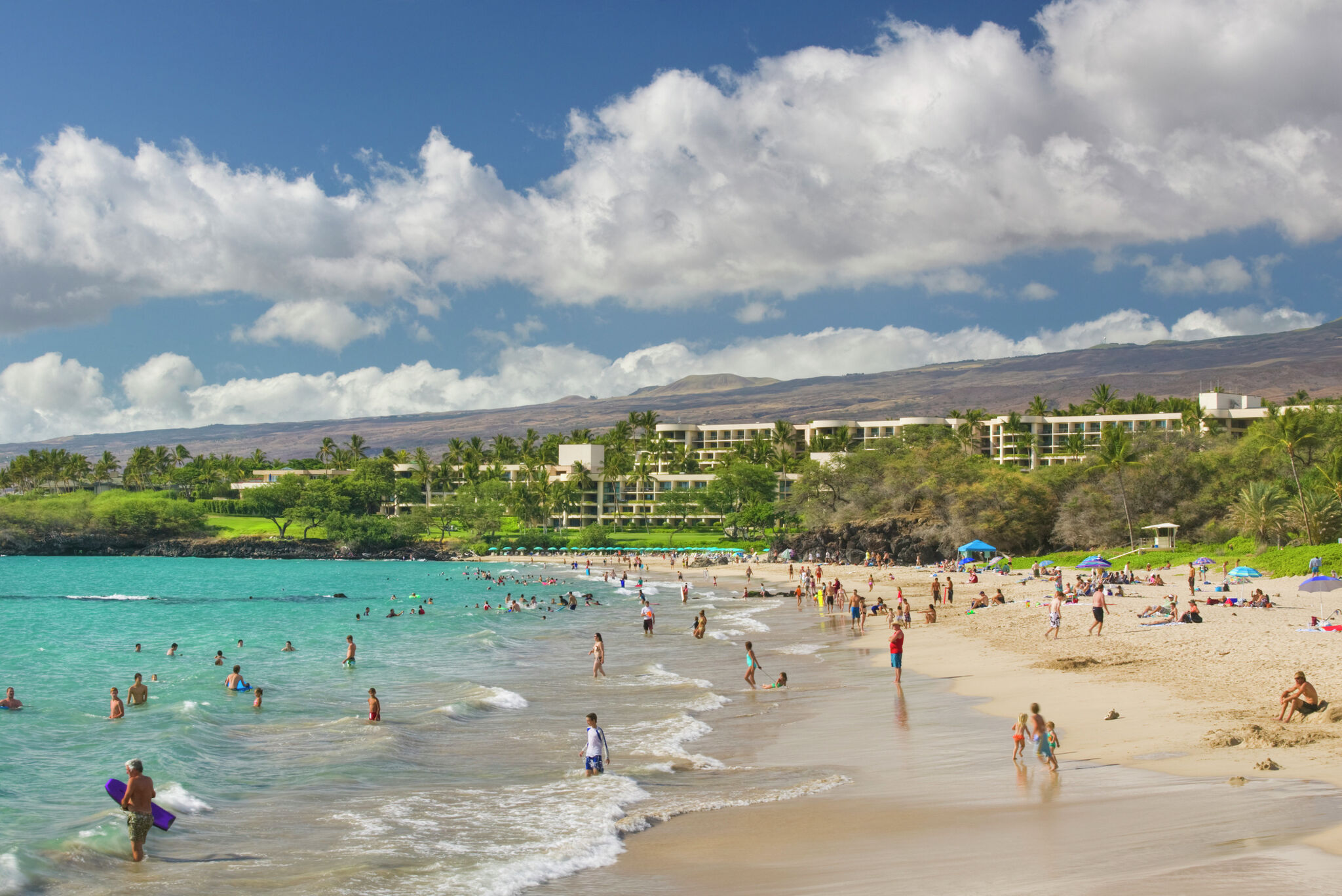
From disruptive
kona low storms
to rising travel costs driven by
higher taxes
,
resort fees
and increasing gas and fuel prices, several factors are weighing on
Hawaii
tourism. On the island of Hawaii, which has seen the largest increase in hotel prices across the state, the small businesses around the island are feeling the ripple effects.
“A definite decrease in tourists,”
Big Island Brewhaus
co-owner Jayne Kerns told SFGATE in a text. “We used to [rely] on busy season December-February when kids were out of school and the snow birds were on island, a spring break bump & then summer vacation busy-ness but none of that has been reliable the last few years,” Kerns continued. “That unreliability affects all those who work in the tourism/hospitality industries.”
One regularly sold-out weekly event in Kohala, the
Paniolo BBQ Sunset Dinner
, saw 22 cancellations due to kona low concerns on April 8 alone, according to Ted Aughe, general manager of Anthony’s Catering, which hosts the weekly dinner along with preparing meals for several tour companies on the island. It wasn’t the only business to see losses, as the state estimates that there was a
$300 million loss
in tourism revenue due to the storms.
Aughe said he’s spoken to many potential visitors who decided to travel to Mexico instead. If they do come to the island, they stay at the resorts instead of
renting cars
, taking tours and exploring. He said that for many visitors, a great deal of their travel budget has already gone to accommodations alone.
Aerial view of the north end of Anaehoomalu Bay and the Waikoloa resort complex, including the bay, reef, boats and beachgoers. Kohala Mountain fills the distant view.
Tom Benedict/Getty Images
The island’s hotels had an
average daily rate of $485
in March, a 7.2% increase from the same month in 2025. Compared with March 2019, when the average daily rate was $274.06, 2025 rates were up about 66.7%, the largest increase among Hawaii’s counties.
Advertisement
Article continues below this ad
Traveling to the island has become more expensive, leading to a different kind of traveler: higher spenders who may not be frequenting small businesses as much as in previous years. Higher prices have become a factor as well: What used to cost a Hawaii Island visitor $178.45 per person per day in 2019
cost $245.41 in 2025
, an increase of 37.5%.
“I’ve been hearing this for more than a year, ‘It’s so expensive now,’” Aughe told SFGATE by phone. “You’ve got to pick and choose. Maybe in the past, you did five events, and now maybe you’re doing two, and you’re not driving around the island as much, maybe renting a car for a day and go see the volcano or whatever. The reality is small businesses help run a huge percentage of the economy. There are less people spending more money that go to the resorts and don’t leave.”
Beyond the island of Hawaii, the entire state is also feeling the combined pressures.
“Statewide, and I’m sure this pertains to Hawaii Island as well, I think it’s a collection, it’s all these impacts, so whether it’s tariffs and increases, the federal shutdown as well as natural disasters and rising cost of doing business collectively … it’s making the economy in Hawaii much more challenging,” President and CEO of
Chamber of Commerce Hawaii
Sherry Menor explained to SFGATE in a phone call. “And as for tourism specifically, you know, whatever happens on a local and national scale trickles down to our state and sometimes it’s perception, sometimes it’s the cost pressure ... now with all these different economic and political factors it’s impacting tourism numbers here in Hawaii.”
In Waimea, a small upcountry town in the northwest part of the island, those who rely on tourism say business has slowed.
A low-altitude aerial photo of the center of Kamuela (Waimea), on the Big Island of Hawaii.
Tom Benedict/Getty Images
Edlyn Carvalho, innkeeper and general manager of the
Kamuela Inn
and a Waimea resident since 1995, is active in many business and hospitality groups, which keeps her finger on the pulse of island tourism trends.
“Typically we’d still see ‘snowbird’ season, higher than average occupancy rates in the first quarter, then start to drop by around April, pick up again in May (graduation season), then drop slightly in June,” Carvalho said in an email to SFGATE. “However, even with two, 3-day holiday weekends, the Annual Cherry Blossom Festival, and Spring Break, we noticed a decline in general travel. Our first quarter 2026 occupancy dropped by 9.37% as compared to the first quarter 2025.”
Even one of Hawaii Island’s biggest draws has seen a decrease. Kilauea Volcano has been
erupting sporadically
since Dec. 23, 2024,
drawing 1,877,854 recreational visitors
to Hawaii Volcanoes National Park in 2025 alone. However, the first three months of the year saw a loss in visitors compared with the previous year. In March 2025, the park received 162,193 recreational visitors to the park, while
March 2026
saw just 101,991, a
37.12% drop
. SFGATE reached out to Hawaii Volcanoes National Park for comment, but officials did not respond in time for publication.
Advertisement
Article continues below this ad
Kamuela Inn
at Waimea on the island of Hawaii,
April 1, 2025
.
IleneDawn via Flickr CC 2.0
Another attraction on the east side of the island, the annual
Merrie Monarch Festival
, brings thousands to the island every April, mostly Hawaii residents. This year’s event was “tremendous” for the Hilo candy factory
Big Island Candies
, said Lance Duyao, director of retail operations. But he said he has witnessed a downturn in other types of visitation. In his 25 years with the business, Duyao has seen countless buses full of international visitors, especially from Japan, unload at their factory, but tour groups started to slow down years ago after the start of COVID-19, he told SFGATE by phone.
SF Gate Logo
Don't let Google decide who you trust.
Make SFGATE a preferred source so your search results prioritize writing by actual people, not AI.
Add Preferred Source
Like the other islands, Hawaii Island was affected heavily by a decrease in international visitation, particularly visitors from Japan. In February 2018, there were 49,216 international arrivals to the island, compared with 18,734 in February 2026.
“The people who are median income or lower income, they don’t have that means to travel right now, consumer confidence is down,” Duyao told SFGATE. “… It’s an exotic vacation without having the exchange … for our West Coast people, they don’t need a passport to come to Hawaii, however all of those nuisance fees like the TAT (Transient Accommodations Tax) and the
Green Fee
and all of that work against Hawaii because the U.S. mainlanders can go to Mexico and get an all-inclusive trip.”
Advertisement
Article continues below this ad
He pointed out that those fees also affect locals who travel between islands, and said he is even reconsidering his own vacations. “I’m rethinking all of that spending now because the prices of items that I need on a daily basis to sustain my life have gone up exponentially,” he said.
Duyao said he’s relying on locals to get the company through the downturn, while Carvalho at Kamuela Inn is offering hotel specials to attract more visitors. For now, all say they’re in a holding pattern, waiting to see what the summer peak season will bring.
Editor’s note: SFGATE recognizes the importance of diacritical marks in the Hawaiian language. We are unable to use them due to the limitations of our publishing platform.
Advertisement
Article continues below this ad
More Hawaii News
—
Over 100 years ago, Hawaii eyewitnesses saw an island vanish into thin air
—
As visitors to Hawaii decline, risks abound
—
33 years after his son went missing in Hawaii, father still holds out hope
—
Hawaii residents brace for change as Larry Ellison tries to rezone 170 acres
We have a newsletter all about Hawaii, with news, tips and in-depth features from the Aloha state. Sign up
here
.
A new type of Hawaii visitor is emerging