Your support helps us to tell the story Read more Support Now From reproductive rights to climate change to Big Tech, The Independent is on the ground when the story is developing. Whether it's investigating the financials of Elon Musk's pro-Trump PAC or producing our latest documentary, 'The A Word', which shines a light on the American women fighting for reproductive rights, we know how important it is to parse out the facts from the messaging. At such a critical moment in US history, we need reporters on the ground. Your donation allows us to keep sending journalists to speak to both sides of the story. The Independent is trusted by Americans across the entire political spectrum. And unlike many other quality news outlets, we choose not to lock Americans out of our reporting and analysis with paywalls. We believe quality journalism should be available to everyone, paid for by those who can afford it. Your support makes all the difference. Read more
The Iran war is costing consumers billions of dollars at the gas pump.
Americans have spent $23.9 billion more on gas, year-on-year, since March 1 because of the Iran war’s impact on U.S. fuel prices, Patrick DeHaan, head of petroleum analysis at tracking site GasBuddy, posted Tuesday on X.
The astronomical added cost breaks down to $6,462 a second and $23.3 million every hour, DeHaan noted.
It’s the equivalent of paying for 1.2 billion hours of daycare; the combined budget for the National Science Foundation, Small Business Administration, and the Department of State; and just $1 billion shy of U.S. costs for the war so far.
Oil prices soared in early March as shipping in the Strait of Hormuz, which sees the transit of 20 percent of the world’s oil supply, ground to a halt over fears of Iranian attacks on tankers.
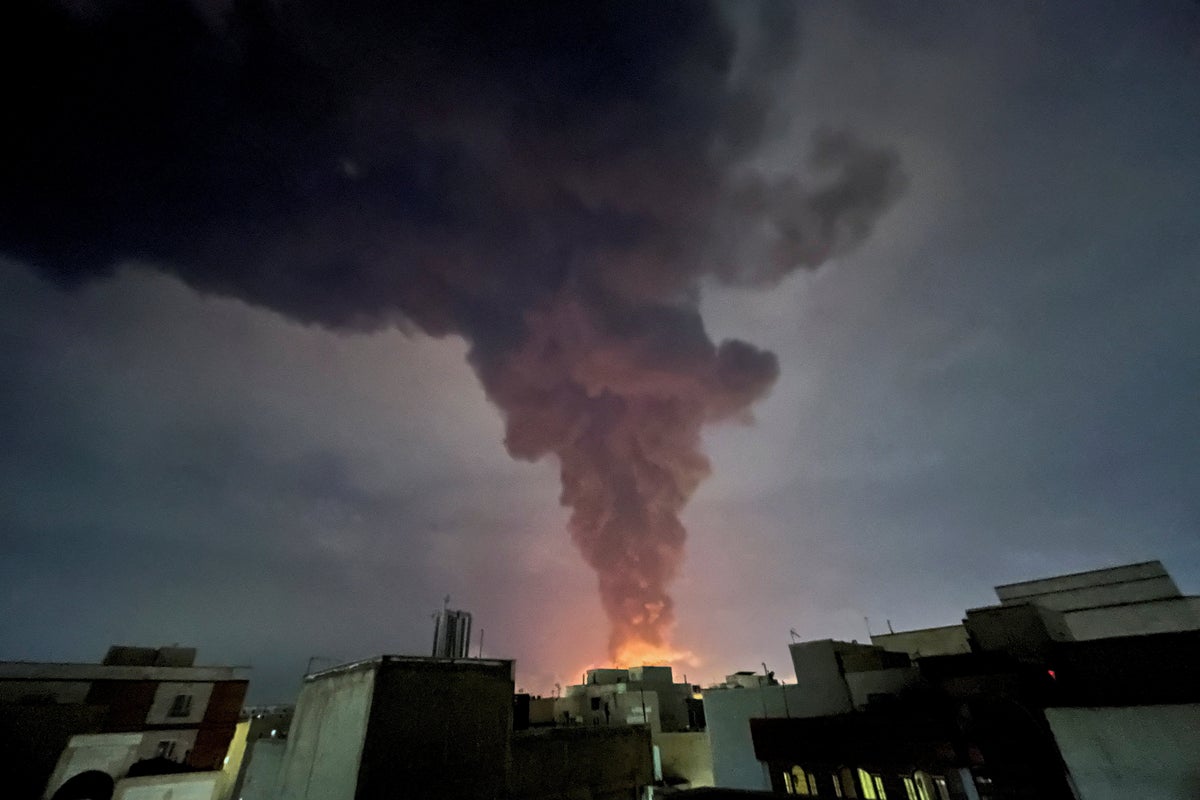
The Iran war is driving gas prices up at dizzying speed, resulting in American consumers spending around $6,400 more per second on fill-ups ( WANA )
As oil prices soared, U.S. gas prices followed, passing $4 a gallon on average in March for the first time in four years. Price relief came in the form of a temporary peace agreement between the U.S. and Iran in mid-April. Soon after, fuel costs rose again and approached $4.50 in early May.
America’s gas-price crisis comes at a bad time for people who were already struggling to cover basic monthly expenses. Some 40 percent of consumers are living paycheck-to-paycheck, an April survey from financial data and news site PYMNTS found.
Some 55 percent of Americans said their finances are getting worse, a level of anxiety that outstrips what consumers felt during the 2008 Great Recession and the pandemic.
Soaring gas prices have likely contributed to those financial fears. U.S. inflation had dropped to 2.4 percent in January and February, its lowest point in a year. The war erased those lows, sending inflation to 3.3 percent in March due to energy prices barreling upward. Gas prices rose 21.2 percent year-on-year in March, and overall energy prices rose 10.9 percent.
For drivers of America’s favorite car - the Ford F-150 - the war’s impact on gas prices is costing them an extra $46.44 per tank fill-up on Monday compared to last year.