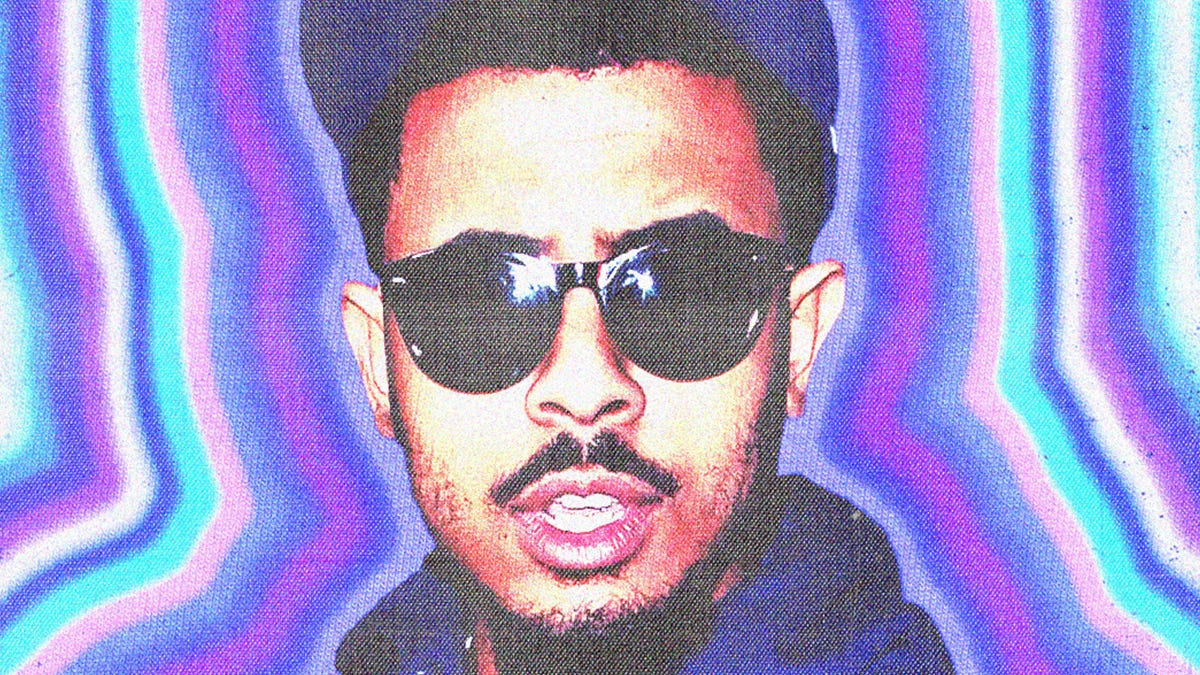
Art by DJ Short
Last year, I walked into an afternoon screening of News from Home, Chantal Akerman’s avant-garde documentary from 1976, where footage of New York is overlaid with Akerman reading her mother’s letters detailing family life back in Belgium. I heard someone call my name: It was my friend Tosten. Just before the lights dimmed, a nervous theater employee apologized profusely for the fact that this was not, as had apparently been in the fine print of the listing, the original, French-language version of the film subtitled in English, but rather the version for which Akerman had translated her mother’s letters into English. When the film was over, Tosten and I immediately agreed: The film’s most moving effect is the way New York (and Akerman’s imperfect English) sometimes drowns out the voice of her mother. Subtitles—legibility, that is—would have run counter to the whole project.
Tosten and I originally bonded over our shared passion for Blu, especially the less celebrated, more experimental work he released after Below the Heavens reshaped the rap underground while we were in high school. Across dozens of albums, in nearly as many strata of audio fidelity as distinct rapping styles, Blu has pushed the form to, and past, many of its supposed boundaries, burying himself under distortion, prying his verses away from any linear, literary readings. It was around the time of the News from Home screening that the New York Times Magazine began canvassing critics for their package about the 30 best living American songwriters. I sent a ballot that was arranged alphabetically, but it felt right that Blu was at the top.
I recently asked Blu to pick the ten records of his that he believes are most representative of his staggering catalog. What follows are pieces of that conversation, except for that two-minute stretch in the middle where the audio got all fuzzy.
Below the Heavens w/ Exile [2007]
Tell me about rapping for Suge.
My cousin was interning at Death Row. He came and checked me out. I was in the I.E. with my homies out there, and I had just recorded 20 songs in two days. I was playing him the songs like, “Yo, I’m going crazy right now.” He was like, “Dude, you got to meet Suge, man.” I was so on board because they just dropped that XXL cover with Left Eye, Crooked, Kurupt, and Eastwood. And then the article, Suge said he was looking for real lyricists. So I already felt like he needed to hear me.
Who would you say you sounded like then? I remember finding some old, old interview where you said you had a little DMX thing going on in high school.
I sounded like DMX on, like, my first three songs when I was 15. But at this point I was 19. I was listening to a lot of Canibus. I was on my battle rap shit. When I met Suge, I kicked him 50 bars. He said rap and I kicked him 50. Then he was like, “Give me another one.” I kicked him 64. He said, “another one.” And I kicked him a hundred. All just battle rap shit, just barring off. I think I kicked 24 bars of my hundred bars from the Wake Up Show.
Did it feel to you like it was going to happen? A deal with Death Row?
Yeah. Right after I kicked the hundred bars, he said, “OK, come to my office.” I walked into his office. He said, “What are you looking for?” I said, “I want a house and a car.” He was like, “Oh, man, that’s definitely doable.” I thought it was going to go down. I left the office and called my producer at the time, who was working with me and RBX. He hits RBX, RBX hits me up: “Don’t do it. Suge will take all your money. Nobody has had a good experience there.” And I was like, all right, I’m going to take his word for it. And my boy convinced me more so by saying, “Give me a year. I’ll get you signed to Roc-A-Fella.” And then, in that time, I met Exile, and then everything just changed.
So you were kind straddling both sides: the L.A. underground and the mainstream with Death Row. Stones Throw was talking to you too, right?
Oh, yeah. We pitched Below the Heavens to Stones Throw. They told us—what was their exact words?—they said something like, it’s too commercial.
When you were making most of Below the Heavens, you were in Long Beach, right?
Yeah. I was in Long Beach staying on studio floors, couch hopping, all through Long Beach.
My understanding is that you, in the years leading up to that, were rapping all the time, recording crazy numbers of songs, hosting shows, playing at other, battling. Do you feel like your writing and rapping changed a lot in those sessions with Exile?
Yes. When I met Exile, the songs that I was working on came out on a project called California Soul. That was more so my sound when I was trying to get picked up by Roc-A-Fella. And I had two underground songs on there. I mean, I had had underground content, really like raw rap shit throughout the project, but there were two songs, one called “Feel Good Music” and one called “Soul Sista,” that really resonated with people a lot. Coincidentally, both were produced by my boy Bombay. When I met Exile, I was already in the mind state of like, ‘OK, this is what people are feeling the most.’ So when I got up with Exile and I was like, this dude is Hi-Tek, Pete Rock, Premier, Dilla, all in one. I was amazed. I was amazed. And I was like, dude, I could do the perfect hip hop record with this guy. And that’s what we pretty much set off to do, man.
One influence you’ve cited a lot is Common, and specifically One Day It’ll All Make Sense. When you first got your hands on that record, how did it change how you were approaching things?
Well, One Day was the first Common album I heard. I was just so impressed with the lyricism and the content of the album, the maturity of it. It was some deep songs on that album as well as spitting shit—I’m a spitter first. Man, it really cracked my head open.
I always heard that Exile had submitted the “Show Me the Good Life” beat for Be.
Yes. “Show Me the Good Life” was made intentionally for the Be album. It was a crazy time. That was right when Below the Heavens blew up off of the leak.
That was the middle of ‘06, right?
Summer ‘06. We had a 30-day tour; I’m sleeping in a van. We’re circling the whole States counterclockwise, from Cali to the South, to the East, North, and back west ending in Seattle. When we get to Texas, I find out the album leaked. By the time we got to Florida, and for the rest of the tour, everyone knew the words to every song I was doing. So I was bummed in Texas. But by the time we got to Florida, it was a totally different story. That’s my best album to this day, man. I try to top it. Every time I make an album, I try to top it.
Her Favorite Colo(u)r [2009/2011]
Well, I’m going to make a counterargument in a second. If my memory is correct, a version of Her Favorite Colo(u)r was online in ‘09, but the final version came out in 2011. I assume this happened right before or right after you signed to Warner?
When I was signing to Warner in 2009, the agreement was to make an album called Her Favorite Colo(u)r produced by and ji. It was going to be a three-part album, produced by Ta’Raach, Shafiq Husayn, and Wajeed. That was the idea. But my girlfriend at the time left me, and I was shattered. I did these songs in two weeks, and I needed a title, and it was the perfect title. And so I dropped it on MySpace. I’m in the middle of the deal with Warner. I still hadn’t signed, and they called me immediately: “Did you just drop our record?” I was like, “Well, yes, but it’s not that record.” And to me, I put the art first at that moment, you know what I mean? Before the business. I should have held off and given that record to Warner. That was what our agreement was. But it was something that I had to do for the art.
When you were making Below the Heavens, you were also making The Piece Talks and Johnson&Jonson. But after Heavens did what it did, there must have been pressure to make your next record this big, widescreen biographical thing. Colo(u)r is very much not that.
Yes. And it was intended to be a big, big album, but like I said, the art was calling me in a different direction, man. I had been making beats for two years, and I made that project from my heart for my ex-girlfriend, and put it out like, “This is what her favorite color is.”
So around the same time, I assume you’re making what I would argue is your best album, theGODleebarnes(lp). Was that intended for Warner?
No, I started producing in ‘07 when Below the Heavens dropped. I moved in with my grandparents and I had a computer with Pro Tools on it, and I started just chopping samples straight in Pro Tools, no midi, just with a fucking mouse. And I made hundreds of beats. By 2008, I was sitting on some songs. By ‘09, I had stopped working on it. I just put it to the side. I got signed to Warner. I was ready to do my big stuff, stuff that I was taking more serious; the things I was producing and rapping on myself were more so for me, just getting my chops up on beats, just keeping my chops up with the raps by spitting over my own beats, and I would just drop it on MySpace. Then my hard drive crashed. So all those sessions were lost. And I just put together a mix of all the songs and gave it away in 2010.
I remember it very well, that single .MP3 file. So obviously you had lost the session files and couldn’t further mix or master anything. But you make it that one, 70-minute .MP3, and this is when a lot of people start talking about the sound quality or distortion on the record. Was that intentional?
Yes. I put this filter over it thinking I was going to get my hard drive fixed. I wanted the songs to be out, but if I ever went back and retouched them, I could put it out professionally. And then in 2015, my whole studio got robbed, and I lost the hard drives.
So that was after the fact. But then, by the time you make Jesus, it sounds like you’re experimenting with different sound approaches to the actual recordings, right?
Yes. I got a very expensive mic, and I just threw a sock on that bitch. I held it in my hand. I didn’t have a mic stand or nothing. So I’m rapping straight into the mic, just holding it, and I put out the project unmixed and unmastered.
I mean, it sounds like you’re rapping just it’s like a two-track, your voice on the finished beat.
That’s exactly what it was. That was when I got released from Warner—or for lack of a better term, I got released from Warner. First, my A&Rs got fired, then the presidents got fired. Then the whole company was brought out. So when the new ownership was in, I went to the office to figure out what the next steps were with my contract, my album, my project. And when I went to the front desk with the new ownership, they asked me my name. I said “Blu,” and they looked me up. Nothing. They said, “Do you have another name?” “John Barnes.” They looked me up again. They said, “You’re not in the system. We don’t know who you are.” And I went home. I called my A&Rs who signed me, called the former vice president who signed me. And they all told me, “Yeah, we’re fired, man. We’re gone. We advise you to move on.” I didn’t know I was supposed to legally leave them, you know what I mean? I just started releasing shit on my own. Fuck it. I released Jesus online. And like I say at the end of “what if I was,” I think, I say “Egypt 11, bitch!” I shouted it like three times. And the reason why I said that was because of the revolution that was going on in Egypt in 2011, when the president released everybody out of jail. So what I did was release Jesus, release NoYork!, release the Flowers album. By the end of that year, that was me doing my Egypt 11.
I had moved to L.A. around that time, and became friends with Nocando, and started going to Low End Theory all the time. And to me, NoYork! is kind of the definitive encapsulation of the beat scene era in L.A..
Exactly. It was intended to be capture the beat scene because the beat scene was so huge at the time, so flooded with talent. I remember an A&R saying me, “You don’t want a Kanye beat?” And I was like, “Man, that’s my whole budget.” But I was also thinking, these young guys in L.A. are the best in the game right now. Flying Lotus, Samiyam, Shafiq, Madlib, Daedelus, Dibia$e, Knxwledge.
I have always to come clean. I’ve always really preferred the original version of the second Blu and Ex album [give me my flowers while i can smell them, released on Bandcamp in 2011 before being fleshed out and given a proper commercial release the following year as Give Me My Flowers While I Can Still Smell Them].
It wasn’t really the second Blu and Exile album. Actually, I hit up Exile when I signed to Warner to get some electronic beats from him, and he was like, “Man, I’m not doing my electro style right now, but I got these loops that I chopped, check ‘em out.” And they were fire. I was like, “Oh, these shits are beautiful.” And so I had a bunch of raps that I wrote during Her Favorite Colo(u)r that I didn’t use, so I put them over the Exile beats and made a little project in two weeks. Then I put the project to the side. I remember Warner was like, “What you been working on?” And I played them a couple new songs. They were like, “You working on anything else?” And I was like, I did these Exile songs and I sent it to ‘em, and they went nuts over it. They were like, “Yo, can we put this out?” But I was trying to do NoYork! In retrospect, I guess I should have put it out with them, but I was pretty focused.
By that point, you sounded so much different than you had on Below the Heavens; flowers and NoYork! and Jesus are all different from one another, but none are like Heavens. What were you doing in 2009, ‘10, ‘11 to push yourself into new modes.
Man. Well, between those three projects is different eras. In 2009, after Her Favorite Colo(u)r, like I said, I just had a bunch of verses laying around. I got signed to Warner, and I had a lot of pressure on my back to make a great record. And that writing resulted in NoYork! And to be honest, NoYork! was not done at all. Those are all demos. Those were the songs we were going to choose from. And my intention was to go in and reproduce the songs with the producers. NoYork! is really me rhyming over two tracks again. But Warner didn’t cut the budget, and then they ended up releasing me, unquote. And so Jesus, I wrote Jesus in two days. I was on tour in the South, and the homie introduced me to trap music, the driver. And that’s my first time hearing just trap shit. When I say, on the song “Jesus,” I saw the future, told the homie, keep winning,” I was talking about the rapper Future.
Good to Be Home w/ Bombay [2014]
So there’s this tumultuous time, getting on and off Warner, putting all this music out. Then Good to Be Home comes out in ‘14. Had you mostly been working on the Bombay songs in that time, or were you working on other stuff you set aside?
I started working on the Bombay around 2012. I hadn’t talked to him in a long time. Years. In high school, I got a beat CD, and I played it for my producer. He said, this is DJ Quik. He said, “You found DJ Quik’s beat CD.” We didn’t know who it was. So I asked the guy who I got it from in the I.E. I said, “Yo, who is this?” He was like, “Let me find out.” He finds some guy, the guy says, “Yeah, those are my beats”. We pay him for a beat. We ask for more. He ghosts. Months later, the guy I know from the I.E. is like, “No, I found the real producer.” So we hit up this new dude looking to buy three beats. He sells them, 75 bucks a beat. And we ask to hear more. And my producer still swears it DJ Quik, that we’re being scammed for DJ Quik beats. Anyway, we find out the last dude who sold us beats was Bombay’s cousin. One last time, we drove from L.A. all the way to the I.E. to meet another guy to get these beats. And I remember Bombay hopped in the whip, and he played us some. And I’m like, “This is not the dude. They’re fucking us again, bro.” But it was. He was like, “Since my cousin robbed y’all, you can have the beats for free. And I put those on California Soul, and that was the last time I talked to Bomb. And then years later, he hits me up again. Dude sends me 300 beats. Now I’m not new to 300 beats. In 2009, I got 500 Madlib beats, which it took me a full year to go through. But with Bombay, I remember the beat for “Child Support” came on and the vision just clicked to me for the album.
Good to Be Home doesn’t sound like Quik.
He had changed his whole sound. It took me a minute to really accept the new sound. But then, when I accepted it, I was like, damn, he’s fucking in here killing shit. All the Madlib shit, he’s fucking killing these loops when before he was playing with synthesizers, keyboards, all his beats had been keyboard beats, and now they’re all samples, no keyboard whatsoever. But it finally clicks. I started working on an album called Red Barnes, and that’s what the album was called up until the end. But I called it Good to Be Home, because I was back home from touring for a while. I had been just at the crib most of the year, which was rare.
Bad Neighbor w/ Madlib & MED [2015]
So Madlib had sent you 500 beats, you say. For Bad Neighbor, did you just circle back and say, I finally found a few I really want to fuck with now?
When I dropped Jesus back in 2011, Mad hit me up. We actually started working on Bad Neighbor back then. After Jesus, MED hits me up. He’s like, “Yo, I heard the Madlib joint you dropped. What’s up with a Madlib-Blu-MED album?” MED is the first person that took me to Europe, in 2005. He’s my OG at this point. One of the songs that I sent him was “Burgundy Whip.”
Was that originally on Jesus and got taken off or something? I remember it being available, briefly, before Bad Neighbor.
No, what happened was, as we were working, we were supposed to be on the Medicine Show, the 13 albums that released in 2010 and 2011. And I remember the 11th tape came out and I was like, “Bro, I don’t think our tape is coming out.” And sure enough, Madlib dropped the last tape. So I dropped a mixtape called UCLA. Man, that shit was online for three hours. Stones Throw shut that shit down. But sure enough, it worked: Two days later, Madlib hit us up. He was like, “Let’s do this record.”
Was the DOOM feature simply a matter of Madlib hitting him up, or did he sift through Madvillain 2 sessions?
That was a favor actually dating back to MED being on Madvillain. MED hit him up for the favor, and he was down. He said something about that on the intro of the song: “Go visit my cousin right quick.”
The Blueprint w/ Shafiq Husayn [2018]
This brings me to what I think is maybe the most interesting record in your catalog, The Blueprint. A lot of the songs here feel to me like the product of freestyling sessions, no?
Fast writing, very fast writing, which is as close to freestyle as you are going to get. Just putting the thought straight down, no stopping.
There’s the song on there where you’re basically just listing Crip sets.
Yep. Come on, man. You can’t escape it out here, man. Especially growing up. It’s way more chill now, but that’s just a part of my DNA growing up here. I was living with my dad on Western and Slauson. It was everywhere.
But your name’s not some ironic rejection of that, right? I read that it was literally about “feeling blue” but that never sounded right to me.
No, no. I got the name in high school. My dad got a house in San Pedro, and I was new to the school, and he bought me a bunch of clothes for back to school. And I got two weeks’ worth of sky blue outfits. I had two shoes. I was a big North Carolina fan at the time, big on the Penny Hardaway Magic. So for me, it was just some basketball shit. And sure enough, I would play basketball every day, and they didn’t know my name, so they would say, “Blue, pass the ball!” And the name stuck. I remember I got my first manager, I was like 17, and he was like, “Yo, what’s your rap name? And I was like, Spitting Image.
That is such a teenage rap name.
Come on. I was trying to be like Common Sense. You got to have the two names, you know what I mean? But he was like, “What’s up with Blue? Everybody calls you Blue.” Then he told me I should go by John Barnes, my real name. And I was like, “Nah, fuck it. I’m Blu.”
What were the Blueprint sessions like? When you say it was written very fast—was that something you and Shafiq decided to do? Did you want the album to have that energy?
Well, I got out of jail and I was dead broke, and I owed Shafiq money. I did four months in jail and then two months in a mental hospital to get out of jail early. I asked Shafiq, “Can I do a mixtape over this beat tape you just put out on Bandcamp? And all the proceeds you could keep?” I didn’t have any money for studio time, so I bought a $20 mic, not knowing this is going to be the shittiest-sounding mic ever recorded on. I plugged this motherfucker up. I could not get it to sound good for nothing, bro. I was like, fuck. And I’m spending my last on a fucking $20 mic. So I do thismix tape, make a couple Gs in a fucking day, two days, you know what I mean? And Nature Sounds hits us up the second day it was out, like, “Yo, what’s up with this shit? Let’s put it out. And I was like, “Y’all crazy. You want me to rerecord?” They was like, “Nah. Just like it is.”
I think it makes sense. It feels like you just stepped in from outside and said it.
Yeah, I did it in probably four days. I remember before I wrote it, I was reading a lot. I was reading books when I was locked up, and I got out and I read more. I read that I was reading the Tookie Williams book, the Raymond Washington book. [Ed.- Both Williams and Washington are widely credited as co-founding the Crips in L.A.; Washington was murdered in 1979 and Williams was executed by the state in 2005.] I actually came up with the idea for the album in jail, the song titles and everything. But I wanted it to be a big record. I got out and was just so broke. So when Shafi dropped these beats online, I heard these amazing tracks—he’s one of my favorite producers ever—and I’m going nuts over these beats. I owe him money. It all just came together like that. I was just listening to it the other day; I feel like it’s some of my best material.
You said you came up with parts of it, the titles and concepts and so on, in jail. Did you find you were able to write while you were inside? It goes both ways. Some people find it really is conducive to writing a lot, and some people really can’t write inside.
No. I remember when I got locked up during Good to Be Home, right at the end of that process, I wrote three songs in jail that made that record. I think there were the best songs on the record, especially “The Return” and “The 50z.” And I wrote those with just the beat, the memory of the beat in my head. If you listen to “The Return,” it’s a nine-bar loop. I still was memorizing that the sequence of the song and everything. But when I got locked up the time after that, I couldn’t write whatsoever for those six months. I didn’t write anything It was terrible in there.
Miles w/ Exile [2020]
So it’s funny to go from being in that place for The Blueprint, with the $20 mic, and then the next one you want to talk about is Miles, which sounds as clean as anything you’ve ever put out. How did it feel to be working with Exile again?
Well, at first, see we got signed by Fat Beats in 2015, and I started working on Exile electronic trap record. He gave me a bunch of—or actually, I collected a bunch of—his trap beats, a bunch of his electronic bounce beats that I’ve been trying to get since NoYork! And so I started doing this project to that, and in the midst of that, I got robbed, went to jail, all of that. I got out and I was still trying to push this trap album, and Exile wasn’t feeling the energy. He was like, “Man, just the energy around everything that’s been going on the last couple of years, I don’t think this is what our fans need. We haven’t released that record in a while. I think this isn’t the smartest move.
What had made you want to pursue the trap record? Was it the same wave of inspiration you caught while making Jesus?
No, I just love Exile’s electronic sound. I love those beats.So I had great ideas for songs with him, and I was really trying to push the agenda. But I was in a bad headspace, so the songs are really street and a little trashy, you know what I mean? A lot of shit-talking on there about the police and shit I was going through. And Ex took a year to convince me not to do that record. We sat down and he was like, “Dude, Fat Beats is hitting me up. We haven’t done anything for a year.” And I was stubborn. I wasn’t replying to him, hoping he would just put out the trap record.
In hindsight, do you feel that he made the right decision?
Definitely. Mainly because when we started working on [Miles], it gave me a lot more purpose, again, for writing. I felt like I hadn’t written a good rap since I got out of jail.
Why do you think that was? What was keeping you from getting back there?
Losing everything I worked on, my life for ten years. The only thing I had invested in was my studio, all my equipment, all my records for ten years of being an artist—and then all of a sudden all that was gone. And it was tough for me to accept: I was not making beats, not listening to records, not collecting any records, you know what I’m saying? Not digging anymore. I would try—a dope rap will come out every now and then, but it wasn’t like me fleshing out anything. I was shook after coming out of jail, feeling like I was wrongly put in jail. So it was a bunch of shit. And Exile was like, “Write about this, what you’re really going through. Don’t try to feed into the negativity of what’s surrounding you. Write about your true feelings/” And I remember I did a song called “Miles Davis” over a DJ Premier beat that I was trying to buy at the time. And Premier didn’t sell me the beat. It was like five Gs or something; I didn’t have the money. And so I said, “Ex, you know what? If you could flip this Miles Davis song and you agree to do an album called Miles with me, I’ll be down to do a new Blu and Exile record.
And that was the title.
It wasn’t so much about Miles Davis as the day that I got robbed, I found out I was having a son, who later passed prematurely, and his name was Miles.
I’m so sorry.
Man. Thank you, man. So for me, it was like, if you really want me to rap about this shit that I’m going through… And the miles is the miles it took to get here. I go on and on; it’s a double album.The songs are longer, more drawn out. I’m saying so much on that album, man. And what’s crazy is I didn’t want to do it, man. And when Exile put the battery in my back to write with purpose again, man, he gave me purpose again. He was like, “People come to us for a feeling, like a healing.”
Afrika w/ Nottz [2023]
You’ve made a lot of albums with a single producer. What do you like about that?
I like the consistency of albums as albums. I like when I’m listening to an album, and it takes me on a journey where I don’t want to change the next song. I fall into the next song and every one flows into each other and you enjoy the whole thing. I think what makes that possible is consistency. And when you’re working with one producer, you tend to get a collected sound, a consistent sound. That’s been my thing since listening to [Common’s] Like Water for Chocolate. I know that’s not one producer.
No, but it’s one collective of people.
Right. It has that consistency. Now, I’ve said this quite a few times, but Nottz is the fucking greatest producer. He’s producing hits, smash singles for all types of people, all types of artists every day. Nottz is like a machine, bro. I met him in 2012, I believe, maybe 2011, at a VA show, with Chad Hugo, and he says, “Let’s go to my studio after.’ And I was like, “Hell yeah.” I’d been a Nottz fan since ‘98 with [Busta Rhymes’s Extinction Level Event: The Final World Front]. We go, and I remember he played me a beat that was so amazing. I heard Nas, I heard Jay-Z. I could’’t believe he played it for me; producers don’t play you their best shit unless you got bread, unless you’re a big artist. So I’m like, “Why are you playing this?” He says, “Do you want it?” And I sat on this beat for years. And then Coalmine Records hit me up to do an EP with Nottz after they had done a Sean Price and Small Professor EP. And we did Gods in the Spirit, Titans in the Flesh, two EPs, that we then combined for an LP. And we went on an incredible run after that.
Where did the idea for Afrika come from?
A lot of material for Miles had come from reading. I just started reading more at the time, and I was reading a book on Africa and was very inspired, and I was like, “I want to do an album on my roots.” I felt like I had more to say about the subject.
I like that it’s packed so densely with guests, so you have this very open-ended topic filtered through so many different lenses.
Yes, exactly, man. It’s like everybody has something to say about Africa.
Los Angeles w/ Evidence [2024]
The writing style on Los Angeles is not exactly the same as The Blueprint, but you still get into some of those almost-freestyled cadences. It’s very—not experimental per se, that’s not the right word—but you’re trying a lot of different approaches, different pockets on there.
Los Angeles, to me, was a return to being comfortable writing again, feeling good about where my pen was. In 2015, when I got robbed, I went through a mental breakdown and I flipped out on Alchemist and Evidence and other people online and in life. I was diagnosed with psychosis, which is when you have a traumatic episode stemming from a dramatic event. I’d been robbed; I’d lost a child; my brother just got double life. My grandmother just passed. I was going through so much shit, and I was losing my nugget. I lost my nugget completely. And the robbery topped everything off. You know what I mean? And when I lost my son, and that was it. That was just the breaking point. And I just started tripping out on everybody, man. And it wasn’t me at all. I’ve never been that way. You know what I mean? I’ve never been that type of person. I’ve never had an event happen like that to me. I really was lost, bro. And I did six months and kind of found my head again. And then it just took years of healing. Finding my pen again, building friendships again after tripping out on so many people. Building relationships with family members again. And I finally got back after Miles. Miles was released in 2020. I had my son in 2022, and I was on fire. I did 12 albums in a year’s time. Evidence hit me up, and I was a little overwhelmed. Evidence has had my back since I flipped out on him, and he still had my back. Evidence is one of the first established artists to ever reach out to me. He’s the first from the coast to reach out to me, show me respect, put me in the studio, you know what I mean? Since my debut. And so he’s been a good friend forever. And so when I tripped out, I’m so blessed that he knew that wasn’t me.
Yeah, that’s wonderful.
That they still stuck with me and waited out, waited it out for me. They let me go through that shit and was still there for me after I went through it, you know what I mean? And he was like, “Yo, man, I’ve been producing for artists. What’s up? Let’s cook something.” And I felt my pen was on fire. It was just perfect timing. Evidence is the king of the L.A. underground to me. Since ‘98. He’s just so prolific, bro. And he puts albums together better than anybody. So it was an honor, and I wanted to make it special. And to me it was, man, it’s one of my favorite albums.
Is there a song on there that stands out as an example of you feeling comfortable as a writer again?
Oh, I love “The Land.” I love the second verse. I love the song “Los Angeles”—the scratches, the beat. That defines the Evidence beat to me. [Co-founder, along with Evidence, of Dilated Peoples, DJ] Babu is one of my favorite DJs. You know what I mean? Even though I got Exile on it, it was still the same feel to me. It was what I was trying to capture. I wrote the album in two weeks, maybe one, and we cut it in a month, man. It was crazy. We were on fire.
So you’ve cited a lot of these albums as being written very quickly. When you’re in the thick of writing an album, what’s the process like? Is it really regimented, waking up at a certain time and getting to it?
After years of doing all these albums, I realize I get hit with waves of inspiration. When Evidence hit me, it took me three months [to start writing]. I sat on the beats for three months. I would put ‘em on periodically during an Uber ride and just listen to ‘em, come up with concepts. And when the whole album, it’s in my mind, then I could put it down.
God Takes Care of Babies & Fools w/ Myka 9 & Mono En Stereo [2025]
Now, if we’re talking about other kings of the L.A. underground, we’re talking about Myka 9. The guys who really took me under their wing when I moved here had come up under those Fellow guys. So to me, they were always like gods.
And they are, bro. Myka, he wrote a song on the first N.W.A album. Bro, on a side note, have you read Myka’s book?
No. I’ve always meant to.
Get it, bro. It’s mainly lyrics, but there are amazing stories in there. You’ll be like, “Oh my gosh, this dude is the dude, man. Insane. The Good Life freestyles, the Wake Up Show freestyles, the Project Blowed freestyles, and the songs in between. Like, man, come on.
What does it feel like then to be in sessions and stuff with those guys?
Well, leading up to that, I did an album with Fatlip. In high school, I was a huge Pharcyde fan. You know what I mean? That’s one of my biggest L.A. influences growing up. They had a huge influence on Below the Heavens, like with the singing hooks, the freedom to be yourself in L.A., you know what I mean? Not be a gangster—that comes from Pharcyde. And so doing an album with Fatlip was crazy. He had two albums. He had two Pharcyde albums out at the time, and one solo album. You know what I mean? And then [these legends] are like, “Yo, we’re down to do an album with you.” And I’m like, what? This is crazy. I had done a project with Fat Jack from Project Blowed, and when we were working on it, he asked me who I wanted on the album. I was like, “Yo, could you hook up a Myka 9 feature?” So Myka comes down to the studio, blazes the verse—the coolest person ever, telling me these crazy stories, right? When I meet him, I’m like, “Dang, this fool is dope.” And then I reached out to him for three more features after that, for different projects. And he was always efficient. He always just come through and really shut shit down. My favorite verse on the Out of the Blue album Shafiq and I did is the last verse on the album, which is Myka’s. I hit him up. I said, “Yo, Myka, would you be down to do an album?” We had a rapport already building and it just trickled over. Man. It was an amazing experience working on that album. I love working with Myka. We wrote the whole album, texting each other back and forth with our verses.
Texting?
Yeah, I would write my vers; I would write 12 bars, send it to him, and in 15 minutes he’ll have his verse written.We wrote that whole album over the phone really quick.
Time Heals Everything w/ Exile [2026]
You guys took long between Heavens and Miles—when you consider that Flowers was a different process—but now you’re in a quicker cadence again. How does that feel?
There’s a secret to the new formula. I can’t reveal yet. But it’s a reason. It’s the reason behind the madness, there’s a method behind the madness. I love this album. The response has been so overwhelming already. Exile actually named this album; it’s a representation of the returning back to the essence after going through so much in life. You know what I mean? Trying to let you know that time does heal everything. It’s like a breath of fresh air after so much.
You’ve been writing raps for decades now. What do you feel like you’re currently getting better at?
I remember working on Below the Heavens, and it would take me forever to write a song. It would take me so long; it was so much pressure. I would be sitting there trying to craft the verse forever, and now verses just fall out. After years of experience, verses just come to me, and it’s become a lot easier with experience, man, I’ll say that.