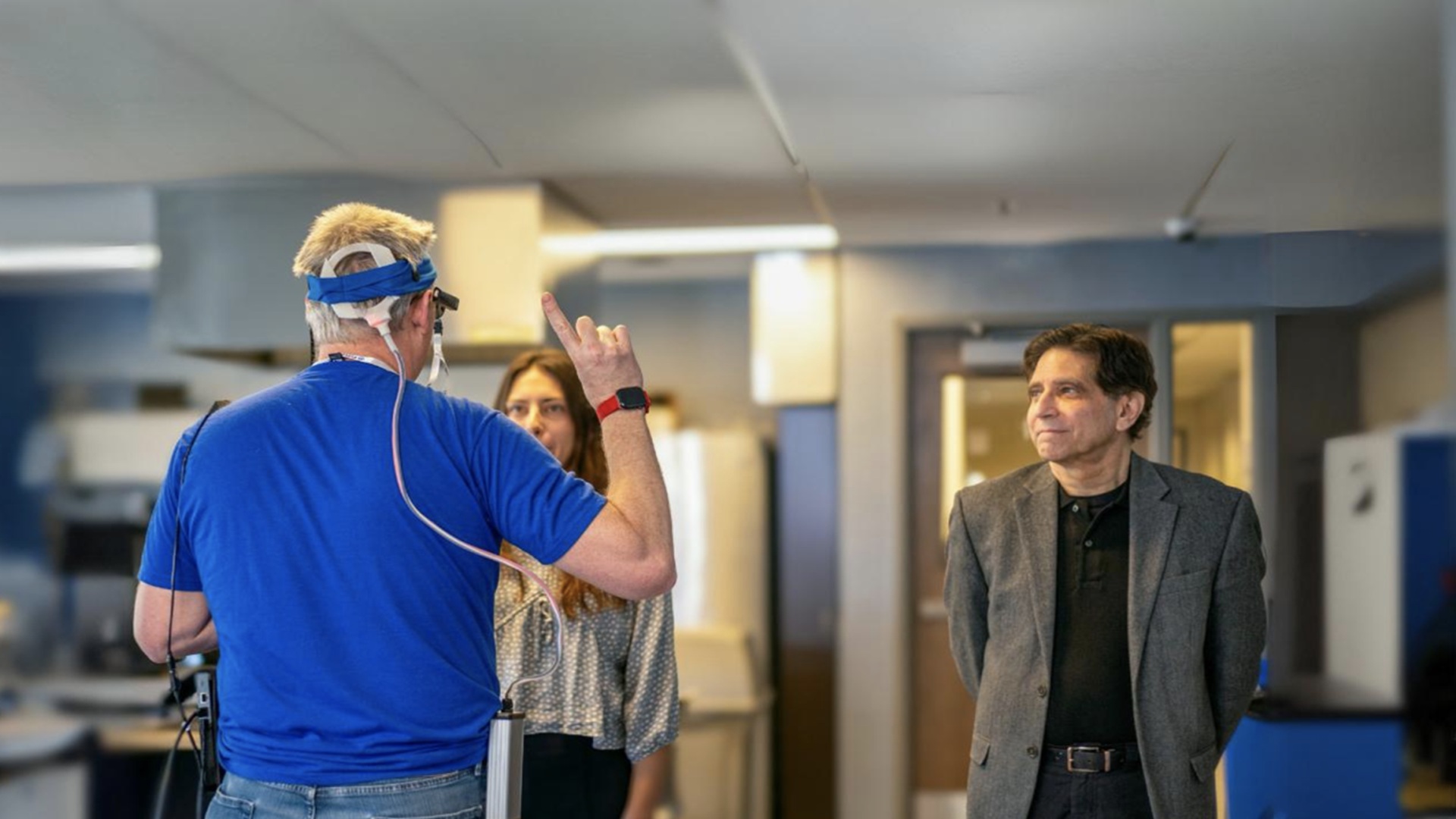
A wireless brain implant designed to restore artificial vision has been successfully implanted in a third blind participant as part of an ongoing clinical study in the United States. The procedure was carried out at Rush University Medical Center, marking another step in testing the scalability of the Intracortical Visual Prosthesis (ICVP) system. The ICVP device bypasses the eye entirely. Instead of relying on damaged retinas or optic nerves, it directly stimulates the brain’s visual cortex to generate patterns of artificial sight. The system uses multiple miniaturized wireless stimulators implanted into the brain, each carrying electrodes that deliver controlled electrical pulses.
In this latest procedure, researchers implanted 34 stimulators with a total of 544 electrodes in a blind participant. The goal of the ongoing trial is to assess whether users can interpret these signals to navigate environments and perform basic visually guided tasks after training. The device is part of a long-running research program led by Illinois Institute of Technology, in collaboration with neurosurgeons and vision scientists across multiple institutions. The study is now in its clinical phase after years of preclinical work refining surgical techniques and hardware stability. Third implant marks milestone “The success of this third implantation of the ICVP represents an important step forward in offering a meaningful option for patients with profound vision loss,” said Dr. Sepehr Sani, the surgeon who implanted the device. Researchers say the repeat success of implantation suggests the system can be reliably deployed beyond a single experimental case, a key requirement for future clinical adoption.
“This project underscores the immense possibilities of neurotechnology—by translating decades of research into real-world applications, we are forging new pathways to enhance lives,” said Philip R. Troyk, executive director of the Pritzker Institute of Biomedical Science and Engineering at Illinois Institute of Technology and principal investigator of the project. Troyk added that the latest procedure shows the system’s stability and reproducibility, which are critical for long-term trials involving human participants. Wireless vision testing begins After a recovery period of around four weeks, the participant will begin training sessions at The Chicago Lighthouse’s Hilton Center for Prosthetic Research. Researchers will evaluate whether the brain signals produced by the implant can be interpreted into usable visual perception. “For people who are completely blind, even the ability to perceive a small amount of light can profoundly impact their daily lives,” said Janet P. Szlyk, President and CEO of The Chicago Lighthouse. “The results from this research open doors to transformative advancements in blindness research and vision restoration.”
The clinical study will follow participants for one to three years, depending on implantation date, to track adaptation, usability, and long-term safety. The research team is also actively recruiting additional volunteers who lost vision in adulthood but had prior normal sight for at least the first decade of life. The ICVP project is being developed through collaboration between Illinois Institute of Technology, Johns Hopkins University Wilmer Eye Institute, the University of Chicago, and other research partners, including medical device and microelectronics firms supporting implant fabrication and testing.