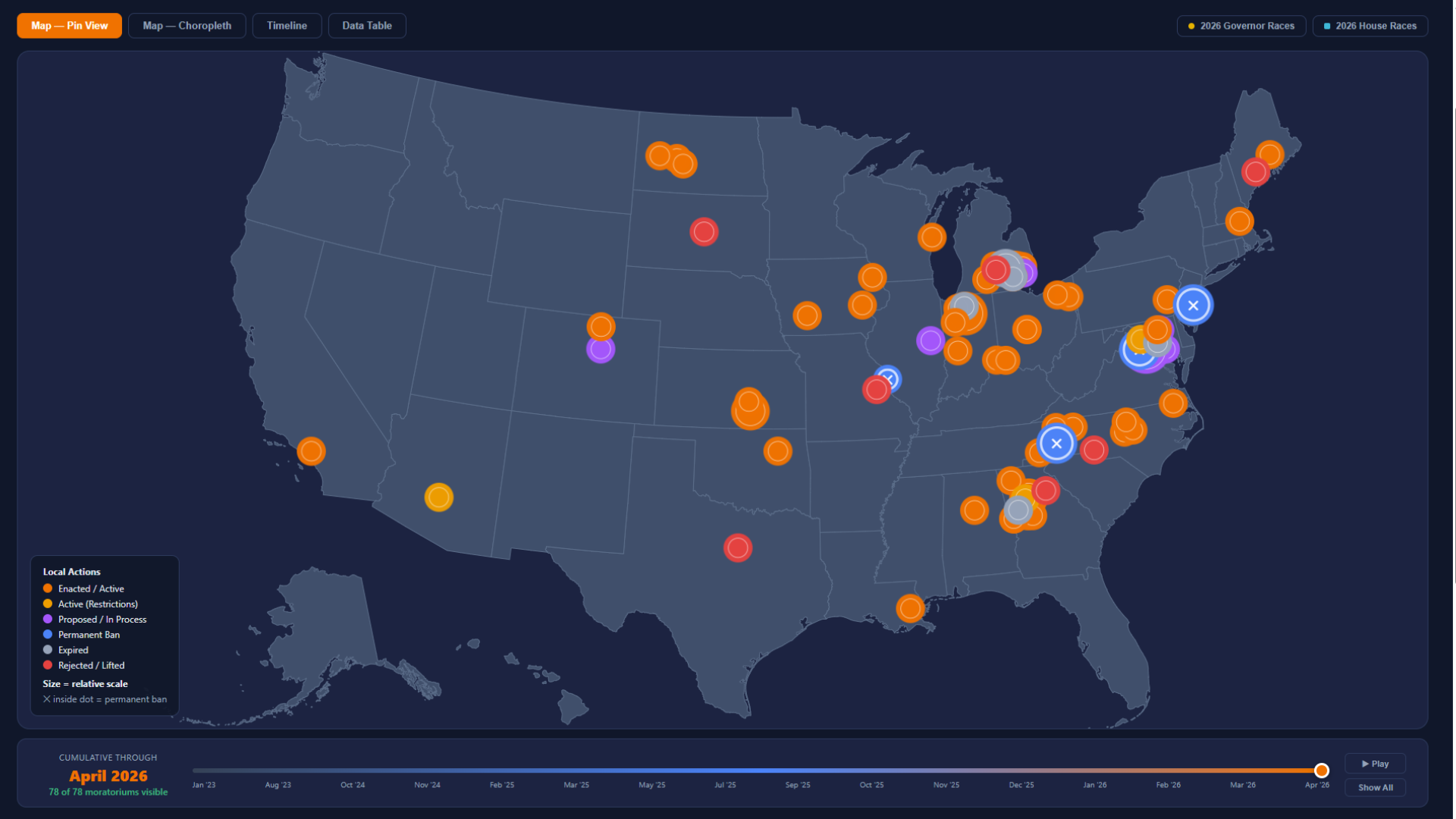
The number of bans being enacted against data centers is increasing across the U.S., with one tracker listing 14 new bans from March to April. According to the U.S. Data Center Moratorium Tracker, there are currently 50 active bans across different jurisdictions, with an addition of four local governments enacting a permanent ban in their area of responsibility. There are also three proposed bans, plus several more in various stages, including those in the process of creating a new ban, exploring the possibility of a ban, and some with expired bans.
Many AI hyperscalers in the U.S. are rushing to build data centers across the nation, especially as they rush to become the dominant force in AI. However, this unbridled investment in data centers is resulting in shortages of various resources. We’re currently in the midst of a massive memory and storage chip shortage, and we soon might see a CPU shortage, especially as AI inference workloads increase. However, the construction of AI data centers has a direct impact on the communities that surround them, especially when it comes to increased electricity costs and noise and air pollution.
Wholesale electricity prices have skyrocketed by up to 267% in the past five years as utility providers are forced to upgrade their infrastructure to handle the increased demand from data centers. However, the upgrade costs are being passed on equally to the data centers and the average consumer, resulting in higher utility bills for everyone. It has gotten to the point that President Donald Trump met with the biggest AI tech companies in the White House and made them promise to “pay their own way” with the “ratepayer protection pledge.”
Latest Videos From
While this move will theoretically reduce the burden on the average American, at least in electricity costs, nearly half the nation is against having a data center near their home. The debates around AI infrastructure have become heated, especially as residents are concerned about their impact on both the environment and their wallets. One incident had an Indiana politician’s home shot at by an unknown assailant who left a “NO DATA CENTERS” note at their doorstep. It also saw town council members who said yes to these projects resigning or being ousted en masse as community members revolt against this threat to their lifestyles.
The tracker shows how quickly moratoriums are popping up across smaller jurisdictions across the nation. The website only listed eight moratoriums as of May 2025, but just one year later, we now have a total of 78. This is going to be a problem for many AI hyperscalers, especially as they grapple with delays caused by hardware shortages around power infrastructure and more. And with investors spending billions (if not trillions) of dollars on the promise that this technology will someday change the world and make lots of money, these delays might spook them and cause funding that many AI startups rely on to dry up.
Follow Tom's Hardware on Google News, or add us as a preferred source, to get our latest news, analysis, & reviews in your feeds.