Editor's Note: This item has been updated with additional comments.
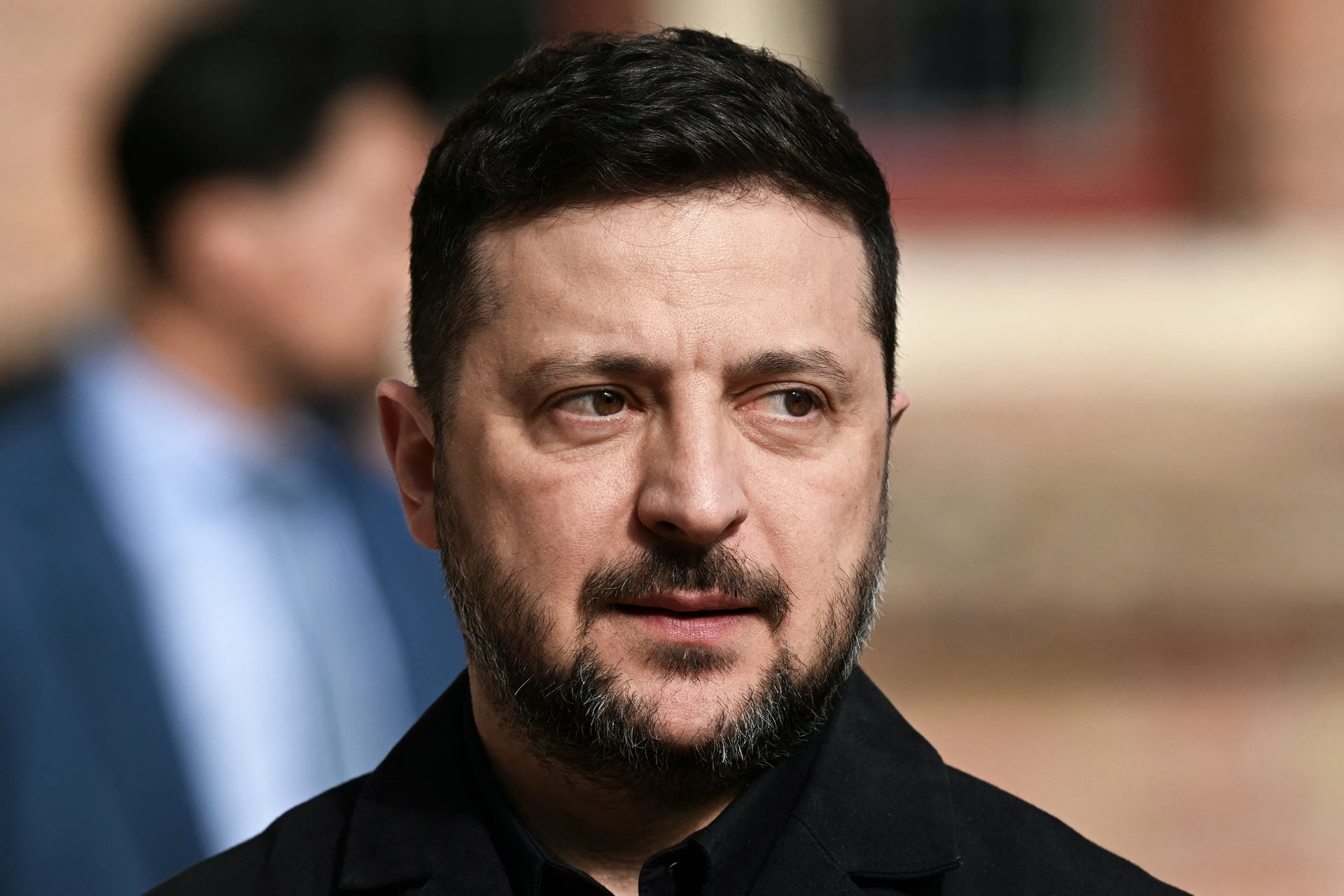
Ukraine "doesn't recommend" that foreign representatives attend the May 9 parade in Moscow, President Volodymyr Zelensky said, after Russia threatened retaliation if its unilateral ceasefire was violated.
The Russian Defense Ministry confirmed on May 7 President Vladimir Putin's announcement of a unilateral ceasefire from midnight May 8 to May 10. According to the ministry, during this period, "all Russian military units will fully cease combat operations."
The Russian Defense Ministry warned that any ceasefire violations by Ukraine or attempts to target Russian facilities would be met with "an adequate response." Russia further threatened to launch a mass attack on the center of Kyiv if Ukraine attempts to disrupt the May 9 parade in Moscow.
Ukraine has consistently called for an unconditional ceasefire with Russia, which Moscow has rejected.
After Putin declared a "Victory Day truce," Zelensky said on May 4 that Ukraine would implement a ceasefire on May 6. Later, he said that by 10 a.m. local time on the first day, Russia had already violated the ceasefire 1,820 times.
"They want permission from Ukraine to hold their parade, so they can safely march onto the square for one hour once a year, and then go back to killing our people and waging war again," Zelensky said in his evening address on May 7.
According to the Ukrainian president, some Russia-friendly countries reached out to Ukraine about their officials' plans to attend the May 9 parade in Moscow.
"An odd desire… these days. We don't recommend it," he added.
In similarly veiled remarks, Zelensky earlier said that the fate of Russia's May 9 military parade "depends" on Ukraine's army, as concerns grow in Moscow over possible attacks during the event.
Kremlin aide Yuri Ushakov claimed that Russia did not invite foreign leaders to its Victory Day celebrations this year.
"We deliberately did not invite foreign guests to the celebrations, unlike last year," he told the Russian state news agency RIA Novosti.
Moscow has also revoked the accreditation of foreign journalists for the parade, according to Der Spiegel. The decision was linked to changes in the event's coverage format due to the "current operational situation," a Kremlin official told the outlet.
Kremlin spokesperson Dmitry Peskov later denied Der Spiegel's reporting, but said the number of journalists allowed to cover the event would be limited.
While Slovak Prime Minister Robert Fico plans to visit Moscow for the occasion, as he did in 2025, this year he plans to skip the parade itself. Slovakia's Deputy Foreign Minister Rastislav Chovanec confirmed that Fico will not attend the parade and said he might take the opportunity to pass along messages from Zelensky to Putin.
"The prime minister's trip to Moscow is primarily focused on commemorating the end of the Second World War. He will not attend the military parade and will only lay flowers at the Tomb of the Unknown Soldier," Chovanec said at a European Affairs Committee meeting on May 7.
"But yes, alongside this, he's also going to meet the Russian president, to whom he may convey messages from the Ukrainian president he met twice over the past week. The prime minister may also obtain valuable information from the Russian president on how Putin views efforts to end the war."
While Fico has historically had a rocky relationship with Zelensky, his tone on Ukraine has softened noticeably in recent days following the ouster of Hungarian Prime Minister Viktor Orban. Fico met with Zelensky on May 4 and reaffirmed support for Ukraine's EU accession.
Still, Fico is the only EU leader to visit Moscow during Victory Day, with the Baltic states of Lithuania, Latvia, and Estonia explicitly banning the Slovak leader from using their airspace to travel to Russia for the occasion.
A senior Ukrainian official told the Kyiv Independent on May 6 that Kyiv sees no reason to observe a ceasefire proposed by Moscow for Victory Day celebrations.
Temporary truces announced during the war, often tied to religious or commemorative holidays, have repeatedly failed. Ukraine's General Staff said Russia violated the Orthodox Easter truce 10,721 times during a 32-hour period in April.
Just days before the announced two-day May ceasefire, Russia carried out mass daytime attacks on Ukrainian cities in the east and south, killing at least 17 people.