Grim Reminder: A Grim Historian is a reader-supported newsletter and depends on your 5$ donations to keep the most depressing politics and history in your inbox. Please consider becoming a paid subscriber or sharing with someone who loves misery.
Share
In the first week of August 1974, President Nixon was talking to the wallpaper.
Not the whole wall. Just specific portraits of dead presidents. He preferred Lincoln. Lincoln was a good listener. Lincoln did not have a tape collection that the Supreme Court was about to make public.
Nixon was also drinking. A lot. The First Lady Pat Nixon was also drinking. A lot.
Secretary of State Henry Kissinger was not drinking. On the night of August 7, Kissinger was kneeling on the floor of the Lincoln Sitting Room, praying with the president, which is generally not something cabinet members do when things are going well.
Staffers, Secret Service agents, and even Kissinger cried openly in hallways. Some aides were furious at him; others became almost cultishly loyal as the walls closed in.
Moments after becoming the first U.S. president to resign, Richard Nixon paused atop Marine One to give his signature double V-sign, like a man trying to outsmile his own downfall.
President Nixon Signals ‘V’ Prior to Boarding Marine One,” photographed by Robert L. Knudsen, August 9, 1974, courtesy of the Richard Nixon Presidential Library and Museum
This is the part of the Nixon story that gets cleaned up in the textbooks. The most powerful person in the world spent his last week in office drunk, sleepless, and wandering the White House asking dead presidents whether he should fight on.
His daughters were terrified. His staff was terrified. Secretary of Defense James Schlesinger was terrified enough to order that any nuclear launch instruction from Nixon be cleared with him first.
So while Nixon was upstairs talking to Lincoln, Schlesinger was downstairs making sure he couldn’t start World War III.
James Schlesinger was not a sentimental man. By early August 1974, he had concluded that the President of the United States could no longer be trusted with the launch codes. So he did the only thing a Secretary of Defense can do in that situation…
He staged a small, polite, paperwork-averse coup.
He went to General George S. Brown, the Chairman of the Joint Chiefs. Brown went to the four-star commanders of every major military command, including Strategic Air Command, which actually had the nuclear weapons. The instruction was simple: if the White House issued an unusual order, do not execute it until Brown and Schlesinger had personally verified it.
Senator Chuck Grassley would later call this “extralegal,” which is the word you use when you mean coup but would prefer not to be quoted using the other word.
The nuclear football may or may not have been physically removed from Marine One on the morning of August 9. Historians disagree. What is not in dispute is that for the last several days of his presidency, Richard Nixon was Commander in Chief in name only, and he never knew it.
The grown-ups had stepped in. The republic survived.
In January 2021, the grown-ups stepped in again. Mark Milley, Chairman of the Joint Chiefs, called the four-star commanders into a secure room after January 6 and told them not to take launch orders from anyone — including the President of the United States — without him in the loop. He had a name for what he was doing.
He called it pulling a Schlesinger.
The republic survived a second time.
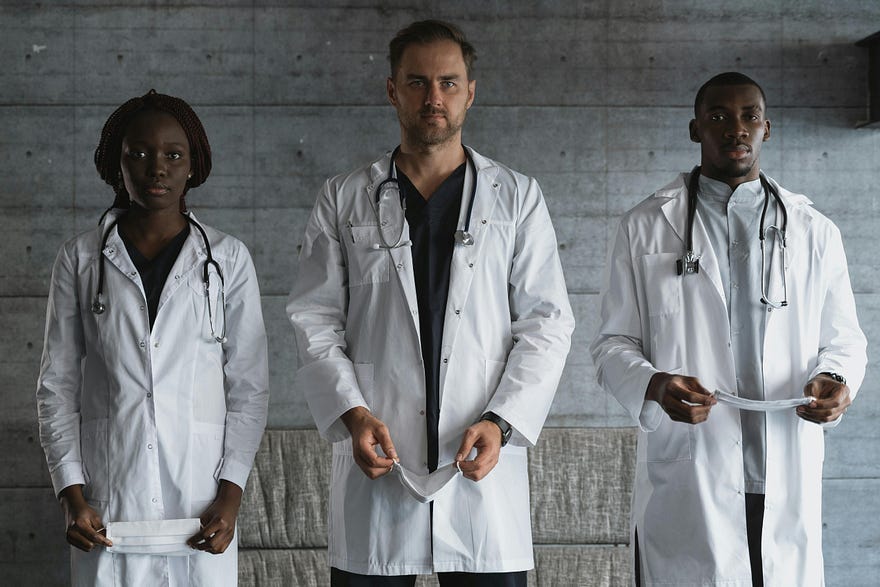
Now, we are on the third strike. On April 30, 2026, thirty-six American physicians slipped a document into the Congressional Record that every future historian will be forced to reckon with.
As of this writing, not a single mainstream reporter has touched it. The Times has not. The Post has not. 60 Minutes has not called. The MSM has done the math. They looked at what happened to the law firms, the universities, and Jimmy Kimmel and politely said, “Not my rodeo.”
Now, issue: Vol. 172, №76 sits in the Congressional Record like Chekhov’s gun on the mantelpiece, waiting for the act in which it must go off.
And I assure you. One way or another, it will go off.
The Thirty-Six
To understand what the thirty-six did, you first have to understand what they knew would happen if they did it.
They knew about the Goldwater Rule — the 1973 American Psychiatric Association ethics rule that forbids members from offering professional opinions on public figures they have not personally examined. They knew about Bandy Lee, the Yale forensic psychiatrist who lost her teaching appointment in 2020 after tweeting that one of Trump’s lawyers showed signs of “shared psychosis” with his client. They knew the American Psychiatric Association would not defend them and might actively go after their licenses. They knew that the administration they were assessing had, over the past fifteen months, demonstrated a remarkable enthusiasm for using the federal government — the IRS, the FBI, the FCC, the DOJ — against private citizens who annoy it. They knew their names would be public, printed in the official record of the United States Congress, searchable forever, easy to find.
They signed it anyway.
The four-page document is titled Medical Concerns About President Donald J. Trump and His Fitness for Office. It is, in plain language, a clinical bill of particulars.
Marked deterioration in cognitive functioning. (Watch any interview for receipts.)
Disorganized speech. (Trump calls this the “weave.” Neurologists call this tangentiality.)
Factual confusions. (Mixing up Nikki Haley and Nancy Pelosi. Mixing up Vance with Rubio.)
Episodes of apparent somnolence during critical public proceedings. (Falling asleep every time Rubio speaks.)
Grandiose and delusional beliefs. (Believing he is Jesus or the Pope, depending on the sundown hour.)
Severely impaired judgment. (Ones that we are paying for in an estimated $1T war.)
Disinhibition and perseveration. (If I hear that Hannibal Lecter story one more time, I will eat my arm.)
Manic behavior. (One hundred and fifty social media posts in a single night.)
The 36 were concerned enough to invoke the Declaration of Geneva — the post-Nuremberg successor to the Hippocratic Oath, which was written specifically because doctors at Nuremberg argued they had only been following orders. They concluded that Donald J. Trump is mentally unfit to be the President of the United States, and that steps to remove him from office must be undertaken with the greatest urgency.
Then they signed their names.
The Hippocratic Oath is now louder than the oath to support and defend the Constitution against all enemies, foreign and domestic.
The question no one can answer
The physicians asked a pivotal question: Will any of Trump’s cabinet members, generals, or staff do what James Schlesinger did?
To answer that question, let’s look at who has the ability to “pull a Schlesinger.”
The Secretary of Defense, Pete Hegseth, is a former weekend host of Fox & Friends whose principal qualification for the job is the willingness to do whatever the President tells him. The Secretary of State, Marco Rubio, is a man who spent the 2016 primary calling Donald Trump a “con artist” and a “lunatic,” and who now serves at his pleasure. The Chairman of the Joint Chiefs, Gen. Dan Caine, has not, to public knowledge, called any four-star commanders into any secure rooms. There has been no anonymous senior Pentagon official. There has been no leaked memo.
What happens next, no one knows.
The mainstream press may eventually report it, or it may not. The American Psychiatric Association may go after the signatories, or it may not. The 25th Amendment may be invoked, or it may not. A general somewhere in the Pentagon may, in some future hour, decide to pull a Schlesinger, or he may not. These are open questions, and anyone who tells you they know the answers is lying or selling something.
But future grim historians know one thing the rest of us do not yet know. Chekhov’s gun, once placed on the mantelpiece, must go off. The doctors understood the rule when they placed it there.
And when the gun fires — and it will fire — the people most damaged will be the ones who chose to load it.
Carlyn Beccia is an award-winning author and illustrator of 13 books. The Grim Historian is a reader-supported publication. To receive new posts and support my work, consider becoming a free or paid subscriber.