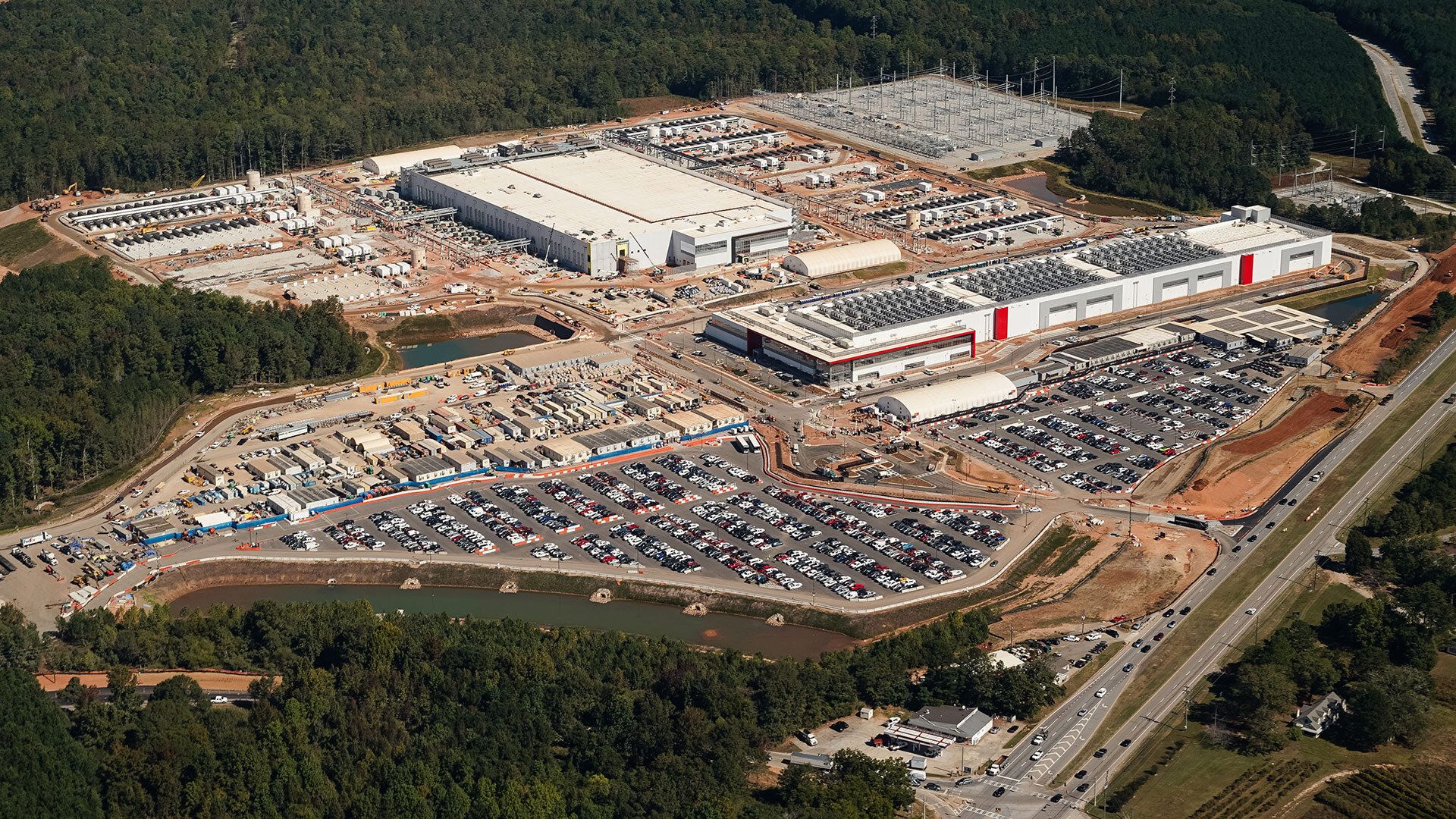
Fayette County, Georgia, was telling residents to stop watering their lawns to conserve water. The request came after homeowners in a nearby subdivision reported unusually low water pressure, but when the county investigated, it found the cause: a data center campus 20 miles south of Atlanta had been drawing roughly 29 million gallons through two water connections the county didn't know existed, Politico reported Saturday.
Quality Technology Services (QTS), the Blackstone-owned developer behind the 615-acre Fayetteville campus, owed $147,474 in retroactive charges for the unmetered consumption, but the county didn’t fine the company.
The QTS Fayetteville (“Project Excalibur”) campus is among the largest data center developments in the country, currently comprising 13 buildings totaling approximately 6.2 million square feet, with plans for up to 16 buildings at full buildout. QTS has said it expects to invest up to $1 billion in the project, which began construction in 2023 and isn’t expected to be completed for another three to five years.
Latest Videos From
QTS told Politico the 29 million gallons were consumed during temporary construction activities, including concrete work, dust control, and site preparation. The company markets a "closed-loop" cooling system for its data centers, which recirculates the same water rather than drawing from the municipal supply. Once operational, QTS said its facilities would only require water for domestic needs like bathrooms and kitchens.
However, the discrepancy between QTS’s stated and actual water usage remained undetected for months, with Politico reporting that the county’s water system director, Vanessa Tigert, attributed the oversight to a procedural error during the county's transition to a cloud-based metering system.
Tigert told Politico that her department has a single employee handling both inspections and plan reviews, saying, “... we don’t have enough staff. We can’t keep staff.” QTS and the county disagreed on how long the water went unmetered, withTigert estimating about four months and QTS saying 9 to 15 months. Despite the unauthorized connections, Fayette County opted not to fine the company. "They're our largest customer, and we have to be partners," Tigert said. "It's called customer service."
The incident came to light last week after a Fayette County resident obtained the utility's May 2025 letter to QTS through a public records request. Fayetteville had already moved to restrict data center growth before this, with the city council banning new data centers in every zoning district earlier this year, adopting Ordinance 26-0-12. A separate proposal from developer Crow Holdings was denied by the city's planning commission in January, and the company withdrew its appeal in March.
Stay On the Cutting Edge: Get the Tom's Hardware Newsletter Get Tom's Hardware's best news and in-depth reviews, straight to your inbox. Contact me with news and offers from other Future brands Receive email from us on behalf of our trusted partners or sponsors
Georgia's Public Service Commission also froze Georgia Power's base rates through 2028, specifically to prevent data centers from shifting electricity costs to residential customers. The state is currently experiencing moderate to severe drought, and Gov. Brian Kemp declared a state of emergency last month over wildfires. Georgia hosts more than 200 data center facilities.
The QTS campus is projected to generate $150 million to $200 million annually in property tax revenue, according to the city. Fayetteville is one of at least 50 cities across the U.S. that currently have active bans on new data center construction, with four adopting permanent prohibitions, according to the U.S. Data Center Moratorium Tracker.
Follow Tom's Hardware on Google News, or add us as a preferred source, to get our latest news, analysis, & reviews in your feeds.