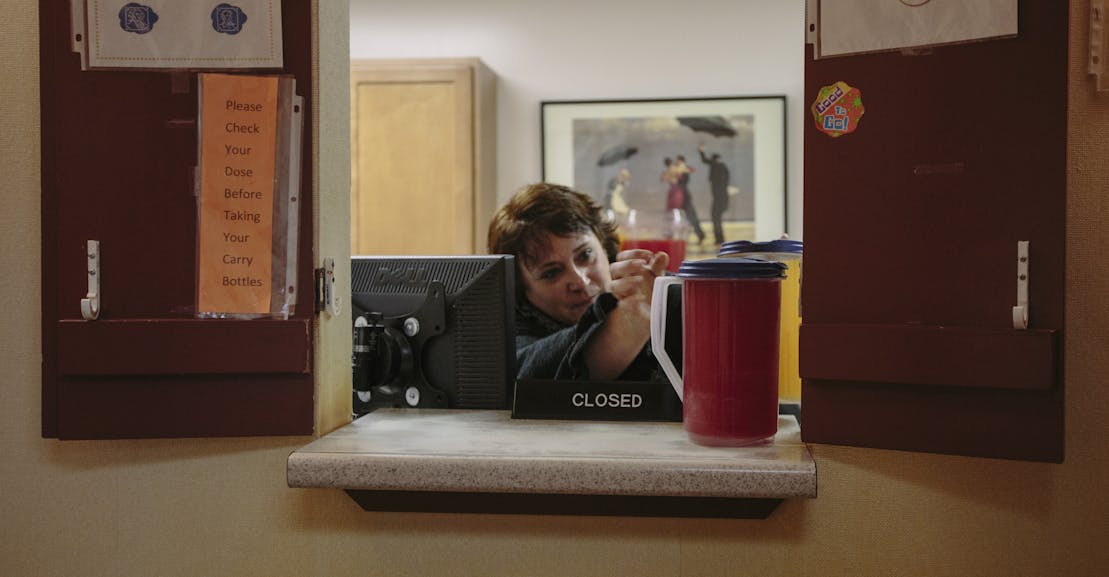
Methadone, a long-acting full opioid agonist and synthetic opioid, is a Food and Drug Administration–approved medication that can treat opioid use disorder. It can also be prescribed by doctors for pain management. Each patient’s dose is tailored to their individual needs, and when taken to treat opioid use disorder, methadone reduces opioid cravings and withdrawal while blocking the effects of opioids. The length of treatment varies for each patient, and some taper their dosage down under medical supervision in an effort to get off it entirely. While the National Institute on Drug Abuse recommends methadone treatment should last at least 12 months, some individuals and their providers opt for long-term maintenance plans.
“In methadone care, people are removed from care for reasons of payment or any reason that has nothing to do with their health.”
Unlike buprenorphine, another medical treatment for people with an opioid use disorder, methadone can only legally be dispensed at an opioid treatment program, a clinic specially designed for the purpose. The federal government bans primary care doctors from prescribing it and pharmacies from distributing the medication. Methadone programs can be hard to get into because of waitlists or the financial cost—the National Institute on Drug Abuse reports that methadone can cost $126 per week, but the price varies widely, especially among for-profit clinics—not to mention the fact that transfer patients may have to give up some of the more convenient privileges they earned at their previous clinic, like take-home doses or leniency if they test positive for THC. Losing access can be frustrating to a patient in an urban area, who will have to switch to a different clinic, but it can be significantly worse for a patient who doesn’t have another clinic nearby.
“There’s drug dealers in every town,” as Sterling says, and they can be more accessible than the clinics designed to keep patients off illicit substances. Those dealers are reliable and charge consistent prices. They don’t revoke access to drugs for minor infractions or expect clients to show up every day at 6 a.m., regardless of what havoc that wreaks on their work schedules and personal responsibilities. But those dealers are also dispensing drugs that are increasingly cut with fentanyl, a synthetic opioid more powerful than heroin or morphine that is leading to a record-shattering epidemic of overdose deaths—predicted to top 100,000 in 2021 alone. And of course, street drugs can land a person in prison. Methadone access might come with a significant amount of red tape, but at least, with appropriate use, it won’t kill a person or get them locked up. Because regulations are so prohibitive at every level, however, getting on methadone isn’t always an easy choice. Advocates argue it should be, and President Joe Biden’s administration has taken notable steps toward broadening access, but for now, the process is still largely the same as it was in the 1970s—and it wasn’t great then.