Just this week, the Senate voted 51-50 along party lines (with tie breaker from VP Kamala Harris) to make President Biden appointee Alvaro Bedoya the deciding vote on a split 2-2 Federal Trade Commission. And now that it is no longer split, a group of senators wants the commission to actually move forward on investigating pharmacy benefit managers.
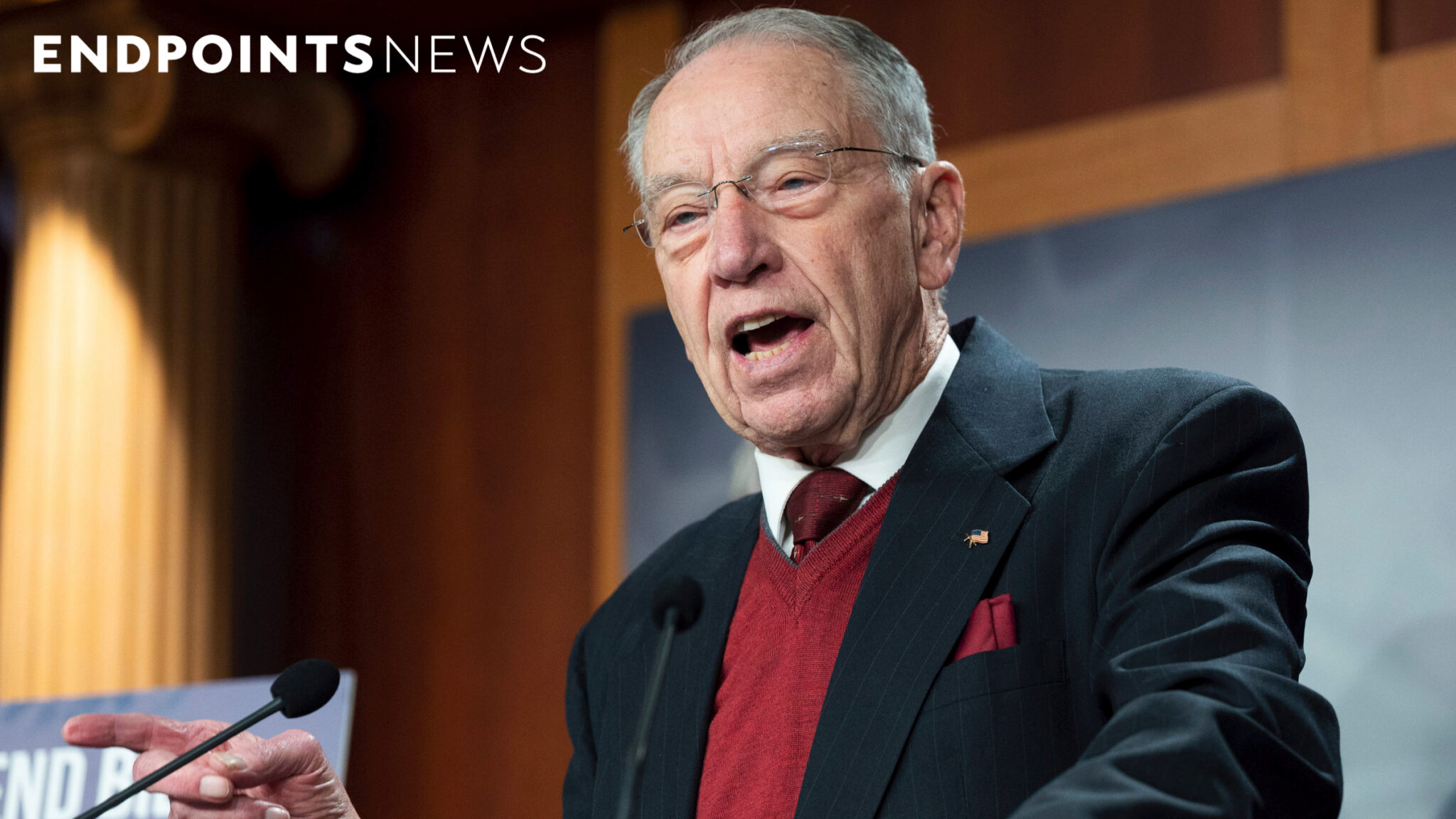
Republican senators Chuck Grassley (IA) and Mike Braun (IN), alongside Democrat senator Ron Wyden (OR), submitted a letter to FTC chair Lina Khan earlier this week, after the commissioners remained deadlocked in a 2-2 vote in February to formally look into anti-competitive practices at the hands of PBMs.
At the time, Khan said, “We have a real moral imperative to act, this inquiry is long overdue.”
This is not Grassley’s first letter regarding investigating PBMs to Khan — he sent a letter to her just back in March after highlighting how PBMs operate with “little to no transparency.”
Now onto the letter: The senators noted that Grassley and Wyden released an 88-page report on the cost of insulin earlier this year after a two-year investigation from the Senate Finance Committee into the three largest insulin manufacturers (Sanofi, Novo Nordisk and Eli Lilly) and three largest PBMs (OptumRx, Express Scripts, and CVS Caremark, which have a combined market share of 75-80%).
What they found was, at least on the insulin front, PBMs utilized a number of contracting tactics to secure “preferred formulary placement.” But as the senators added through PBMs’ sheer market share:
Despite, or perhaps because of, this level of consolidation, PBMs operate with little transparency, making it difficult, if not impossible to understand how PBMs influence prescription drug pricing.
As of 2019, some 37 million Americans are on insulin, and 7 million require it daily. The senators also noted that for people on Medicare Part D, more than 1 in 4 spend more than $5,000 a year for their insulin.
Some of those tactics that the senators briefly mentioned were found in four PBM practices: rebates, formulary exclusion lists, administrative fees and price protection clauses. For rebates, they’ve increased in lock step with list price since 2013, if not earlier, the senators noted. They also said, “We found that PBMs with a large volume of clients are able to extract higher rebates from manufacturers when compared to smaller payers, who often lack leverage and resources.”
On formulary exclusion lists — the lists that dictate whether or not a healthcare plan will cover the price of a drug — the Senate committee’s investigation found that payers and PBMs increased their own use of the lists to control drug costs, as manufacturers had increased their rebate offers to PBMs “significantly following the threat of exclusion.” For manufacturers, exclusion of their drugs can end up resulting in financial losses and reduced market share.
Then the letter went on to admin fees — while information is not well known thanks to confidential rebate agreements, what the committee found suggested that fees range between 3% and 5% of the list price, which can be problematic as the list price can be increased to offer PBMs concessions in exchange for preferred formulary placement.
The letter then cited a law review article published in the Harvard Journal on Legislation from legal researcher Robin Feldman:
[T]hese payments reduce the drug company’s net income from sales of the drug and increase the PBM revenue related to a specific drug. Even when a drug company pays for services from a PBM, if the value of the service is substantially less than the payment made, the transaction is simply an indirect price concession. Once again, raising list price can leave room for the drug company to offer these goodies . . . [and, as a result], many people be will be forced to pay higher list prices.
Beyond the rebates, exclusion lists and admin fees, the final tactic mentioned was price protection clauses, initially designed to limit a drug maker from increasing the list price beyond a pre-specified amount — and if the maker goes above that amount, the PBM and health plan receive an additional rebate, depending on the contract. However, the committee’s investigation found that those clauses don’t deter annual inflation of the list price — and PBMs accept them as long as they get more concessions at the end of the day.
In closing, the senators wrote to the FTC: