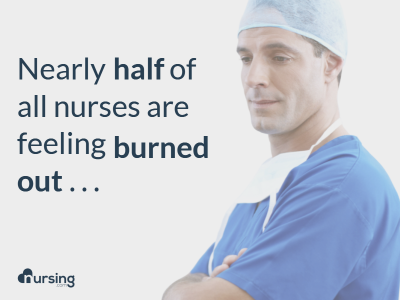
Anyone that has had to go to work in the last year has felt some sense of burnout. This might have made them switch companies or change their careers, but the impact of that decision is confined only to the employee.
When a highly trained healthcare worker burns out and leaves the industry they leave a gap that can’t be filled easily at all. Inevitably there will be fewer nurses to care for patients which will undoubtedly impact patient care. Since the start of the Covid-19 pandemic the medical field and nurses, in particular, have been through harrowing experiences, and it is starting to take its toll.
It isn’t just the environment, it is also the workload. Early in covid when there was a ventilator shortage, nurses spent their entire shift manually ventilating patients.,
We at NURSING.com ran a survey amongst our nearly half-million members and discovered some truly scary statistics. Nurses freely admitted:
they are so burnt out
offices are so short-staffed
they are so afraid of how this is hurting their patients
This burnout can cause nurses to leave the field which can hurt staffing and lead to further burnout. It is a scary cycle, and the biggest concern is that the end result is how this is affecting patient safety. Imagine a scenario where you go to the hospital in an acute situation and can’t be seen because there are no nurses. Even if you are seen you are not getting the care you deserve.
The nurses that do remain on the job are reporting being harassed and attacked, is it any wonder they want to quit?
Shortages can always be reduced by training new nurses, but this time it is different. Covid also impacted the training of nurses, so it will be even longer before things normalize.
83% of Educators believe that Covid-19 has disrupted the education of their nursing students.