In this article TGT
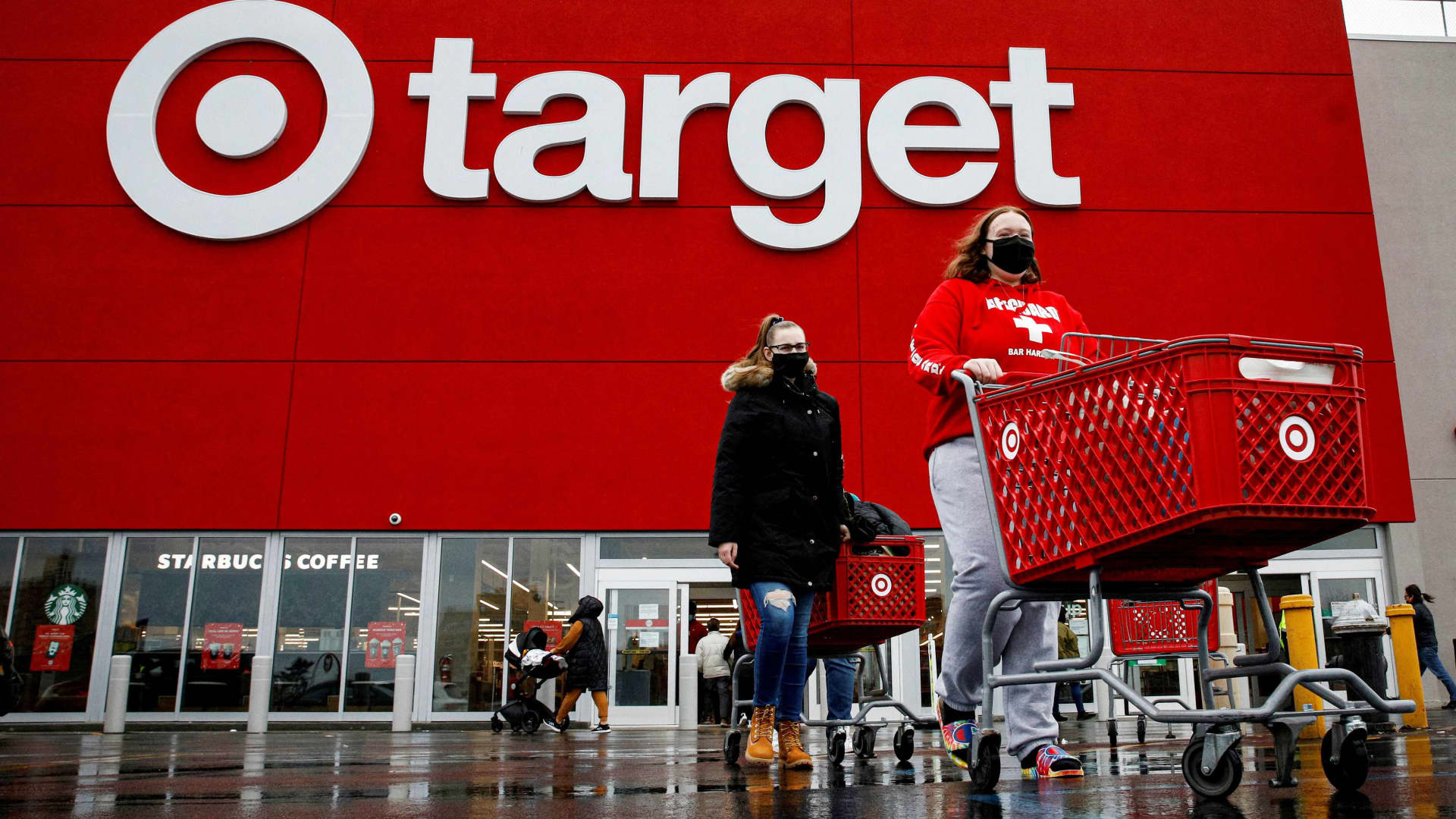
FILE PHOTO: Shoppers exit a Target store during Black Friday sales in Brooklyn, New York, U.S., November 26, 2021. Brendan Mcdermid | Reuters
Target on Wednesday said its quarterly profit fell nearly 90% from a year ago, as the retailer followed through on its warning that steep markdowns on unwanted merchandise would weigh on its bottom line. The big-box retailer missed Wall Street's expectations by a wide margin, even after the company itself lowered guidance twice. Yet the company reiterated its full-year forecast, saying it is now positioned for a rebound. It said it expects full-year revenue growth in the low to mid single digits. Target also said its operating margin rate will be in a range around 6% in the second half of the year. That would represent a jump from its operating margin rate of 1.2% in the fiscal second quarter.
Shares of Target fell more than 3% in early afternoon trading. Chief Financial Officer Michael Fiddelke defended Target's aggressive inventory efforts. He said the retailer had to move swiftly, so it could clear the clutter, gear up for the holidays and navigate an economic backdrop clouded by inflation. "If we hadn't dealt with our excess inventory head on, we could have avoided some short-term pain on the profit line, but that would have hampered our longer-term potential," he said on a call with reporters. "While our quarterly profit took a meaningful step down, our future path is brighter." Here's how Target did for the three-month period ended July 30, compared with Refinitiv consensus estimates: Earnings per share: 39 cents vs. 72 cents expected
Revenue: $26.04 billion vs. $26.04 billion expected Target has had a sharp reversal of fortunes over the past two quarters. After posting quarter after quarter of eye-popping sales numbers during the Covid pandemic, it has seen clothing, coffee makers, lamps and more linger on the shelf – and then get kicked to the clearance rack. Some of that excess merchandise is the same stuff that sold out during earlier parts of the pandemic, when shoppers snapped up home decor and loungewear. The turnabout forced the big-box retailer to cut its profit outlook twice, once in May and then again in June, and to pledge to move quickly to get its inventory level to a healthier place. Inventory was still high, though: $15.32 billion at the end of the second quarter, compared with $15.08 billion at the end of the first. But CEO Brian Cornell said on the call with reporters that it is a more favorable mix, as Target leans into high-frequency categories like food and household essentials along with popular categories like seasonal merchandise. It canceled more than $1.5 billion in orders for discretionary categories with lower demand. Fiddelke said the inventory number is larger because of cost inflation and receiving inventory earlier to make sure Target is ready for the holidays. In the second quarter, the company's net income fell to $183 million, or 39 cents per share, from $1.82 billion, or $3.65 per share, a year earlier. Total revenue rose to $26.04 billion from $25.16 billion a year ago, driven partially by higher prices due to inflation. Quarterly profits got squeezed in many different ways. Sales of a lot of merchandise became less profitable as it got marked down. Freight, transportation and shipping costs rose, as fuel prices increased. And the company had to add head count and cover more compensation in distribution centers as it dealt with a glut of extra stuff.
A cautious approach