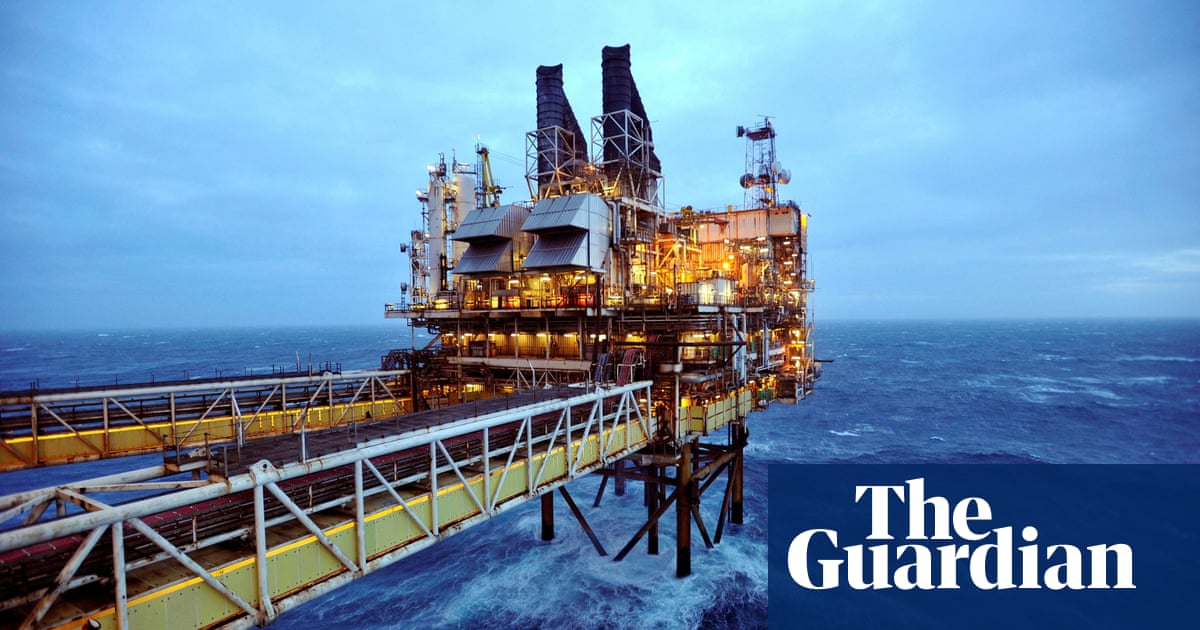
BP said it expected to pay about $800m (£693m) in windfall tax on its North Sea operations this year, as it posted bumper profits of $8.2bn in the third quarter.
BP has seen profits soar this year as Russia’s invasion of Ukraine has pushed up wholesale gas prices. It said the performance of its gas business had been “exceptional”.
The FTSE 100 oil company said the windfall tax figure covered the seven months from the levy’s introduction until the end of the year, and its total tax bill on its North Sea operations this year would be about $2.5bn.
Ministers are considering whether to extend the windfall tax on North Sea oil and gas operators.
Analysts had expected a drop-off in BP’s huge profits to about $6.6bn in the third quarter of the year after it raked in $8.5bn in the second quarter – a 14-year profit high. However, the slowdown was smaller than expected, despite BP noting “weaker refining margins” and lower oil prices.
The $8.2bn third-quarter profit far outstrips the $3.3bn of underlying profits recorded in the equivalent period of 2021.
The BP chief executive, Bernard Looney, said: “We are providing the oil and gas the world needs today – while at the same time investing to accelerate the energy transition.”
The new chancellor, Jeremy Hunt, is reportedly considering increasing the windfall tax by up to five percentage points, to 30%, and extending its lifespan by three years, to 2028.
The energy profits levy was introduced in May by the then chancellor, Rishi Sunak, who estimated it could raise £5bn.
However, BP’s rival Shell said last week it had paid zero windfall tax in the UK, despite making record global profits of nearly $30bn so far this year. Its British corporate entity did not make any profits during the last quarter after investing in drilling more oil in the North Sea.
Hunt is due to present his tax and spending plans in his autumn statement on 17 November.
The US president, Joe Biden, on Monday called on big oil companies that are bringing in big profits to stop “war profiteering”, threatening to hit them with higher taxes if they do not increase production.
BP, which increased its dividend by 10% in the quarter, will repurchase $2.5bn of shares after buying back $7.6bn so far this year. Looney was criticised after describing the company as a “cash machine” late last year.
Sign up to Business Today Free daily newsletter Get set for the working day – we'll point you to the all the business news and analysis you need every morning Privacy Notice: Newsletters may contain info about charities, online ads, and content funded by outside parties. For more information see our Newsletters may contain info about charities, online ads, and content funded by outside parties. For more information see our Privacy Policy . We use Google reCaptcha to protect our website and the Google Privacy Policy and Terms of Service apply.
The company’s run of huge profits showed little sign of abating as it said it expected oil prices to “remain elevated” after the recent Opec+ supply cut – which angered Biden – and uncertainty in gas and refining markets caused by the war in Ukraine.
Campaigners at Global Witness said BP’s profits of £23.4bn over the past 12 months could pay for 9.4m UK energy bills.
Jonathan Noronha-Gant, the senior fossil fuels campaigner at Global Witness, said: “Big fossil fuel firms making eye-watering profits is a slap in the face for the millions of citizens struggling to heat their homes, cook their meals or buy everyday essentials.
“As winter fast approaches, a dividing line is emerging: whose side is the government on? Britons facing financial hardships or an industry that’s making billions in profits off the current energy crisis? A proper windfall tax on the profits of big polluters is no longer a far cry, it is now a necessity.”
A Friends of the Earth energy campaigner, Sana Yusuf, said: “With the economy sinking, energy bills soaring and the climate crisis deepening, Rishi Sunak must surely act on the excessive profits that fossil fuel firms like BP are raking in. The case for a bigger, bolder windfall tax is now overwhelming.”
BP said it invested $3.2bn in the third quarter and $9bn in the first nine months of 2022, compared with $2.9bn and $9.2bn in the equivalent periods of 2021.
The £86bn company expects its oil and gas production levels to be higher in 2022 than in 2021 despite the loss of its Russian ventures, which it was forced to divest after the invasion of Ukraine.