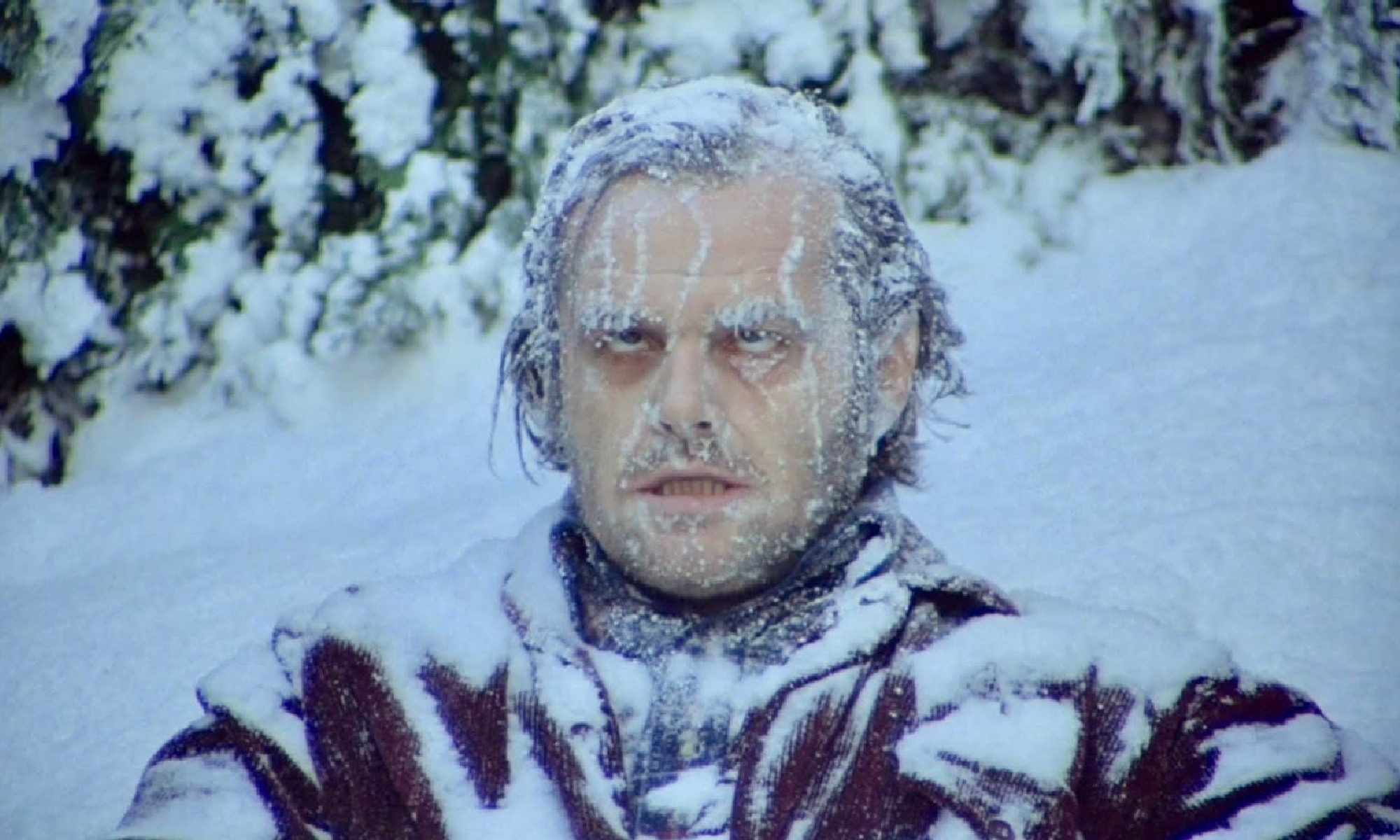
When the idea for this feature was first proposed, the angle was “Stephen King stories set at Christmas.” Much to my surprise, however, and despite our best efforts, we were not able to find a story by the master that was set specifically during the holidays or that pertained to them in some meaningful way (feel free to correct us, by the way, if you know of one). Given the breadth of King’s prose, this absence is surprising. It also begged a new question: What, then, are his best stories set in winter? It’s perhaps telling how quickly the choices multiplied. More than a few of King’s best-known tales take place during the coldest part of the year, and a few lesser-known tales benefit greatly from having the same backdrop.
We’re not parsing whether they’re short stories, novels, TV productions, or movies—we’ll discuss the story in whatever medium (or media) it’s appeared in—and we’ve left out a couple, like The Stand and The Dark Tower, that have brief segments set during the winter. Nonetheless, the below collection tells its own kind of story. So curl up in your favorite sweater or blanket, light a fire if you have one, pour yourself something hot, and peruse these King stories set in the darkest, frostiest time of the year—we suspect they’d still leave you chilled even if you read them during the dog days of summer.
The Shining
Of course, we’ll begin with the quintessential King winter tale, about the plight of the Torrance family when they’re left all alone to take care of the Overlook Hotel after it’s closed for the season. Both the novel and the Stanley Kubrick film (and, we suppose, the 1997 miniseries, although we haven’t seen it in ages) use the snowy confines of the Overlook and its grounds effectively, but we daresay that the book does it the best: there’s a scene omitted from the film in which little Danny encounters something inside a snow tunnel he’s made, and Halloran’s frightening journey to rescue the Torrances is even more harrowing on the page—as if nature itself is being controlled by the forces inside the hotel.
Nevertheless, both the book and the movie effectively convey the sheer loneliness and claustrophobia of being trapped on the mountain, snow piling up all around, even when you have a vast, albeit malevolent, hotel to move around in. Like the Overlook itself, the frozen environment in which it crouches like a sleeping giant is almost a character in its own right.