In previous weeks, Johnson had been spending 30 minutes at a time sitting on top of an electromagnetic machine to strengthen the pelvic floor. The contraption, which feels like two small hands repeatedly punching you in the sensitive region in quick succession, is typically for women who are hoping to rebuild strength after birth. But Johnson wanted to use it for something else.
The night before we met, Bryan Johnson didn’t get up once to pee. The development excited him greatly, because it was proof his plan was working.
Johnson is not a professional athlete, nor does he have any obvious illness. He is, in many ways, a Silicon Valley success story, the founder of the payment processing company Braintree, which purchased Venmo in 2012 before it was acquired the next year by PayPal for $800 million, making him rich enough to pursue far loftier goals. Soon after that, he founded Kernel, a neuroscience-focused technology company focused on developing a helmet that will, in his own words, “ bring the brain online .”
Johnson says that he spends more money on his body than LeBron James. With this sizable budget (more than $2 million a year), he pays for the food he eats (a precise 1,977 calories a day, made up of the world’s most nutritious elements), as well as the 112 to 130 supplemental pills he takes on a daily basis, and the ultrasound machine and other medical-grade machinery he keeps on the second floor of his discrete compound in Venice, Los Angeles, where he and his team of more than 30 doctors, clinicians, and researchers analyze how the 78 organs that make up his body have responded to the latest tweaks to his diet, sleep, and movement.
In Johnson’s world, anything less than complete perfection is seen as deficiency, and the nightly urination was getting in the way of perfect sleep. The machine seemed to have fixed the problem. He proudly showed me his sleep activity for the past week as registered by his smartwatch; he had scored an enviable and perfect 100 each night, on 8.5 hours on average. There were other benefits, too. The machine had substantially increased his “urination strength” and the distance from which he could stand from the toilet while peeing—a sign, he claimed, that he was getting younger, not older.
Johnson has replaced many of things that, until this point, have brought humanity together with needles, prodding, and pain. “I’m potentially the most measured person in human history,” he told me. His new life brings him deep joy, he says, as he has come to see himself as the Lewis & Clark of the human body, meticulously and obsessively recording his adventure through his own anatomy in journal posts he publishes online . His ultimate goal, he says, is to discover not the “perfect diet” and “perfect health” (though he is searching for those too), but whether it is possible to achieve what has to this point in human history seemed an impossibility: He seeks to not only slow down the aging process, but to stop and then reverse it, organ by organ, blood test by blood test.
“Our minds are given unquestioned authority to do what they want, when they want, how they want, so long as you're not violating the laws of society,” Johnson explained to me when we first spoke late last year. “We said, ‘What does my liver want? And what does my heart want?’ And then we rearranged life to make sure it's getting it.”
But his latest obsession might be his most ambitious project to date. At a minimum, it is certainly his most personal. For nearly two years, Johnson has been using his body as a science experiment, a vessel through which, he hopes, humanity can understand its utmost limits through his own regimen of extreme dieting and exercise, which has been developed according to what he believes is the top scientific literature of the day and tweaked according to how his ligaments, tendons, liver, heart, lungs, pancreas, and skin respond. He describes the process, in which he analyzes his body and then adjusts his “protocol” for the slightest imperfections, as “gorgeous” and freeing. Others might see his situation differently. He no longer eats what his brain wants or, at times, does what his brain wants. He has constructed a machine out of science, and outside of one large exception—his personal preference to remain predominantly vegan—that machine dictates his life.
“I'm trying to explore this question of: Can somebody who's willing to say yes to an algorithm, like myself, stay the same age biologically? Can we achieve the fountain of youth?” he told me when I visited his Venice home in December. “It would change our understanding of being human. It'd be very hard for us as a species to not grapple with that.”
For nearly two years, Johnson has been using his body as a science experiment, a vessel through which, he hopes, humanity can understand its utmost limits through his own regimen of extreme dieting and exercise, which has been developed according to what he believes is the top scientific literature of the day and tweaked according to how his ligaments, tendons, liver, heart, lungs, pancreas, and skin respond. (Photo courtesy of Bryan Johnson)
Extreme as the specifics of his approach might be—this is a man who has a device that tracks his nightly erections—Johnson falls squarely in line with many of his Silicon Valley peers. In recent years, people throughout the technology sector have taken increasingly innovative—and often eccentric—approaches to their personal health and wellness in a pursuit of a longer, happier life. The industry is chock-full of people who, for example, eat five cans of sardines a day or consume nothing but coffee, water, and tea for over a week straight. Former Twitter CEO Jack Dorsey made headlines in 2019, when he announced that he fasted for 22 hours a day and often went days with nothing but water, sparking concerns that the tech sector was “rebranding eating disorders” as wellness. But it was not entirely outside of the norms of an industry that has become taken with “biohacking,” in which one approaches the body as a computer program, to be forever tweaked and optimized.
Johnson himself claims to not be a part of the biohacker movement—or any movement outside of his own, for that matter—but he fits neatly within the growing demand for radical means to combat the aging process. “There are hundreds of millions of dollars being raised by investors to invest in reprogramming, specifically aimed at rejuvenating parts or all of the human body,” Harvard anti-aging researcher David Sinclair told the MIT Technology Review in 2021. While its roots are academic, the anti-aging movement has piqued the interest of some of the tech industry’s largest players, including PayPal co-founder Peter Thiel (“I’ve always had this really strong sense that death was a terrible, terrible thing,” he has said) and Jeff Bezos, reportedly an investor in the “ cellular rejuvenation ” biotech company Altos Labs.
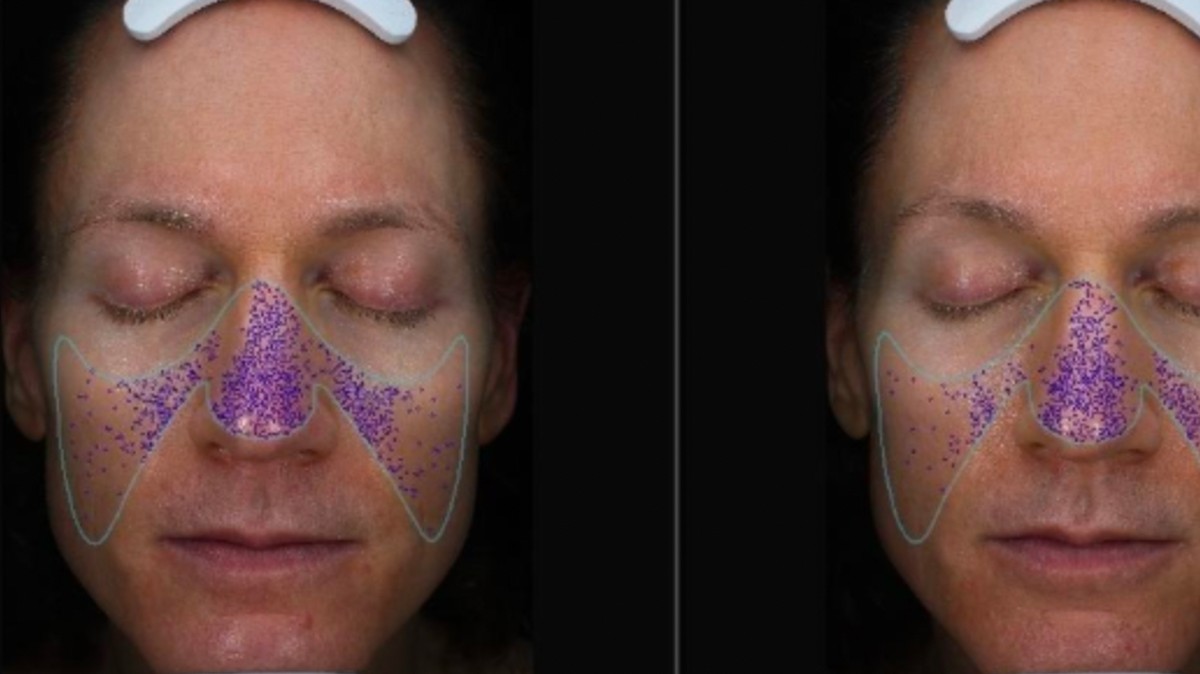
As of now, Johnson claims that the experiment, which he’s dubbed Project Blueprint, is more concerned with understanding the possibilities of one body—his own—than in creating a replicable system. The journey has led to improved physical health, but the most inarguable effect thus far has been on his physical appearance. He has dropped 60 pounds, and a recent MRI scan found that Johnson was in the 99th percentile for both body fat and muscle concentration—proof, he said, of his achieving “the perfect body ratio.” The muscles everywhere from his shins up to his neck appear to almost protrude out of him, and his skin wraps tightly around his face, which is the point: Johnson puts his skin through regular and painful skin rejuvenation processes, on top of the obligatory application of numerous daily creams. After two years, he claims, his skin is that of a twenty-something and his fitness level is that of an 18-year-old; his body also now runs three degrees cooler than it used to. More than 50 of his biomarkers are also now “perfect,” he has said. He even claims he has been able to stop dying his hair as of three months ago, after making “significant progress reversing gray hair.”
“It sounds like they're measuring like 1,000 things at once,” she said. “It's very hard to take that amount of data and look at [the individual components] one at a time, and really deduce any sort of causal link with what we're doing in our everyday lives.”
That is, in many ways, Johnson’s point, and he sees himself as a key figure in helping to find answers to questions that have plagued humanity throughout recorded history. Levine, however, cautioned against taking too much away from one individual experiment, no matter how in-depth the data might be.
The ultimate utility of what Johnson is doing is both unclear and unproven. Morgan Levine, who ran a laboratory focused on the aging process at Yale University until she was recruited last year to work at Altos Labs, told Motherboard that our behaviors and lifestyles do play a “major role” in how we age, allowing for individual variation, and that some general, common-sense rules apply: Exercise, eat lots of vegetables, and don’t smoke. But she also emphasized that in many ways, we still know very little about the aging process, and that it is difficult to say with confidence that one particular diet or routine will lead to better results. “We're still so early in understanding how to quantify these things,” Levine said.
And yet, in person, he remains a clearly middle-aged man, searching—as so many do, just with more resources at his disposal and a greater degree of obsessiveness—for the one thing no amount of money has ever been able to buy.
Like a lot of people, he felt the least in control of his emotions at night, when he would become “powerless.” What he coined “Evening Bryan” would help himself to extra servings of dinner or make his way through a box of graham crackers. Evening Bryan, he said, was “an absolute monster,” who left him irritable, cloudy, miserable, and self-loathing by morning. “I felt so much shame. Because I was out of control. I couldn't regulate what I ate. And I felt so bad about myself,” Johnson said. He started to see his own proof of the power law, a term popular in venture circles to describe the outsized impact of a small number of investments. Evening Bryan might be in control for only hours a day, but he inflicted most of the harm on Johnson’s life, he came to believe. “I was at war with myself,” he said. “I was just a slave to myself and my passions and my emotions and my next desire.”
Johnson came from humble beginnings in Springville, Utah, one of five children of a devout Mormon mother. He had grown up on a “typical ’80s American diet” of sugar-filled cereal and canned goods, he said, after which time he was never able to rid himself of the “awful” diet and habits that developed from that. Johnson did what he could to exercise and eat healthy. But throughout his adult life, he struggled with chronic depression, exacerbated by the stress of running his technology companies.
As far back as he could remember, Johnson had struggled with his own image of his body. He had a hard time looking at himself in the mirror and felt jealous when he was around people who felt comfortable in front of the camera. “I wanted that so badly,” he said.
Johnson started to perform an analysis on all the organs that make up his body. He tested his urine, stool, saliva, and fitness levels. He underwent ultrasounds, MRIs, and colonoscopies. He swallowed a camera “the size of a baby carrot, after fasting for 24 hours,” took laxatives for six hours, then excreted it almost 11 hours later. The result was 33,537 images of his intestinal tract. “Every conceivable way to test my body to get data on my body, I did,” he said. Then, comparing the data to the scientific literature, he and his team started to put together a program to improve every aspect of himself. The most important element of this program is a complete reliance on data that assumes the data are always beyond dispute.
Johnson became determined to replicate the feature within himself and started to think of his body like a computer program. He is, so he says, building an algorithm (at other times he calls it an “evidence-based medicine protocol”) using a combination of a database of more than 1,000 peer-reviewed scientific publications on health and longevity—including “every major lifespan study that's ever been done,” ranked “according to their contribution of lifespan”—and weekly tests that strips him of authority over what he eats and does every day, giving less agency to his conscious self than to the protocol’s estimates of what his lungs, heart, liver, and kidneys want in his pursuit to allow them to be, as he puts it, their “best selves.”
A moment of inspiration occurred a few years back, when Johnson learned to fly a plane. In the air, he came to appreciate the beauty of the autopilot feature, which allowed the humans running the plane to sit back and hand over the controls to technology, which took in measurements and flew the plane even better than a human could. “I thought, ‘What if my body could be run on autopilot?’” he said.
He does not align himself with a lot of the longevity or wellness movements. He sees Blueprint as separate from—and better than—the “religious debates” that make up most of the health space. It is based upon data, he asserts, and nothing else. And what if the interpretation of medical data today is still too limited to lead to objectively optimal outcomes? That is a question only partially answered. “Blueprint is a stock ticker of sorts that will reveal, through the tracking of my biological versus chronological age, the status of today’s anti-aging science,” he wrote in October 2021.
Johnson admits the lifestyle shift requires a period of adjustment, or adaptation, both psychologically and in terms of the stomach handling the foods he now eats. He says he himself has committed around 75 “infractions” to date, and that Evening Bryan sometimes threw tantrums early on when he was hungry at night. But Evening Bryan is dead now, Johnson said: “It just takes a little time to retrain your brain.”
The result is Project Blueprint , the program that Johnson has set up to dictate every facet of his life. “It runs my body for me, and it does a better job than I can,” he said. Every day, seven days a week, Johnson wakes up at 5:30 a.m. and proceeds to consume the same 100-plus pills, exercise for exactly 67 minutes (“I am never sore somehow”), and eat exactly 1,977 calories, about 550 less than the maintenance level a man of his size, age, and activity level typically requires. Each one is carefully selected according to the science of the day. “I cannot look at a menu and decide what I want,’” he said proudly. He stops all food consumption by noon, and then goes to bed at 8:30 p.m., even if he is mid-conversation with his children. “Bed time for us is a pretty serious affair,” he said. Missteps are not moments of relief, sprinkled here and there for fun, but “infractions.”
(Upon close inspection, Johnson’s willingness to follow the data does have its limits. When I asked him how his team decided upon 1,977 calories as the perfect amount, expecting to hear it had been the result of a complex equation, I was surprised to learn that it was simply the year he was born. Large parts of his workout routine were crafted not by a world-class athletic expert, but his teenage son. And he required that the protocol adhere to his strong desire to remain vegan, with one exception, even when his preferred combination of veganism, caloric restriction, and intense daily exercise caused his testosterone to drop enough for him to need to wear a testosterone patch on his thigh. While all fine and good on their own, these are most certainly preferences, albeit likely harmless ones, sitting outside of the bounds of his self-stated ideology.)
When improvements can be made, they are. Early on, Johnson only ate one meal a day . But his body fat percentage dropped below 3 percent, and they adjusted to bring it up to an “optimal” range. He used to drink a small bit of red wine a day to obtain the health benefits. Now he just takes a pill that he claims is a “proprietary creation” with—purportedly—the same benefits and none of the downsides of alcohol. Similarly, while Bloomberg reported last week that Johnson used to wear seven skin creams and get weekly acid peels, he now only applies four creams and has dropped the peels, his team told me. “The protocol is constantly being updated,” they said.
The evidence is more clear that people should avoid regular overconsumption, meaning people should eat as many calories as they burn or live at perhaps a “slight deficit,” Levine said. She characterized Johnson’s deficit levels as “extreme,” and would not advise any person to undertake such a lifestyle shift. But she said there are limits to what we know right now. “The amount of caloric restriction that could be beneficial to one person will be totally different or even detrimental to another,” she said. Past the obvious—don’t smoke, eat plants—the effects of particular interventions on the individual are not only often unknown, but perhaps right now unknowable.
Existing in a state of perpetual and extreme caloric restriction makes it difficult to fit all the nutrients he needs into his diet. He believes a constant caloric deficit to be “the number one evidence-based health protocol,” though when I later asked specifically what research convinced Johnson to remain in a state of extreme caloric restriction, the only answer I got was “scientific evidence.” Levine, the Altos researcher, said that studies on caloric restriction have led to mixed results and mostly focused on animals. Experiments on mice, for example, have found that while some benefit from restriction, others do not or even experience negative effects. A new study on flatworms out just this month found “ no benefits to lifespan ” outside of “perfect” environments, as Levine put it.
Despite this, Johnson has places his faith in his data machine, Whatever the theoretical benefits of caloric restriction, its benefits are self-evident to him, and make for a challenge worth relishing—one that requires him to take down more than 100 supplemental pills each day, including 54 in front of me, which he throws in his mouth 15 to 20 pills at a time (some days he takes up to 85 in the morning). The supplements include everything from the anti-diabetic drug acarbose and endogenous steroid hormone precursor dehydroepiandrosterone—a potential “ anti-aging ” treatment—to tumeric and lithium. Johnson now considers supplements one of the core necessities of life, alongside food, sleep, and exercise.
Sasha Bayat, a registered licensed dietitian at Brigham and Women’s Hospital, a teaching hospital of Harvard Medical School, described the amount of supplementation as “extreme” and warned that “excessive amounts of supplements can be harmful and cause a significant burden on the liver,”, adding that it’s preferable to get nutrients from real food when possible, as some vitamins and nutrients work better in combination. “For instance, vitamin D will help the body absorb calcium. So if you're just getting calcium with no vitamin D, you're not really absorbing that calcium,” she said.
Making the most of the limited number of daily calories he allows himself requires a “frugality mindset,” according to Johnson. “‘Every calorie, every supplement has to fight for its life to exist,” he said. “I treat life as every calorie needing to be justified.” He refers to the pill meant to replicate the benefits of red wine, for example, as “expensive” not because of its high price, but because of its caloric density. He has come to enjoy the feeling of hunger, sometimes even fantasizing about breakfast as he goes to bed at night (“specifically about the density of nutritious value”), a stark contrast to when he used to go to bed full.
“I haven't been convinced by any data on any supplements unless people do have a true deficiency in their diet,” she said. “In terms of having a boosting advantage for things like the aging process, I think it's all speculation right now.”
Johnson starts every day off with the same drink, which includes two and a half grams of creatine, collagen peptides (the only non-vegan food Johnson consumes), and spermidine, which he tells me stabilizes the DNA, especially when consumed at its “optimal amounts,” which, he says, is 13.5 milligrams per day(Photo courtesy of Bryan Johnson)
Johnson appears conscious of the idea that he does not eat enough. To prove he does, Johnson treats me over our two and a half hours together to all of the foods he eats each day, save the rotating final meal he finishes before noon. After a cup of tea (for the antioxidants), I take down a morning drink that includes water, two and a half grams of creatine, collagen peptides (the only non-vegan food Johnson consumes), and spermidine, which he tells me stabilizes the DNA, especially when consumed at its “optimal amounts,” which, he says, is 13.5 milligrams per day. At the same time, I consume “a pretty good starter kit” of supplements including cocoa flavanols (“it increases nitric oxide production”) and the red wine pill.
Later, I eat a meal he calls nutty pudding, a sort of smoothie that includes berries, sunflower lecithin, and a chalky side of supplement. We also eat the super veggie, which includes hemp seeds, broccoli, cauliflower, lentils, shiitake mushrooms, world-class olive oil, and, strangely, pure dark chocolate that has been tested for heavy metals like cadmium. (The chocolate makes up 138 calories of Johnson’s daily calories.) Johnson prefers to blend his veggie meal. He says he likes the texture, even if it looks disgusting, which it does, and that it allows him to take it down more quickly, as it would take too long to eat piece by piece. (Johnson doesn’t use salt, instead using a substitute called Nu-Salt, or potassium chloride. “All the fun of salt without the sodium,” he said).
By his own admission, Johnson is not a foodie, which he attributes to his humble origins. When I suggest that some people might feel the rote nature of his consumption sucks some of the joy out of food, which has long been a defining aspect of human culture, Johnson appears to understand intellectually, if not emotionally, before casting the concern aside. “Why are we so obsessed with our decision-making around food? And why do we think it's our domain? Why wouldn't an algorithm just do it for me? Why wouldn’t I gleefully accept that if it can maintain my body in perfect health?” he said.
According to Johnson, he eats 10 times the amount of dietary fiber the typical American does, and it’s true that the food is filling, especially when consumed in quick succession by this reporter. Taste is another matter; the food is fine, if odd, due to forced-together flavor combinations like chocolate and broccoli. (Later that day, after I left, I became momentarily overwhelmed by a sense of nausea and had to lie down, perhaps evidence of the aforementioned period of adaptation that Johnson referred to.)
The problem, as Johnson sees it, is that if humanity were to no longer have decision-making power over the foods they eat each day, “a person says, ‘What else am I?’” Not needing to decide what to eat each day has gifted Johnson with more time to think about other things.
When I asked what he used that extra time to think about, the answer he gave was “the future of our existence.”
Bryan Johnson is, depending on how you measure, either 45 or 42. By the number of days he has been alive, he is 45. But according to Johnson’s preferred marker, known as one’s epigenetic age, he is about two and a half years younger.
The field of epigenetics has been burgeoning area of interest for anti-aging researchers since the early 2010s, soon after UCLA professor Steve Horvath and his colleagues published an article claiming to have discovered a way to measure the “age that our cells, tissues, and organ systems appear to be, based on biochemistry,” not chronological age, by focusing on DNA methylation, according to the National Institutes of Health. It became known as one’s “epigenetic clock,” and it led to fascination within academia (and Silicon Valley) with whether the aging process can be slowed (and in the popular press with the idea that a middle-aged person can have the body of an 18-year-old).