“Dr. Panos and I both see patients with COPD, and it’s a huge population,” says Zafar. “Their life really changes when they have COPD. They were active individuals but now they’re debilitated and limited, so we wanted to come up with something easy that helps improve their life.”
For people with COPD, it takes longer to get inhaled air out of their lungs with each breath due to tighter air tubes. Therefore, when they breathe fast, like during physical activities, air is retained in the lungs. This air stacking or “dynamic hyperinflation” is the main reason for breathlessness and also leads to lower oxygen levels. As the breathing gets difficult during physical activity, people become less and less active and more isolated.
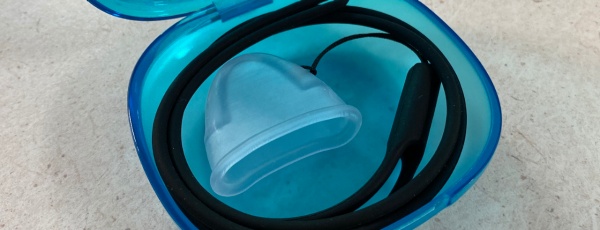
Panos and Zafar developed a hands-free device that is the size of a whistle. Zafar said he looked at positive-expiratory pressure (PEP) breathing devices on the market and they were handheld, big and bulky, so they tried to come up with something that is very simple, lightweight and easy to use. The device is designed to be worn around the neck with a lanyard for day-to-day use and inserted into the mouth when needed, during or after exertion.
In the study, they examined people with COPD who were short of breath and gave them two tasks. “We conducted a six-minute walk test with and without the device,” says Zafar. “They were given the device to take home and use in their daily routines. In two weeks, there was a follow-up to see how PEP Buddy use impacted their shortness of breath and quality-of-life scores.”
The study found 72% of the participants had a significant impact in reducing their shortness of breath and improving their quality of life. Among those who would drop their oxygen levels during walking, 36% of them did not drop oxygen levels when using PEP Buddy. This is the first mechanical device to show such an impact on oxygen levels in people with COPD.