Oil storage tanks stand at the RN-Tuapsinsky refinery, operated by Rosneft Oil Co., at night in Tuapse, Russia. Andrey Rudakov | Bloomberg | Getty Images
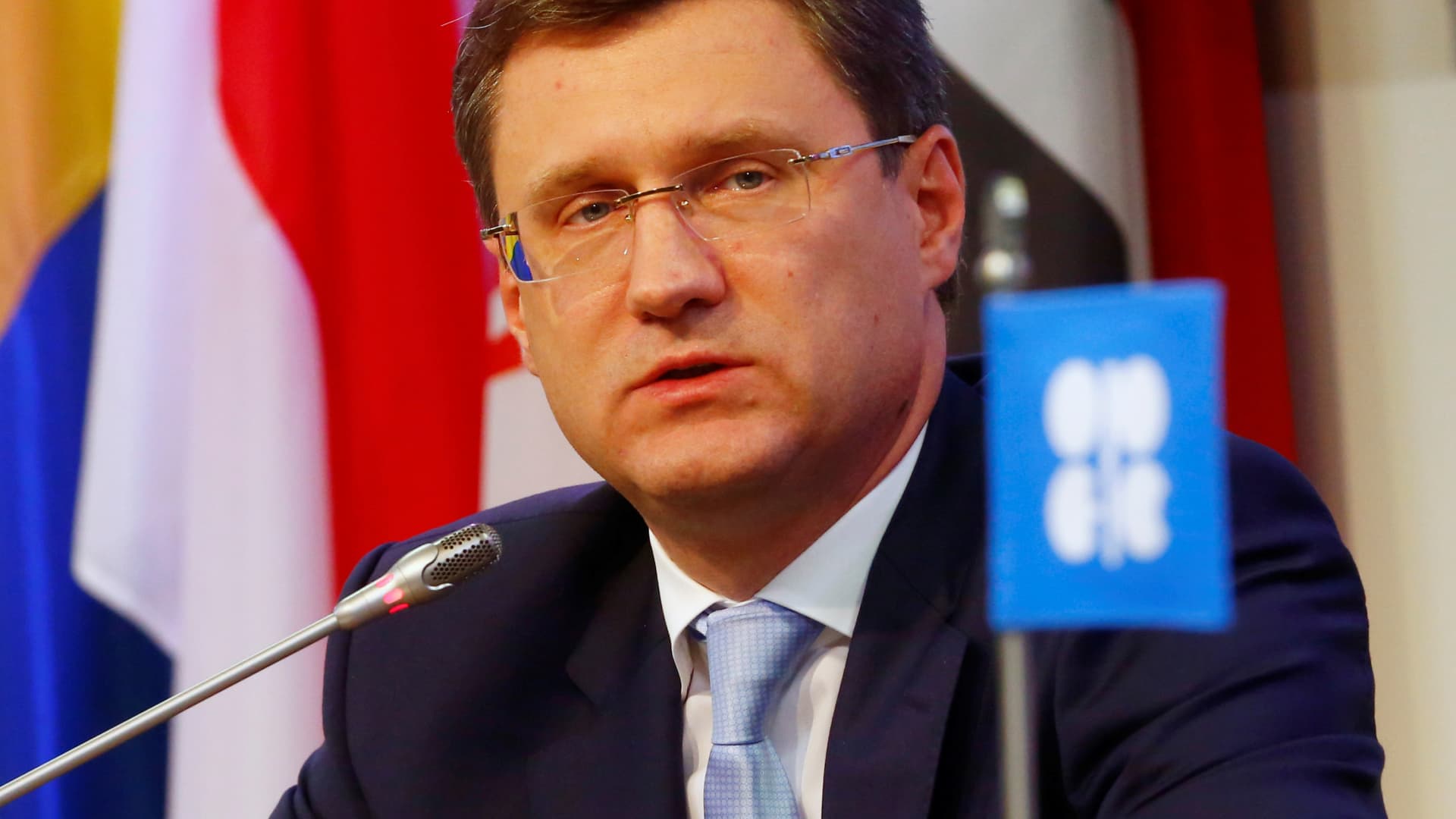
Russian Energy Minister Alexander Novak. Leonhard Foeger | Reuters
In addition to Saudi Arabia's output cut of 500,000 barrels per day, other member states have also pledged cuts: the UAE will be cutting output by 144,000 barrels per day, while Kuwait, Oman, Iraq, Algeria and Kazakhstan will also be reducing output. "The selected involvement of the largest OPEC+ members suggest that adherence to production cuts may be stronger than has been the case in the past," Commonwealth Bank of Australia's Vivek Dhar said in a note.
Oil at $100 per barrel?
"OPEC+'s plan for a further production cut may push oil prices toward the $100 mark again, considering China's reopening and Russia's output cuts as a retaliation move against western sanctions," CMC Markets' analyst Tina Teng told CNBC. Teng noted, however, that the cut could also reverse the decline in inflation, which would "complicate central banks' rate decisions." In March, oil prices tumbled to their lowest since December 2021, as traders feared the banking rout could dent global economic growth.
They're looking into the second half of this year and deciding they don't want to relive 2008. Bob McNally Founder of Energy Aspects
The oil cartel and its allies are looking to avoid a repeat of the 2008 crash, one analyst said. "They're looking into the second half of this year and deciding they don't want to relive 2008," said Bob McNally, president of Rapidan Energy Group, citing oil prices crashing from $140 to $35 in six months in that year. McNally added that while it's not his base case, oil prices could "make a dash for $100 … if Chinese demand goes back to 16 million barrels a day second half of this year [and] if Russian supply starts to go off because of sanctions and so forth," "Then these cuts, if they stick with them, are going to super tighten the market," he said.
The logo of the OPEC is pictured at the OPEC headquarters on October 4, 2022. In October last year, the oil cartel announced its decision to cut output by two million barrels per day. Joe Klamar | Afp | Getty Images
Significant, but not 'set in stone'
However, some analysts say the latest cut is set to deliver a more significant impact than the one set last year. "Most of the cuts will be made by countries that are producing at or above quotas, which implies a higher share of the announced cuts will translate into real supply reductions than in October 2022," said Energy Aspects' founder Amrita Sen, who also expects prices to hit $100 per barrel.
watch now
However, Sen holds the view that the output cut could potentially be reversed, hinging on easing global market pressures. "I do believe if the market over tightens, exogenous issues or shocks fade, they will reverse this cut down the line so this isn't set in stone for the rest of the year — but very clearly defending a [price] floor," she said.