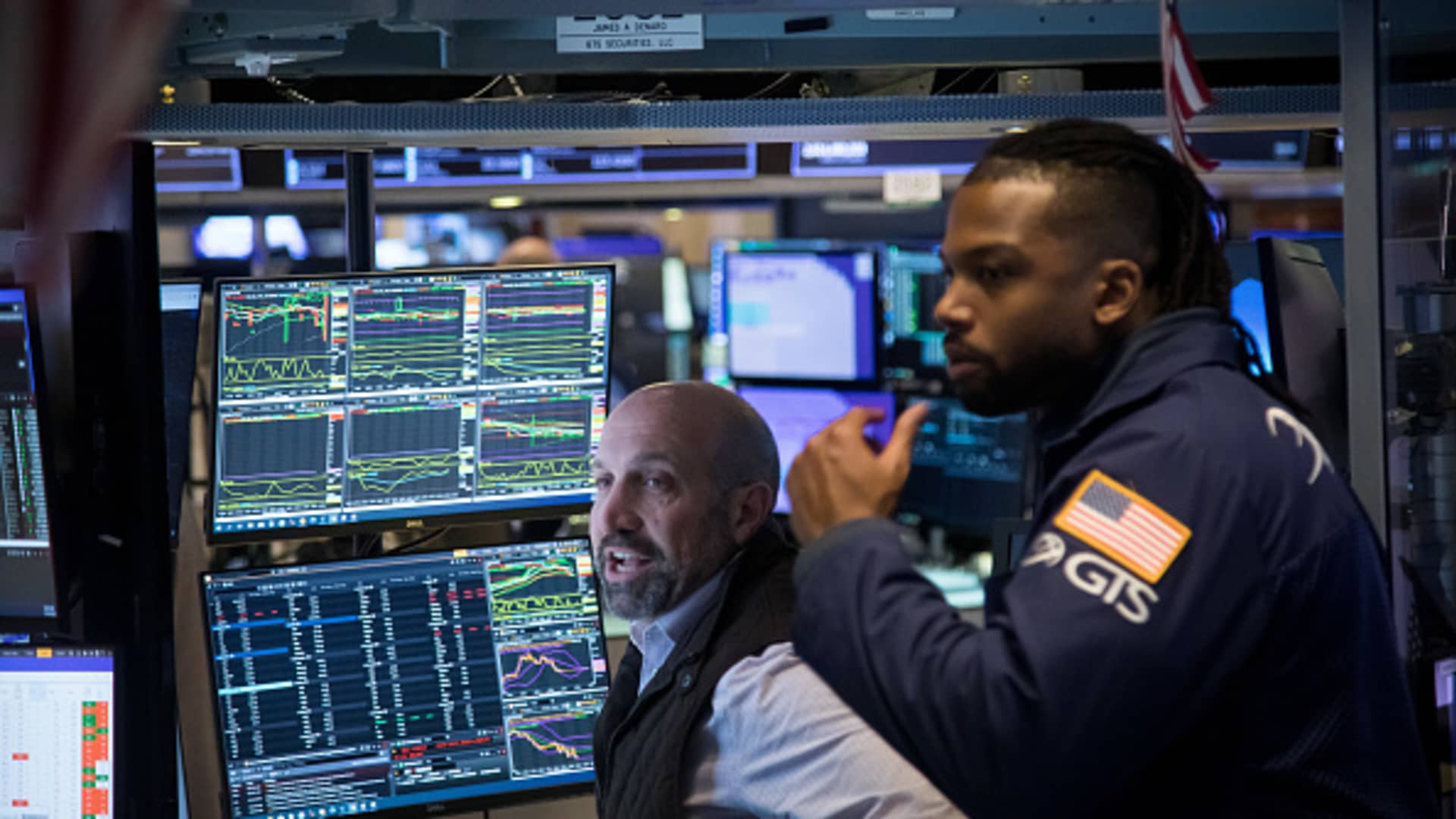
Traders work on the floor of the New York Stock Exchange (NYSE) in New York, US, on Wednesday, Nov. 9, 2022.
The yield on the benchmark 10-year Treasury note slipped 3 basis points to 3.307%, while the yield on the 2-year note fell 8 basis points to 3.751%. Yields move inversely to prices.
U.S. Treasury yields fell on Wednesday as traders sorted through recent readings on the labor market to gauge the possibility of a recession in the months ahead.
Yields were higher before the ADP private payrolls report came in below expectations, signaling a slowdown in hiring in March.
That report comes after job openings data released Tuesday showed vacancies fell below 10 million in February for the first time in nearly two years, pressuring Treasury yields as investors considered whether the information could deter the Fed from further rate hikes.
Future monetary policy moves remain in focus, with the Federal Reserve continuing to tackle inflation and the aftermath of banking collapses that caused turmoil in the bond markets in recent weeks.
The Fed is next scheduled to meet in early May, when the policy rate will likely rise by a further 25 basis points, according to the CME Group's FedWatch tool.
Federal Reserve Bank of Cleveland President Loretta Mester said in a speech in New York on Tuesday that the central bank needed to raise rates to address inflation. She offered no details.
"Precisely how much higher the federal funds rate will need to go from here and for how long policy will need to remain restrictive will depend on how much inflation, and inflation expectations are moving down," Mester said, adding that it will "depend on how much demand is slowing, supply challenges are being resolved, and price pressures are easing."
Investors are also looking ahead to the non-farm payrolls data set, due out for release Friday.